Turkey has launched a new effort to break Somalia’s political deadlock, but Puntland and Jubaland have refused to participate in Ankara-led mediation, questioning Turkey’s neutrality ahead of internationally backed talks involving the U.S., EU and UN.
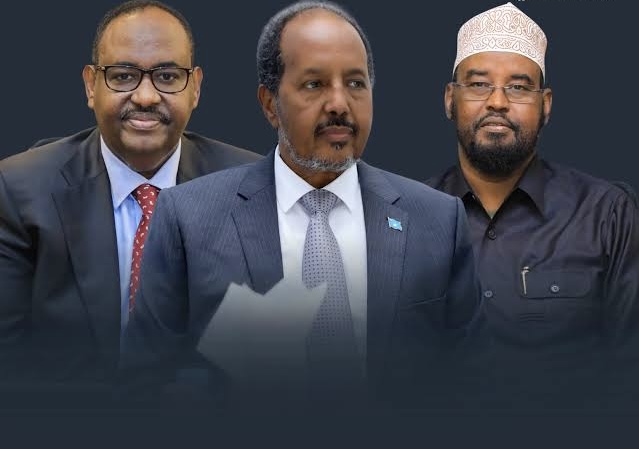 MOGADISHU (Somali Report) — Somalia’s latest attempt to break months of political deadlock entered a critical phase this week after Puntland and Jubaland rejected Turkey’s role as mediator, arguing that Ankara cannot serve as a neutral broker in the country’s increasingly divisive electoral dispute.
Turkish intelligence officials held preliminary consultations in Mogadishu on Tuesday with representatives of Somalia’s federal government and opposition leaders ahead of direct political negotiations expected to continue on Wednesday.
However, delegates from Puntland and Jubaland declined to participate in the Turkish-hosted discussions, maintaining that Turkey’s close political, military and economic partnership with the federal government undermines its neutrality.
According to sources familiar with the discussions, Turkish officials acknowledged during Tuesday’s meetings that Ankara had initially hoped to mediate the crisis independently but accepted that broader international participation had become necessary after sections of the opposition and the two federal member states expressed reservations.
The sources said Turkish officials nevertheless reaffirmed their commitment to helping facilitate a political settlement, stressing that Ankara seeks stability rather than political advantage in Somalia.
The preliminary consultations will be followed by another round of talks on Wednesday before a larger internationally backed meeting on Thursday involving representatives of the United States, the European Union, the United Nations, Turkey, Somalia’s federal government and opposition figures.
The renewed diplomatic push comes amid growing international concern that Somalia’s political crisis could deepen if no agreement is reached on elections before October 2026.
At the center of the dispute are constitutional amendments approved by the federal parliament earlier this year and the government’s plan to organize universal suffrage elections.
Somali Report · Newsletter
Your morning briefing on Somalia's biggest stories — politics, security, business, and the people shaping the region's future.
President Hassan Sheikh Mohamud’s administration argues Somalia must move beyond the clan-based indirect electoral model that has dominated previous elections.
Opposition leaders, united under the Somali Future Council, say they support direct elections in principle but reject what they describe as a unilateral process designed without sufficient national consensus.
The opposition has instead proposed a transitional direct election model that would preserve elements of Somalia’s traditional power-sharing system while gradually introducing universal voting.
Sources also told Somali Report that Turkish officials privately warned Somalia’s leadership that sustaining the current political course without broader political consensus could become increasingly difficult if the electoral dispute remains unresolved in the coming months.
Neither the Turkish government nor Somalia’s presidency has publicly commented on the reported assessment.
Turkey has become one of Somalia’s closest international partners over the past decade, providing military training, security assistance, infrastructure investment and diplomatic support.
But that close relationship has increasingly prompted opposition politicians, Puntland and Jubaland to question whether Ankara can act as an impartial mediator in disputes involving Villa Somalia.
Whether the negotiations scheduled throughout the week can narrow the divide between the government and opposition remains uncertain, but diplomats hope the expanded international format will create enough confidence among all parties to revive meaningful dialogue and avert a deeper political crisis.
About the Author

Mohamed Farah is a senior editor at Somali Report, based in London, covering geopolitics, trade, business, and security across the Horn of Africa and the Red Sea region.
Somalia condemns Houthi attacks on Saudi Arabia, warns of regional security threat


