Somalia’s Ports Minister Abdulkadir Mohamed Nur, a key figure in Mogadishu’s strategic partnership with Turkey, has accused opposition groups of working with foreign actors to destabilize the capital ahead of planned demonstrations.
MOGADISHU (Somali Report) — Somalia’s Minister of Ports and Marine Transport, Abdulkadir Mohamed Nur, has accused opposition groups of working with foreign actors to destabilize Mogadishu, escalating political tensions ahead of planned anti-government demonstrations in the capital.
Nur, one of President Hassan Sheikh Mohamud’s closest allies and a former defense minister, alleged that unnamed foreign actors were encouraging opposition figures to create unrest in exchange for financial support.
“The opposition group were told by foreigners that additional funds would only be released if they created insecurity in Mogadishu,” Nur claimed in a statement posted on X, without providing evidence.
He further accused opposition supporters of attempting to bring instability to public areas, including Lido Beach, one of Mogadishu’s most popular recreational sites.
The allegations come as security forces have increased deployments across the city ahead of demonstrations scheduled for June 4. Troops and military vehicles have been positioned along major roads and near neighborhoods where prominent opposition leaders have recently relocated.
The opposition says the protests are intended to challenge what it describes as President Hassan Sheikh Mohamud’s disputed mandate extension and to oppose government policies affecting residents of the capital.
Government officials, however, insist the security measures are intended to prevent violence and maintain public order.
Security Build-Up Across the Capital
The heightened political rhetoric has coincided with a visible security buildup in Mogadishu.
Former President Sheikh Sharif Sheikh Ahmed has relocated to the Mirinaayo area near Lido Beach, where his Himilo Qaran party plans to open a new office. Former Prime Minister Hassan Ali Khaire has also moved to Howlwadaag district, while other opposition figures are expected to spread across several parts of the city as preparations continue for Thursday’s demonstrations.
Mohamed Ahmed Diiriye, known as Yabooh, the Banaadir regional administration’s deputy governor for security and politics, said authorities had not banned the protests but had designated specific locations where opposition leaders could address supporters.
“The government has not rejected the protest. It has accepted it,” Yabooh told reporters.
He warned, however, that authorities would not tolerate armed mobilization.
“Is a protest with weapons behind it, guarded by guns, really a protest? That is chaos,” he said.
Yabooh pledged that security forces would protect both opposition leaders and civilians participating in the demonstrations but insisted that no weapons would be allowed.
Turkey Connection
Somali Report · Newsletter
Your morning briefing on Somalia's biggest stories — politics, security, business, and the people shaping the region's future.
Nur’s intervention has drawn attention not only because of his senior position in government but also because of his longstanding ties to Turkey, one of Somalia’s closest international partners.
A turkey educated and a fluent Turkish speaker, Nur previously served as a diplomat Somalia’s embassy to Turkey before rising through the ranks of government as deputy director of the National Intelligence and Security Agency (NISA), defense minister and later ports minister.
He played a prominent role in deepening Somalia’s strategic partnership with Ankara, particularly during his tenure as defense minister.
In 2024, Somalia and Turkey signed a major defense and maritime cooperation agreement following Ethiopia’s controversial memorandum of understanding with Somaliland. The agreement expanded Turkey’s role in maritime security and military cooperation with Mogadishu.
Nur’s subsequent transfer from the defense ministry sparked speculation in diplomatic circles. Reports published by Middle East Eye cited unnamed sources alleging that U.S. officials had expressed concerns over Somalia’s growing defense cooperation with Turkey and had lobbied for his removal.
Somali officials strongly rejected those claims. Somalia’s ambassador to Turkey, Fathudin Ali Mohamed, described suggestions of foreign influence over cabinet appointments as “baseless” and said Somalia’s leadership decisions were determined by national priorities.
Political Crisis Deepens
 The confrontation between the government and opposition stems from a broader dispute over constitutional amendments approved by parliament earlier this year.
The changes could extend presidential and parliamentary terms from four years to five and postpone federal elections until 2027.
President Hassan Sheikh Mohamud argues the reforms are necessary to advance Somalia’s transition from indirect clan-based elections to universal suffrage.
Opposition leaders disagree, arguing that the president’s original mandate expired on May 15 and that any extension requires broad political consensus.
The dispute has revived memories of Somalia’s 2021 electoral crisis, when an attempt to extend former President Mohamed Abdullahi Farmaajo’s mandate triggered armed clashes in Mogadishu before political leaders returned to negotiations.
International partners have expressed growing concern over the latest standoff. The United Nations, European Union and several foreign embassies have urged Somali leaders to resume dialogue and reach agreement on an electoral roadmap, while the United States has called on all sides to exercise restraint.
For now, neither side appears willing to back down.
With opposition leaders pressing ahead with planned demonstrations and government forces maintaining a heavy presence across the capital, fears are growing that Somalia’s political dispute could evolve into a wider security confrontation in the days ahead.
About the Author
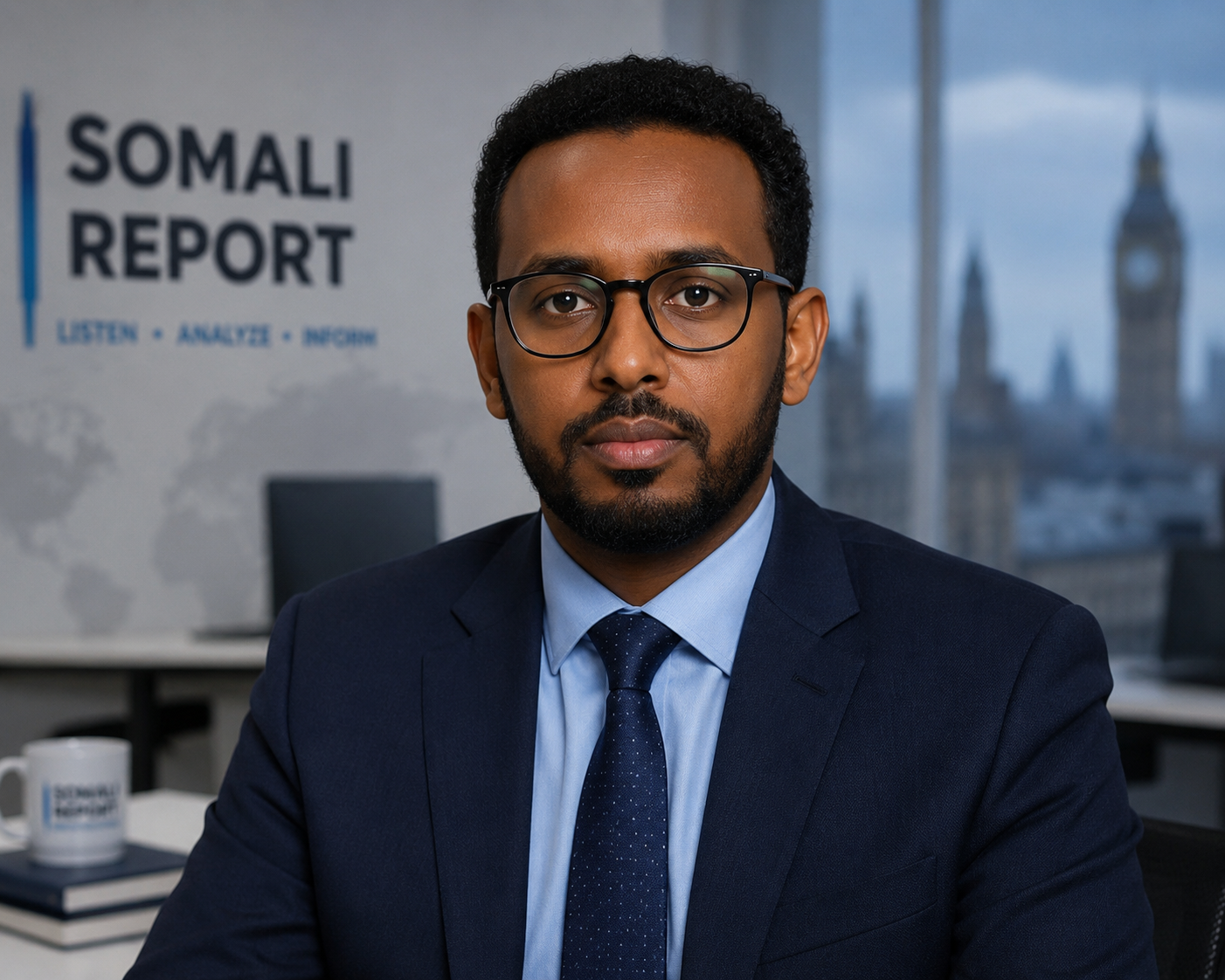
Mohamed Farah is a senior editor at Somali Report, based in London, covering geopolitics, trade, business, and security across the Horn of Africa and the Red Sea region.
Jubbaland Approves Budget Exceeding $60 Million as Domestic Revenue Rises


