Hirshabelle's regional and local elections have been postponed as voter registration remains incomplete and political groups seek more time to prepare for the closely watched vote.
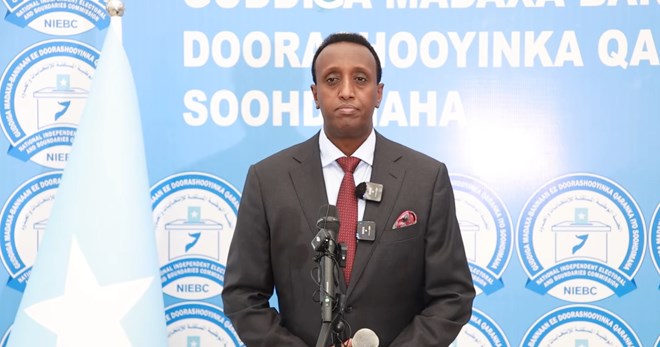 MOGADISHU, Somalia (Somali Report) — Somalia's National Independent Electoral and Boundaries Commission has postponed elections in Hirshabelle state that were due to take place on Thursday, citing unfinished preparations and the need to give political groups more time to organise.
The elections for Hirshabelle's regional parliament and local councils had been scheduled for Aug. 20, 2026. The commission said the delay was temporary and was intended to allow key electoral preparations to be completed. The commission did not announce a new election date, saying it would publish an updated timetable within two weeks.
Three main issues were cited for the postponement.
Voter registration is still underway in four districts in Hiiraan region, according to the commission. Officials said the registration process must be completed before the election can proceed.
The commission also said political organisations needed additional time to mobilise their supporters so they could participate effectively in the electoral process.
Political organisations would also be given more time to submit their candidate lists for the elections, the commission said.
The decision comes as Hirshabelle faces growing political competition over its leadership and the direction of the state, one of Somalia's federal member states.
The election has attracted particular attention because of a longstanding political dispute in Hiiraan, where local figures and communities have pushed for greater influence over the leadership of Hirshabelle.
President Ali Gudlawe and his political allies, who are seen as having close ties to Somalia's federal government, are seeking another term in office, while political opponents are campaigning for changes in the state's leadership.
The electoral commission's decision to delay the vote is therefore likely to intensify political discussions among competing groups, particularly as parties prepare their candidates and seek to consolidate support ahead of the new timetable.
Somali Report · Newsletter
Your morning briefing on Somalia's biggest stories — politics, security, business, and the people shaping the region's future.
The commission said the postponement should not be interpreted as a cancellation of the elections.
"Within two weeks, the commission will announce the election timetable and the date on which the election will take place," it said in a statement.
The move comes as Somalia seeks to expand direct elections and strengthen its electoral institutions after years in which political leaders were largely selected through indirect processes involving clan-based representation.
Hirshabelle's vote is being closely watched as part of broader efforts to establish a more direct electoral system in Somalia's federal states.
But the process has faced political disagreements, logistical challenges and disputes over voter registration and the organisation of elections.
The delay also highlights the difficulties facing electoral authorities as they attempt to meet political deadlines while ensuring that voters, candidates and political organisations are able to participate.
For residents of Hirshabelle, the postponement means uncertainty will continue over when they will finally cast their ballots for regional and local representatives.
The commission has not indicated whether the new date will significantly alter the wider electoral timetable, but the next two weeks are expected to be closely watched by political groups and candidates preparing for the contest.
The election is expected to be an important test of Somalia's ability to conduct state-level voting while managing political competition and maintaining confidence in the electoral process.
As the commission prepares to issue a new timetable, the main political sides in Hirshabelle are likely to intensify consultations and campaigning, with the leadership contest and the demands of Hiiraan communities remaining central to the debate over the state's political future.
About the Author
Ahmed Omar is a senior journalist for Somali Report, based in Mogadishu. He has two decades of experience reporting on Somalia for international and local media. He covers politics, security, governance, business, trade, economic developments and regional affairs.
Somalia Caught Between Ethiopia and Egypt? Opposition Challenges President’s Regional Strategy


