Somalia’s economy grew by 3.1 percent in 2025, as the Cabinet reviewed economic reforms, domestic revenue, public finances and the country’s security situation.
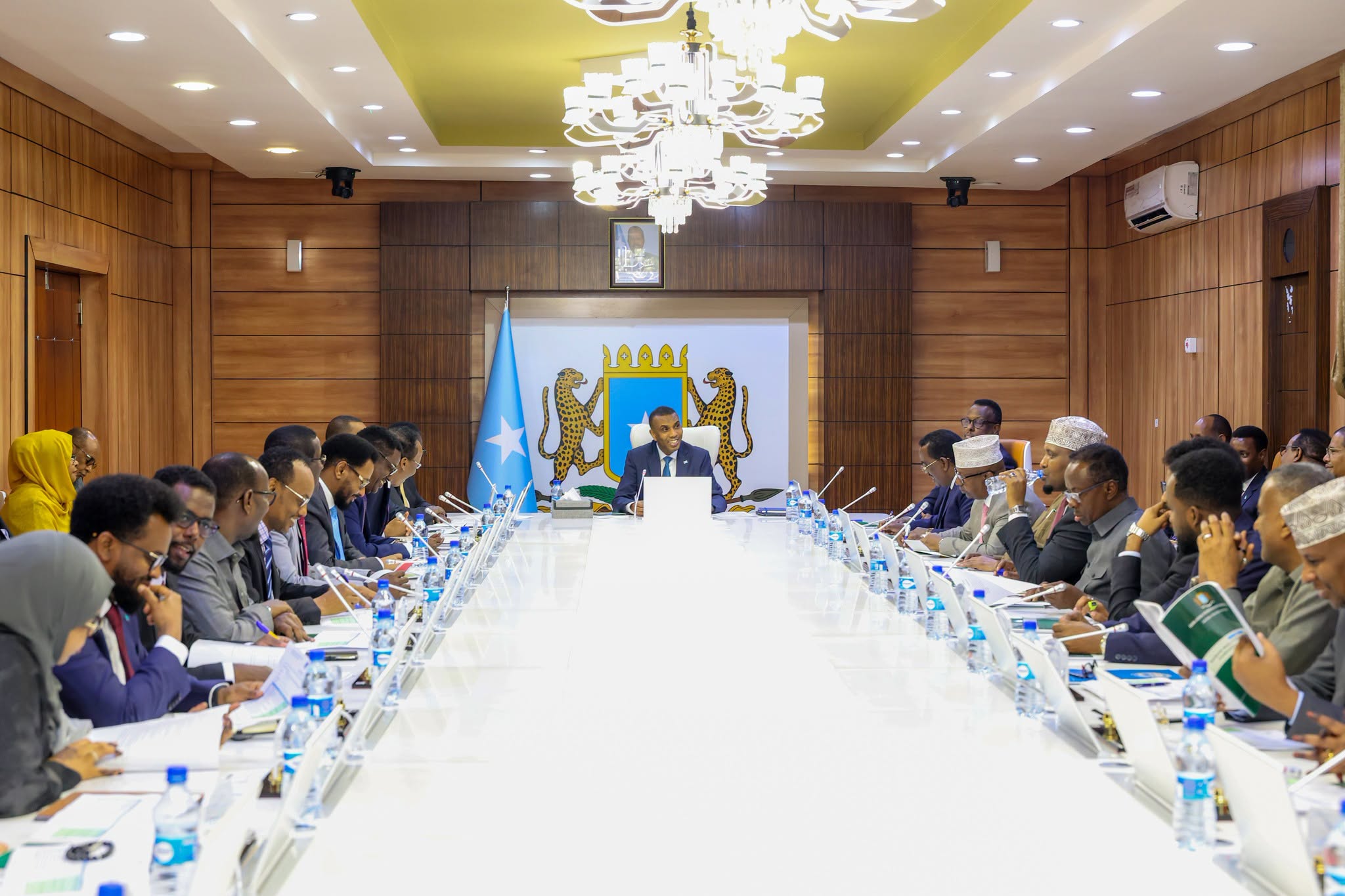
The weekly meeting of the Federal Government’s Council of Ministers was chaired by Prime Minister Hamza Abdi Barre in Mogadishu. Ministers received a briefing on the latest security developments and operations carried out by Somalia’s armed forces, according to a government statement.
The cabinet also heard a report from the Ministry of Finance covering the government’s 2025 annual accounts, economic growth, domestic taxation and reforms to the country’s public financial management system.
The ministry reported that Somalia’s economy grew by 3.1 percent, measured by gross domestic product (GDP), as the government continues efforts to improve revenue collection and strengthen financial institutions.
Barre stressed the importance of achieving greater economic self-reliance by making better use of domestic production and the country’s natural resources.
He called for increased domestic revenue, greater investment and stronger transparency and accountability in the management of public finances. The prime minister also urged government institutions to protect national assets and ensure that public resources are managed efficiently.
Barre praised the Ministry of Finance following an assessment by the Office of the Auditor General, which, according to the government, for the first time rated the administration of public finances at what it described as a “clean opinion” — the highest level indicating sound financial management.
The rating was presented by the government as evidence of progress in strengthening financial governance and improving accountability in the management of public funds.
Somali Report · Newsletter
Your morning briefing on Somalia's biggest stories — politics, security, business, and the people shaping the region's future.
Barre said Somalia’s economy was recovering significantly from difficult conditions in previous years, expressing optimism that continued reforms could eventually help the country achieve greater financial independence.
He said stronger domestic revenues and improved economic management would help reduce Somalia’s dependence on foreign assistance, which has long played an important role in supporting the government and humanitarian programmes in the country.
The prime minister attributed the economic progress to the resilience and efforts of the Somali people, while urging government institutions to maintain the pace of reforms.
Somalia has been pursuing broad economic and financial reforms in recent years, including measures aimed at expanding the domestic tax base, improving public financial management and strengthening oversight of state resources.
The government has also sought to increase domestic revenue as it prepares to assume greater responsibility for financing national institutions and security operations.
The cabinet’s discussions on both security and economic affairs come as Somalia continues its transition toward greater national responsibility for security following years of reliance on international partners.
The government has repeatedly said that stronger institutions, increased domestic revenue and improved financial accountability are essential to building a more self-sufficient Somali state.
About the Author
Ahmed Omar is a senior journalist for Somali Report, based in Mogadishu. He has two decades of experience reporting on Somalia for international and local media. He covers politics, security, governance, business, trade, economic developments and regional affairs.
Somalia condemns Houthi attacks on Saudi Arabia, warns of regional security threat


