Somali President Hassan Sheikh Mohamud joins world leaders at COP31 in Antalya, Turkey, as discussions focus on climate change, global warming and financial support for vulnerable countries.
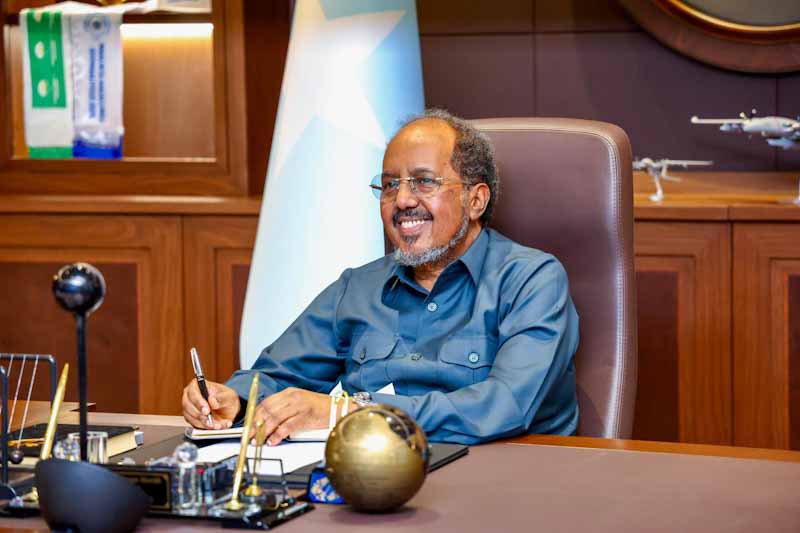 ANTALYA (Somali Report) – Somali President Hassan Sheikh Mohamud is attending the 31st United Nations Climate Change Conference (COP31), which opened in the Turkish city of Antalya on Monday, bringing together world leaders and representatives from across the globe to discuss the growing impact of climate change.
The summit, scheduled to run until November 20, is focusing on the increasingly severe consequences of global warming, the challenges facing vulnerable countries and the need for coordinated international action to address the climate crisis.
According to the conference programme, Hassan Sheikh and other invited leaders are expected to deliver speeches and participate in high-level discussions scheduled for November 11 and 12.
The gathering comes as governments face mounting pressure to translate climate commitments into concrete action, particularly in countries already experiencing the effects of rising temperatures, prolonged droughts, floods and extreme weather events.
The summit's agenda also includes the presentation of scientific reports examining the consequences of rising global temperatures, including deaths linked to extreme heat and health problems reported in parts of Europe this year.
Climate-related health risks have become an increasingly prominent concern, with scientists warning that prolonged exposure to high temperatures poses serious threats to vulnerable populations, particularly older people and those with underlying health conditions.
Meanwhile, sources close to the Somali delegation said Hassan Sheikh is expected to hold bilateral meetings with several participating leaders, including Turkish President Recep Tayyip Erdogan, who extended invitations to heads of state attending the summit.
The anticipated talks could provide an opportunity for Somalia to strengthen its diplomatic engagement with international partners and seek greater support for climate resilience initiatives.
Financial and technical assistance for countries most exposed to climate change is also expected to feature prominently in discussions, particularly for African nations struggling with recurring environmental disasters.
Somali Report · Newsletter
Your morning briefing on Somalia's biggest stories — politics, security, business, and the people shaping the region's future.
Somalia is among the countries considered highly vulnerable to climate change, despite contributing relatively little to global greenhouse gas emissions.
The Horn of Africa nation has experienced repeated cycles of severe drought and devastating floods in recent years, disrupting livelihoods, killing livestock, damaging agricultural production and worsening food insecurity.
Prolonged droughts have placed millions of people at risk, while seasonal flooding has displaced communities, destroyed infrastructure and disrupted access to essential services.
The combination of these environmental shocks has further strained Somalia's fragile economy, which remains heavily dependent on livestock, agriculture and other climate-sensitive livelihoods.
Somali authorities have repeatedly called on the international community to increase financial assistance and support efforts to strengthen the country's capacity to withstand climate-related disasters.
The Somali delegation attending COP31 includes senior federal government officials, among them cabinet ministers and the country's second deputy prime minister.
Somalia's participation comes as the government seeks to attract international investment and technical cooperation to improve climate adaptation, strengthen disaster preparedness and protect vulnerable communities.
For Somalia, the summit offers an opportunity to highlight the disproportionate impact of global warming on countries with limited resources to respond, while pressing wealthier nations and international institutions to deliver on their climate financing commitments.
The outcome of discussions on climate funding and adaptation could prove particularly significant for countries such as Somalia, where environmental shocks have become a major driver of displacement, humanitarian needs and economic instability.
About the Author
Ahmed Omar is a senior journalist for Somali Report, based in Mogadishu. He has two decades of experience reporting on Somalia for international and local media. He covers politics, security, governance, business, trade, economic developments and regional affairs.
