Somalia has released footage alleging that the UAE operated military facilities and weapons networks in Bosaso without federal approval, as diplomatic tensions between Mogadishu and Abu Dhabi deepen.
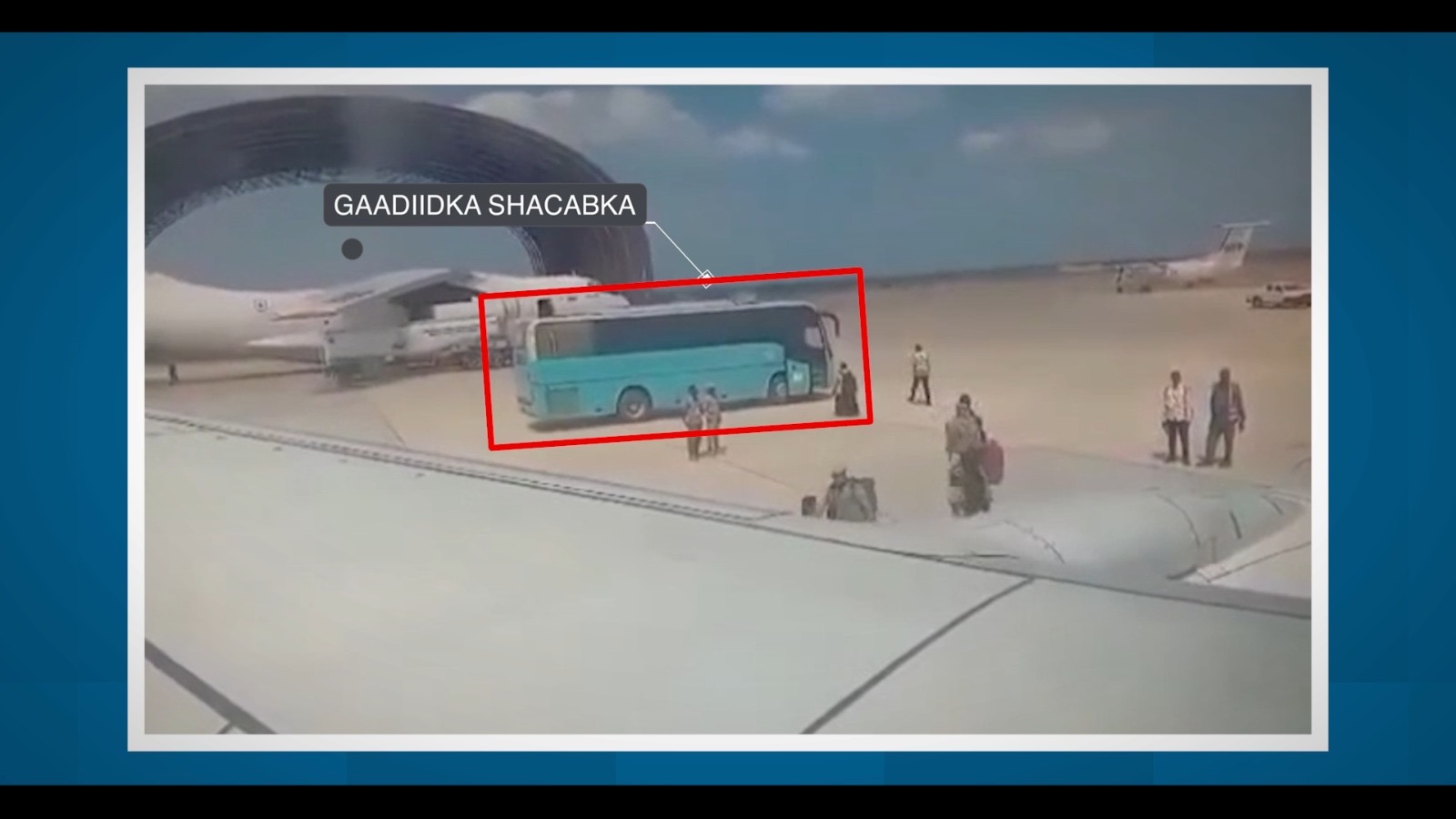 MOGADISHU (Somali Report) — Somalia has released footage alleging that the United Arab Emirates operated military facilities and weapons supply networks in the country without authorization from the federal government, escalating an increasingly bitter diplomatic dispute between Mogadishu and Abu Dhabi.
The Somali National News Agency (SONNA) published the footage late Tuesday, saying it showed Emirati military activities in Bosaso, a strategic port city in the semiautonomous Puntland region.
According to SONNA, the UAE operated military facilities and weapons logistics networks in the city, which it allegedly used as a transit point for foreign fighters linked to the conflict in Sudan.
The agency claimed that more than 6,000 Colombian personnel associated with the Sudanese conflict had passed through Bosaso. It also alleged that hundreds of UAE-chartered flights and maritime shipments had travelled through Somali airspace and territorial waters without authorization from Mogadishu.
The claims could not be independently verified, and the footage's contents and the identities of those allegedly involved have not been independently established.
The allegations come amid a deepening diplomatic crisis between Somalia and the UAE, with the federal government accusing Abu Dhabi of violating the country's sovereignty and interfering in its internal affairs.
Somalia said Friday it would not allow its territory, ports or airspace to be used to fuel conflicts in Yemen, Sudan or any other country.
The UAE has strongly rejected Mogadishu's approach, denouncing what it described as the Somali government's "hostile approach" towards Abu Dhabi.
In a statement, the Emirati government said Somalia's positions were "irresponsible" and risked undermining bilateral relations and the foundations of cooperation between the two countries.
Somali Report · Newsletter
Your morning briefing on Somalia's biggest stories — politics, security, business, and the people shaping the region's future.
Abu Dhabi also accused Mogadishu of attempting to bring domestic political disputes into bilateral relations in a manner that could adversely affect the interests of the two countries' populations.
The diplomatic dispute escalated last Thursday when Somalia ordered the UAE ambassador to leave the country and recalled its own envoy from Abu Dhabi.
The measures followed accusations by Somali President Hassan Sheikh Mohamud on Tuesday that the UAE had established military bases in parts of Somalia and deployed forces operating outside the country's national security framework without federal government approval.
Earlier this year, Mogadishu announced the cancellation of all agreements with the UAE and closed Somali airspace to Emirati military and cargo aircraft, further straining relations.
Relations between the two countries have experienced repeated periods of confrontation and reconciliation, with disagreements over security cooperation, political influence and strategic ports contributing to tensions.
A major diplomatic confrontation occurred in 2018 when Somali authorities seized $9.6 million from an Emirati aircraft at Mogadishu airport. Abu Dhabi condemned the seizure as illegal, saying the money was intended to support the Somali military and training programmes.
The UAE subsequently ended its military training mission in Somalia and rejected allegations of interference in the country's internal affairs.
The latest dispute underscores growing tensions over foreign military activities and regional security arrangements in the Horn of Africa, where Somalia has increasingly sought to assert federal authority over its territory, airspace and security partnerships.
About the Author
Ahmed Omar is a senior journalist for Somali Report, based in Mogadishu. He has two decades of experience reporting on Somalia for international and local media. He covers politics, security, governance, business, trade, economic developments and regional affairs.
