More than ten years after Kenya launched its military intervention in Somalia, the promised security gains remain elusive. While the Kenya Defence Forces helped secure key areas like Kismayo, al-Shabaab has expanded its regional reach, intensifying attacks inside Kenya and deepening questions over the long-term impact of Operation Linda Nchi.
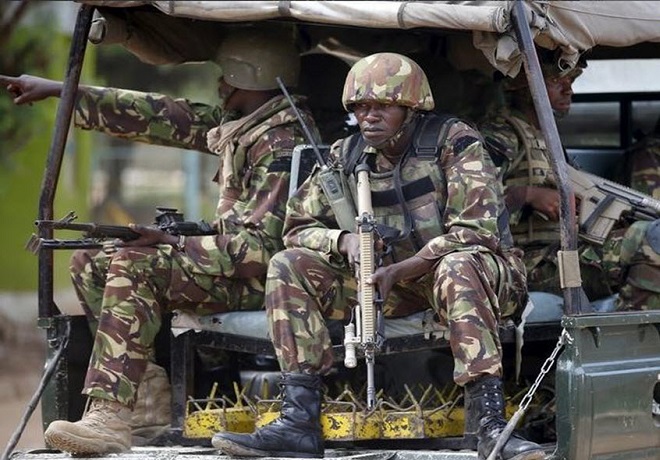 Kenya Defence Forces troops during operations in Somalia under Operation Linda Nchi. (File photo)
NAIROBI (Somali Report) – In early October 2011, the Transitional Federal Government of Somalia was coming to grips with an evolving al-Shabaab that had just conducted the country’s most deadly suicide bombing at the time. On 4 October, a truck bomb detonated outside a compound housing several government ministries, killing up to 82 people, mostly students and their parents gathered at the Ministry of Higher Education following up on scholarship opportunities abroad. Despite all the fanfare that had followed al-Shabaab’s exit from the capital city earlier that year in August, this attack confirmed the group’s continued resistance and adaptation.
The group, which had reverted to its initial guerrilla tactics, claimed responsibility and warned civilians to avoid government installations, even as the attack was widely condemned. On the same day the truck bomb went off in Somalia’s capital, in Nairobi, the Kenya Defence Forces was finally granted the authority to invade Somalia. Twelve days later, on 14 October 2011, the first Kenyan boots crossed into Somalia in Kenya’s first expeditionary warfare campaign dubbed Operation Linda Nchi — Protect the Country.
The deployment of Kenyan forces to Somalia had been rumoured for a while, but the invasion was hurried and communications were poorly prepared. It was announced to Kenyans and the world two days after the fact by the Minister for Internal Security, flanked by his Defence counterpart. Two days later, Kenyan officials travelled to Mogadishu to synchronize messaging with Somali authorities. In a letter dated 17 October 2011 to the UN Security Council, Kenya described the invasion as a “remedial and preemptive action” against recurrent incursions by al-Shabaab and kidnappings of foreign nationals. This justification later shifted to self-defence under Article 51 of the UN Charter. Al-Shabaab denied responsibility for the abductions.
“When the Kenya government and the people of this country feel that they are safe enough from the al-Shabab menace, we shall pull back.” — Gen. Julius Karangi, Chief of General Staff, KDF
Two weeks after the launch of Operation Linda Nchi, General Julius Karangi stated: “This campaign is not time-bound.” Ten years later, the end of the incursion—now integrated into AMISOM—is still not in sight. Nor is the peace or safety Kenya sought. In Somalia, beyond control of Kismayo and influence in Jubaland, the KDF has little to show.
Kenya suffered its greatest military tragedy in 2015 when al-Shabaab attacked El-Adde, killing an estimated 170 soldiers. It was described as one of the deadliest attacks on peacekeepers in modern operations. Inside Kenya, attacks have multiplied, including Westgate Mall (2013), DusitD2 (2019), and the Garissa University massacre (2015), which killed 147 people.
Parallel internal security operations were launched in Kenya to root out al-Shabaab, described as having its “head in Eastleigh and tail in Somalia.” This framing reinforced suspicion of Kenyan Somalis and echoed historical grievances from the Shifta War era (1963–1967), when Somali populations in northern Kenya resisted post-independence arrangements.
Operations such as Usalama Watch (2014) intensified profiling, detentions, and forced relocations, especially in Eastleigh and coastal regions. These measures contributed to alienation and, in some cases, radicalisation, allowing al-Shabaab to expand its influence inside Kenya.
Kenya’s intervention was also shaped by broader strategic interests. The Jubaland Initiative aimed to create a buffer zone in southern Somalia—Gedo, Lower Juba, and Middle Juba—sometimes referred to as “Azania.”
Somali Report · Newsletter
Your morning briefing on Somalia's biggest stories — politics, security, business, and the people shaping the region's future.
Kenya trained Somali militia forces and later supported Ahmed Madobe’s Ras Kamboni movement. In 2012, Kenyan forces and allies captured Kismayo. Madobe later declared himself leader of Jubaland, though initially unrecognised by Somalia’s Federal Government.
Tensions escalated with Ethiopia and Somalia, including disputes over elections and border incidents. Somalia accused Kenya of interfering in internal affairs, while regional mediation efforts under IGAD often failed to resolve disputes.
Critics argue the intervention failed to contain al-Shabaab. Instead, the group expanded its reach, carrying out repeated attacks in Kenya and evolving into a transnational threat.
Kenya has also faced allegations of illicit trade involving charcoal and sugar in Somalia, as well as accusations of aerial bombardments causing civilian casualties and infrastructure damage in border regions.
Despite this, the KDF is credited with contributing to stabilisation efforts in Somalia, particularly in securing Kismayo and weakening al-Shabaab strongholds. However, the broader relationship between Kenya and Somalia has deteriorated, marked by diplomatic disputes, maritime disagreements, and shifting alliances.
Kenya later transitioned its forces into AMISOM in 2012, sharing the financial burden with international partners. Discussions continue about the future of peacekeeping missions, with Somalia increasingly advocating for a Somali-led security architecture.
Ultimately, Somalia’s evolving security vision challenges the long-term presence of foreign troops, including Kenya’s stated position that withdrawal depends on Kenya’s own sense of security.
— Samira Gaid is a regional security analyst and founder and director of Balqiis Insights, a think tank dedicated to advancing peace and security in the Horn of Africa. This piece was originally published on October, 2021 in The Elephant.


