African Union member states are reviewing the future of AUSSOM as funding shortfalls and the impending loss of UN logistical support fuel discussions over how and when the Somalia peacekeeping mission could eventually come to an end.
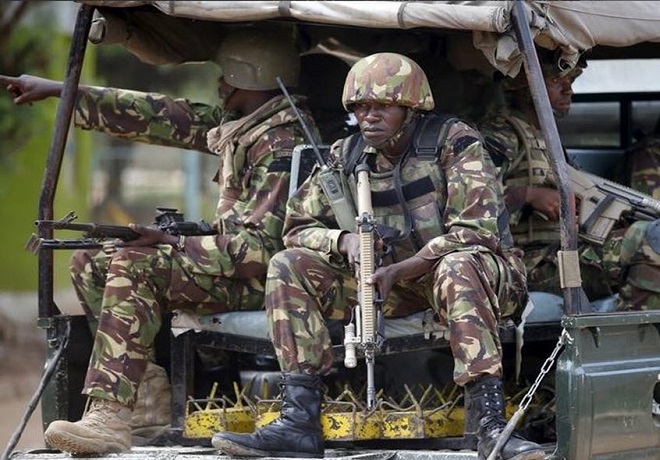 MOGADISHU (Somali Report) — The African Union has completed the first phase of strategic consultations on the future of its military presence in Somalia, marking what appears to be the clearest indication yet that African governments are preparing for the eventual end of the African Union Support and Stabilisation Mission in Somalia (AUSSOM).
According to an African Union Commission invitation seen by Somali Report, technical and strategic consultations began in Addis Ababa on July 22-24 following the AU Peace and Security Council’s 22nd Informal Consultative Meeting on July 8, which established a task force to examine options for the mission’s future.
The consultations brought together representatives from the Federal Government of Somalia, AUSSOM, the United Nations Support Office in Somalia (UNSOS), the United Nations Office to the African Union (UNOAU), troop- and police-contributing countries and members of the AU Military Staff Committee.
The AU said the discussions reviewed the operational, political, financial, legal and force structure implications of future AU engagement in Somalia, alongside transition arrangements, implementation requirements, risks and opportunities.
The findings from Addis Ababa will feed into meetings of AUSSOM chiefs of defence and police, defence ministers and an extraordinary summit of troop- and police-contributing countries in Kampala on July 30-31 before recommendations are submitted to AU policy organs.
The consultations come as several African governments are openly questioning how much longer the continent can sustain the costly peace operation.
During an emergency meeting of military advisers to the AU Peace and Security Council, Cameroon and Gabon argued that every peace support operation must eventually come to an end and urged Somalia to accelerate the development of security institutions capable of operating without foreign troops.
Their intervention reflects a notable shift in the debate. Rather than focusing solely on securing more international funding, AU member states are increasingly discussing how to manage an orderly transition out of Somalia while avoiding a dangerous security vacuum.
Financial pressure has become the central concern.
The United States has informed the African Union that it will no longer support the continuation of the UN logistical package provided through UNSOS after December 31, 2026. AU officials have warned that losing the logistics operation would leave AUSSOM facing severe operational constraints.
UNSOS provides the mission with essential services, including food, fuel, aviation support, strategic transport, medical evacuation and equipment. Without that support, officials fear the mission would struggle to sustain bases, reinforce frontline positions or evacuate casualties.
AUSSOM replaced the previous AU mission on January 1, 2025, with a mandate to support Somali security forces against Al-Shabaab and gradually transfer security responsibilities to national institutions.
However, financing the mission has become increasingly difficult.
Somali Report · Newsletter
Your morning briefing on Somalia's biggest stories — politics, security, business, and the people shaping the region's future.
The AU requires roughly $190 million to reimburse troops during the 2025-26 financial year but has secured only about $120 million in confirmed pledges. Meanwhile, uncertainty surrounds the future of the UN logistics package worth approximately $500 million, which underpins the mission’s operations.
Military planners have reportedly examined three broad scenarios: a phased withdrawal of AU forces, continued deployment supported by bilateral donors replacing UNSOS, or a smaller regional force financed through bilateral or hybrid arrangements.
Growing concern over funding has made a managed withdrawal appear increasingly realistic to many member states.
Uganda, AUSSOM’s largest troop contributor since the first AU deployment in 2007, has also called for a clearer long-term strategy, while Ethiopia has reiterated its commitment to supporting Somalia’s security efforts.
Despite the discussions, officials acknowledge that any rapid withdrawal would carry significant risks.
Al-Shabaab continues to control or influence large rural areas and regularly launches attacks against Somali security forces, AU positions and government facilities. Although Somalia’s security forces have expanded, analysts say they still lack the logistics and operational capacity needed to independently secure the country.
The debate over AUSSOM’s future comes as former Somali National Security Adviser Hussein Moalim warned that Somalia must urgently prepare to secure itself without indefinite reliance on foreign troops.
Speaking in Mogadishu, Moalim said international partners have played a vital role in supporting Somalia’s fight against Al-Shabaab but argued that successive governments have failed to build a sustainable national security system capable of standing on its own.
“Governance cannot be dependent on any foreigner,” Moalim said. “It is unfortunate that we have not done the work that we needed to do.”
His remarks came weeks after the United States informed the African Union that it would oppose continued United Nations logistical support for AUSSOM beyond December 31, 2026, a decision that has intensified concerns over the mission’s long-term viability.
The nearly 12,000-strong AUSSOM mission depends heavily on the United Nations Support Office in Somalia (UNSOS) for food, fuel, water, medical evacuation, transport and other logistical support. AU officials have warned that without a replacement funding mechanism, the mission would face severe operational challenges.
For now, the Addis Ababa consultations do not signal an immediate withdrawal of AUSSOM. Instead, they mark the beginning of what could become the African Union’s most consequential transition planning process in Somalia since peacekeepers first deployed in 2007.
As donor fatigue grows and international funding becomes increasingly uncertain, the debate has shifted from whether AUSSOM should remain indefinitely to how its eventual departure can be managed without creating a security vacuum that Al-Shabaab could exploit. Moalim’s warning underscores the central challenge facing Somali leaders: building national security institutions capable of standing on their own before international support inevitably comes to an end.
About the Author
Fatuma Taxadar Yusuf is the Editor-in-Chief of Somali Report. She was the first woman to serve as an editor and media managing director in Somalia’s Puntland State. Previously, she worked with the BBC World Service and other leading media organizations in Somalia. She also serves as Deputy Chairperson of the Somalia Media Council, an independent body that regulates media standards and professional conduct in Somalia.
Several Killed as Somali and Oromia Forces Clash in Ethiopia’s Moyale


