Somalia's startup ecosystem needs more than grants. Discover why customer-driven entrepreneurship, patient capital, and faster startup financing are key to sustainable growth.
 AI-generated illustration | Somali Report
MOGADISHU (Somali Report) —This is not an argument against NGOs, innovation hubs, or grants. Somalia presents incredibly tough conditions for entrepreneurs;limited capital, weak legal protections, high risks, inconsistent infrastructure, and a regulatory environment that makes it difficult to start, operate, or recover from a failed business. NGOs and innovation hubs have frequently stepped into gaps left empty by both the state and the market. Many have supported young people, offered essential training, and given early stage ideas a fighting chance.
Nor do I claim that my own journey is a blueprint for everyone else. Many Somali entrepreneurs have taken different routes, including incubation programmes, grants and built highly successful andlasting businesses. There are also many people far more experienced than me in this ecosystem.
But from my own experience, based on what I have seen in the last 10 years, I have become concerned about a growing systemic risk: when funding, training, and recognition are organised primarily around donor requirements rather than customer needs, we accidentally create an artificial innovation ecosystem.
The Honest Investor
After we exited our startup Gulivery, a last-mile delivery service provider, we began building BIXI, a payment gateway, and later our first product, eDir, an inter-wallet payment app.
What that intense period of building taught us was simple,customers are the most honest investors in the world. They do not care about your “theory of change,” your workshop certificates, or how polished your slide deck is. They use your product, pay for it, and return or they don’t.
With BIXI, we focused entirely on everyday pain points: how people move money, pay bills easily, connect digital wallets, and reduce friction. There were attractive workshops, innovation competitions, and grant opportunities all around us, but my co-founders Abdi Shakur Shidane and Jamal Jama chose to channel our energy directly into our users.
I am incredibly grateful we did. Otherwise, BIXI might have simply become another well presented case study in an NGO report: a great idea, a high-profile launch event, a few branded T-shirts, and a final conference photo with nothing left after the funding cycle ended.
That is the hidden trap behind what we call Grantpreneurship. A grantpreneur is not necessarily dishonest, lazy, or badly intentioned. Often, they are bright, ambitious, and hardworking people responding rationally to the opportunities available to them. But the current ecosystem can reward becoming excellent at proposals, donor pitches, and development buzzwords like resilience, inclusion, capacity-building and scalable impact long before it rewards finding ten customers willing to pay for your product.
When international NGOs become the primary buyers, facilitators, and judges of local innovation, it is natural for entrepreneurs to shape their ideas around what the programme wants to fund. It is not a moral failure by either side. It is simply how incentives work.
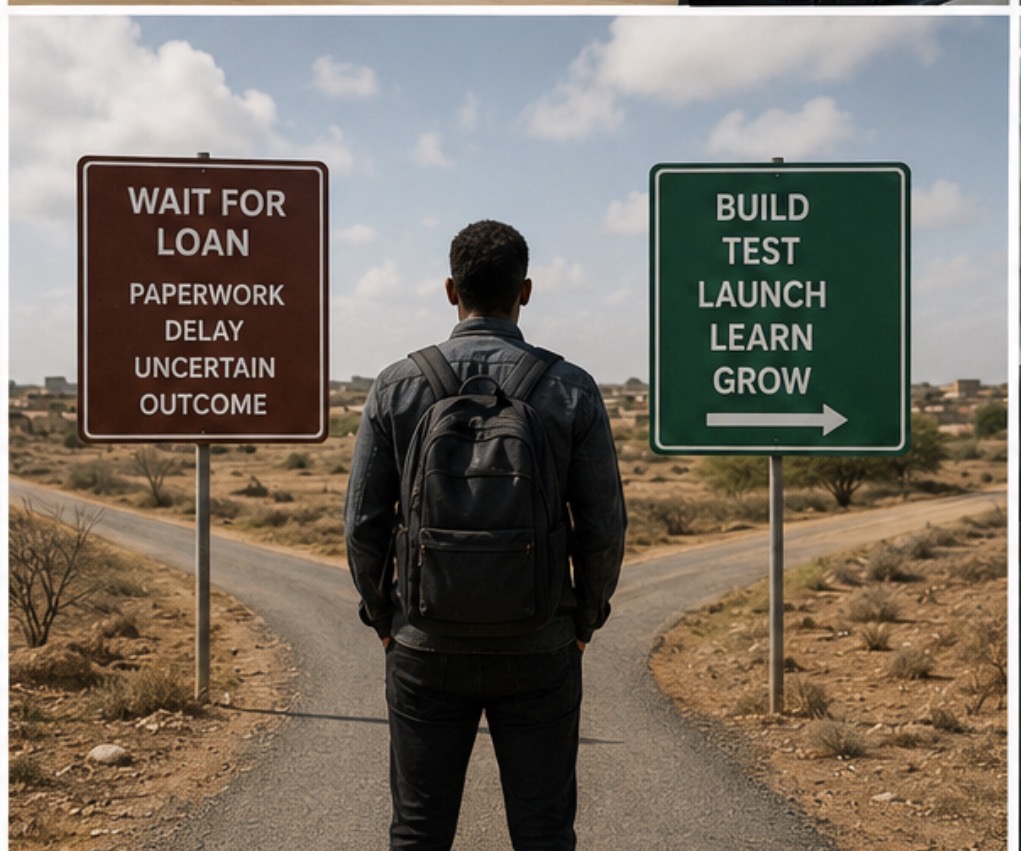
But innovation is strongest when it begins with a real local pain point and an actual customer. I saw the cost of this dynamic a few years ago with a young entrepreneur who joined an incubation programme run by a local hub. The training was delayed for months while the hub worked through bureaucratic approvals with the funding NGO. When the sessions finally ended, he was told he could access a bank loan as a certified graduate.
So he waited again, months drifted away between the training, the paperwork, the bank, and the NGO. Meanwhile, an independent competitor noticed the exact same market gap, launched a basic version of the service immediately, found customers, and began generating revenue.By the time our incubated entrepreneur was finally authorised to move, the market opportunity had vanished. He never received the loan. Eventually, he gave up and looked for a job.
This failure did not happen because the hub or the NGO wanted him to fail. It happened because a process designed to protect him was simply too slow for the market he was trying to enter. Markets do not wait for donor approvals, procurement procedures, or the next steering committee meeting. In the real world, the builder who moves quickly, tests an imperfect product, and learns directly from customers will often have the advantage.
The Distorted Labour Market
 AI-generated illustration | Somali Report
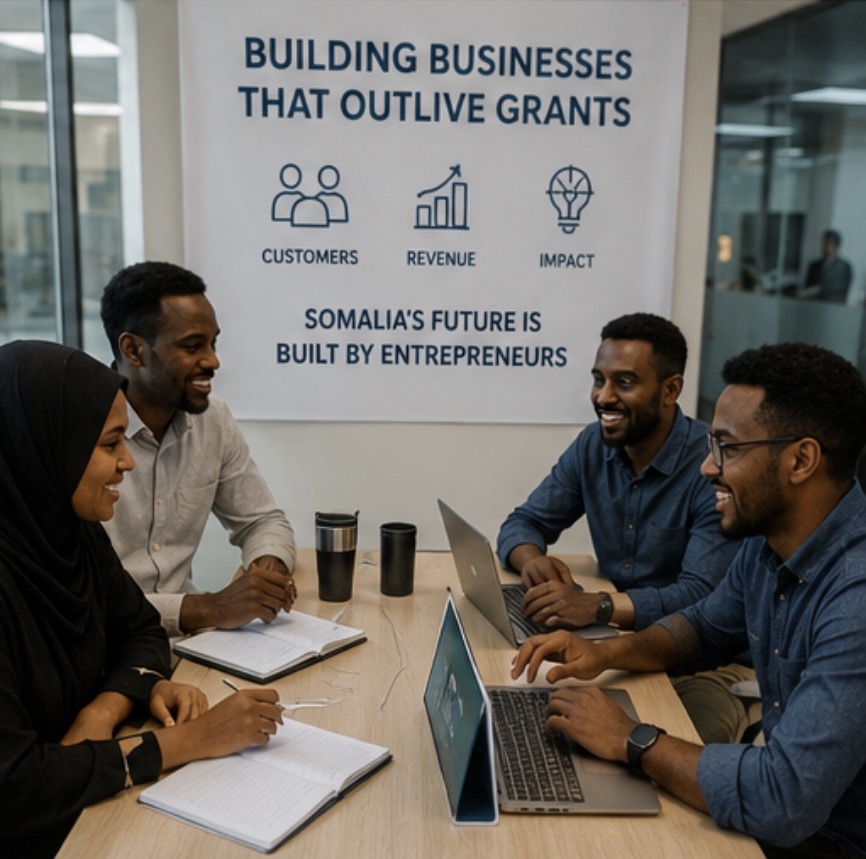
This donor centric model does more than slow down individual founders; it can also distort our local labour market.
Somali Report · Newsletter
Your morning briefing on Somalia's biggest stories — politics, security, business, and the people shaping the region's future.
When trying to recruit talented, highly educated professionals for our own tech ventures, we consistently found that toptier local talent preferred NGO jobs over startups. Objectively, this makes sense. People have families, responsibilities, and bills to pay. An NGO position offers a level of stability, compensation, and structured progression that a young, volatile company trying to bootstrap its first dollars simply cannot match.
At scale, however, this can create a serious talent drain. The brilliant minds capable of building Somalia’s next logistics giant, fintech powerhouse, or high growth agricultural platform are often pulled into implementing short term, externally funded projects. This is not a critique of their choices; it is a direct reflection of oureconomy.
Interestingly, as the global aid landscape has begun to shift, many friends who chose the NGO sector for years are now looking seriously at entrepreneurship. While reduced international aid carries a devastating human cost for vulnerable populations who rely on humanitarian services, it should also force a critical economic conversation, how do we build an economy where talented Somalis have more than one credible path where they can choose to build, sell, employ, and potentially scale?
A Healthier Path: Reimagining Capital and Growth
 AI-generated illustration | Somali Report
Somalia does not need fewer people doing humanitarian work. It needs a vastly stronger commercial economy running alongside it. Grants can be useful fuel, innovation hubs can open doors, and NGOs can give early concepts hope. But the ultimate goal must be to build enterprises that outlive the grant cycle, serving customers and paying salaries long after the workshop coffee, banners, and per diems have disappeared.
To do this, we have to rethink how we deploy development capital. Consider Gargaara, Somalia’s apex SME financing facility. Backed by international development partners, Gargaara was created with an important purpose: increasing access to finance for small and medium sized enterprises through commercial financial institutions.
That work matters, and Somalia does not need to abandon SME lending. Established businesses need working capital, equipment finance, and expansion funding. But from experience, Somali banks are naturally built for businesses with collateral, operating history, and predictable cash flow, not someone with a good idea, a laptop, and no uncle willing to guarantee a loan.
That leaves a major gap for early-stage startup founders. The young entrepreneur I mentioned earlier is a good example. He had spotted a real market gap and completed his incubation training but then spent months waiting for a bank loan that never arrived. During that wait, someone else entered the market, launched, found customers, and began making revenue. By the time he was ready to move, the opportunity had moved on without him.
This is where Somalia needs a complementary startup-finance routes. Imagine if that same young man had entered a Somalidesigned accelerator and seed fund instead (like Y-Combinator or TechStarter). Rather than waiting through endless approvals for debt he might never receive, he could have received a small, fast investment to build and test his product.
In return, the accelerator could take a modest equity stake or use a Sharia-compliant profit-sharing or a revenue based arrangement. It would not just hand him money and wish him luck. It would become a partner: sharing some risk, helping him sharpen the idea, opening doors to mentors and customers, and making sure he gets to market while the market is still there.
There would be no guarantee of success. That is entrepreneurship. But he would have had a real chance to compete, adapt, and perhaps become the business that captured that market.
The aim is not to replace commercial banks or dismiss Gargaara’swork. It is to serve founders traditional finance is not designed for: people who need capital, practical support, and speed not another certificate confirming that they have attended a workshop.
Instead of asking pre-revenue founders to prove they are already safe borrowers, we should give the strongest ones a fair chance to become successful businesses. By turning part of development capital into patient venture fuel, Somalia can invest not only in temporary projects, but in the entrepreneurs who will build its permanent commercial future.
— Deeq M Afrika is the Co-Founder and CEO of BIXI, creators of eDir, Somalia’s largest mobile money exchange platform. A former Somalia national team footballer, he writes on entrepreneurship, governance, technology, and development, with a focus on practical solutions for Somalia’s future.
My Country, Somaliland, Recognized


