Somalia's electoral commission has delayed the Galmudug regional and local elections for a second time in less than three weeks, citing overwhelming requests from political parties seeking more time to finalize candidates, campaign and complete logistical preparations ahead of the controversial vote.
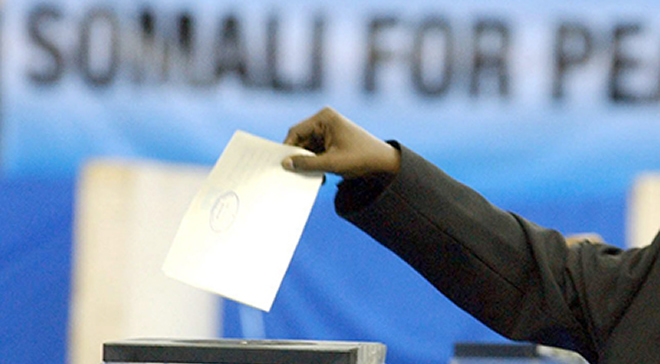 DHUSAMAREB (Somali Report) — Somalia's National Independent Electoral and Boundaries Commission (NIEBC) has postponed the highly contested elections in Galmudug State for a second time, pushing the vote back five days after political parties appealed for additional time to complete preparations.
In a statement issued Wednesday in Dhusamareb, the commission announced that elections for the Galmudug House of Representatives and local councils, previously scheduled for July 25, will now take place on July 30, 2026.
The electoral body said the decision followed formal requests submitted by participating political organizations, which argued that they needed more time to organize campaign activities, finalize candidate documentation and coordinate operations across Galmudug's vast territory.
"Recognizing the central role political parties play in delivering an inclusive and credible election, the commission has decided to postpone the voting," the NIEBC said, adding that the extension would allow all contestants to participate under fair and orderly conditions.
The commission also pledged to continue guiding political parties on electoral procedures and said it would ensure voting and vote management are conducted in accordance with Somalia's electoral laws.
The latest postponement comes only a day after the commission acknowledged that it was reviewing a request from political parties but insisted no final decision had yet been made.
Speaking on Tuesday, NIEBC Chairman Abdikarim Ahmed Hassan said more than 95 percent of registered political parties participating in the election had requested a delay, citing logistical and operational challenges.
According to the chairman, parties said they were struggling to submit candidate lists on time while campaigning across Galmudug's widely dispersed communities, many of which can only be reached by air rather than road. They also requested additional personnel to support election preparations.
At the time, Hassan maintained that the commission remained operationally ready for the July 25 vote and said election staff training was scheduled to begin on Wednesday while the request was under consideration.
Somali Report · Newsletter
Your morning briefing on Somalia's biggest stories — politics, security, business, and the people shaping the region's future.
The commission has spent months preparing for what would be one of Somalia's most ambitious direct elections. More than 200 polling stations have been designated across Galmudug, with over 200,000 registered voters, most of whom have already collected voter identification cards. Security agencies have also supported voter registration and card distribution over the past eight months.
Election officials have previously said staffing, polling materials and security arrangements were in place, while warning that only authorized commission officials are permitted to announce election results or publish official electoral information.
Wednesday's announcement marks the second delay in the electoral timetable this month.
On July 6, the commission postponed the Galmudug regional parliament and local council elections from July 20 to July 25, saying additional time was needed to complete technical and administrative preparations following consultations with political parties.
At the time, the commission also urged parties to expedite the submission of candidate lists and called on Somalia's Ministry of Interior to accelerate training and civic education for newly elected local council members.
The repeated postponements come against the backdrop of a broader political dispute over Somalia's electoral model, with disagreements persisting between the federal government, opposition figures and some regional leaders over the implementation of one-person, one-vote elections.
Political tensions in Galmudug had intensified in recent months before easing after President Ahmed Abdi Kariye, commonly known as Qoor-Qoor, announced he would not seek another term following negotiations with federal officials. He said the decision was intended to help resolve differences over the electoral process and support a unified national approach to the country's political transition.
Despite the latest postponement, the federal government continues to present the Galmudug elections as a key milestone in its plan to introduce simultaneous direct elections for regional legislatures and local councils, a reform that remains one of the most politically contested issues in Somalia's ongoing democratic transition.
About the Author
Fatuma Taxadar Yusuf is the Editor-in-Chief of Somali Report. She was the first woman to serve as an editor and media managing director in Somalia’s Puntland State. Previously, she worked with the BBC World Service and other leading media organizations in Somalia. She also serves as Deputy Chairperson of the Somalia Media Council, an independent body that regulates media standards and professional conduct in Somalia.
Several Killed as Somali and Oromia Forces Clash in Ethiopia’s Moyale


