Somalia’s Interior Minister Ali Yusuf Ali (Ali Hosh) has rejected opposition calls for the formation of an inclusive Transitional Council, insisting the country has entered a new constitutional era focused on one-person, one-vote elections and warning there will be no return to the transitional political system.
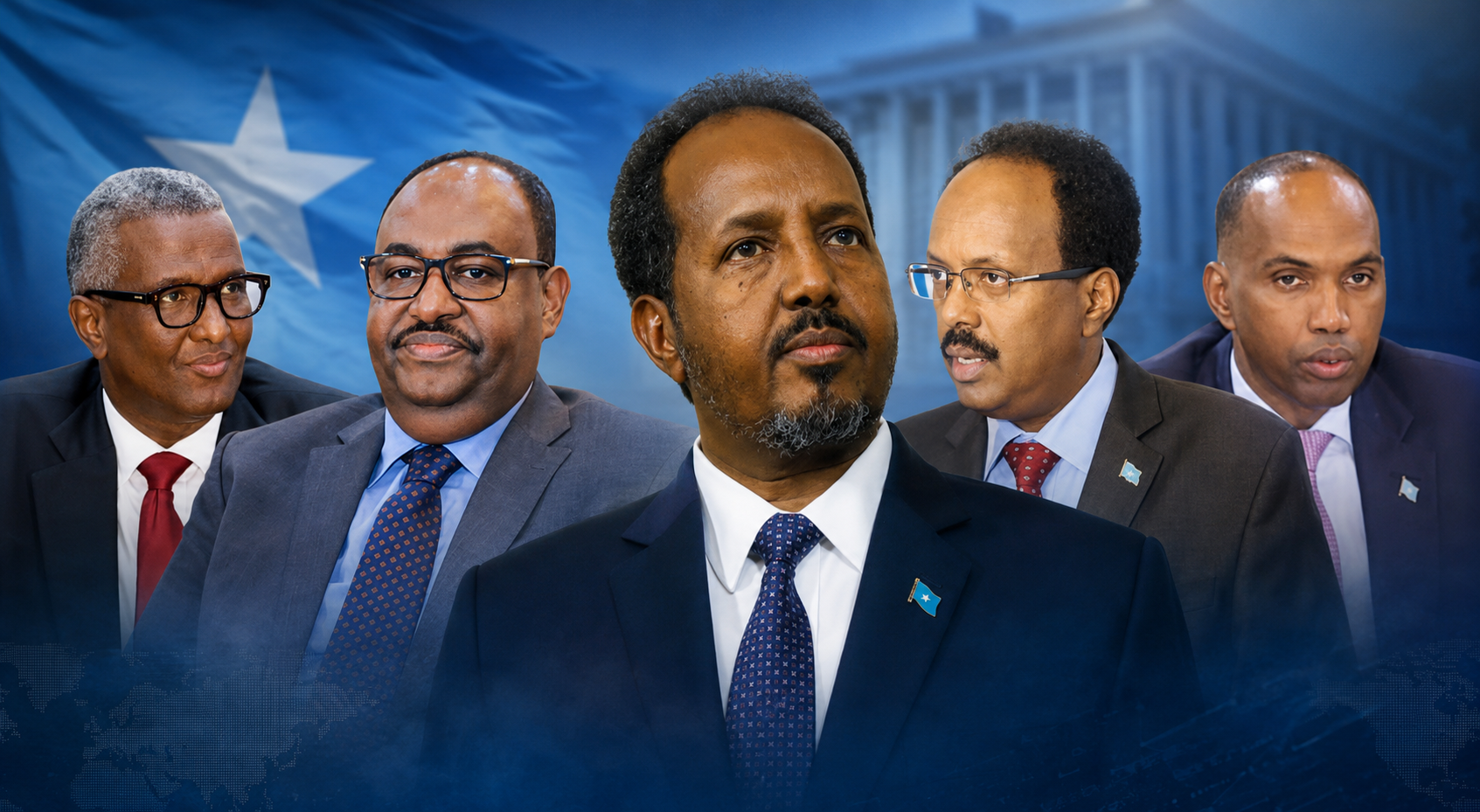 MOGADISHU, (Somali Report) — Somalia’s Interior, Federal Affairs and Reconciliation Minister Ali Yusuf Ali, widely known as Ali Hosh, has firmly rejected opposition demands for the establishment of a Transitional Council to oversee the country’s constitutional and electoral process, arguing that Somalia has permanently moved beyond the era of transitional governments.
The minister’s remarks come amid escalating political tensions following a letter issued by the Somali Future Council, an opposition coalition comprising former President Sharif Sheikh Ahmed, former prime ministers, senior opposition politicians, and the leaders of Puntland and Jubaland. The group called for the creation of an inclusive Transitional Council to manage Somalia’s political transition until new national institutions are established through consensus.
Responding to the proposal, Ali Hosh said the opposition had failed to prevail during political negotiations over Somalia’s electoral framework and was now promoting ideas that would reverse years of constitutional progress.
"The last six governments all came to power through indirect elections during Somalia’s transitional political period. That chapter is over," the minister said in a statement. "The Somali people are now moving toward a constitutional system based on one person, one vote, and there will be no return to transitional arrangements."
He stressed that Somalia had entered what he described as a new phase centered on completing the constitution and implementing direct elections, arguing that democratic legitimacy must come directly from Somali citizens rather than negotiated interim political settlements.
Ali Hosh acknowledged that politicians are free to express their views under Somalia’s democratic framework but said political proposals must strengthen state institutions rather than undermine them.
"Political differences are normal in any democracy," he said. "However, proposals should contribute to national progress and protect Somalia’s statehood instead of returning the country to previous political stages."
His comments were widely viewed as the federal government’s strongest public response yet to the opposition’s proposal.
Somali Report · Newsletter
Your morning briefing on Somalia's biggest stories — politics, security, business, and the people shaping the region's future.
The Somali Future Council has argued that the country is facing a constitutional and political vacuum, claiming President Hassan Sheikh Mohamud’s constitutional mandate expired in May while Parliament’s term ended in April 2026. The council says Somalia requires a broad political agreement and an inclusive Transitional Council capable of rebuilding consensus, safeguarding state institutions and overseeing constitutional and electoral reforms.
In an open letter addressed to African leaders whose countries contribute troops to the African Union Support and Stabilization Mission in Somalia (AUSSOM), the opposition coalition warned that continued political divisions could undermine counterterrorism operations against al-Shabab and ISIS, weaken national institutions and erode international confidence in Somalia’s political leadership.
The council also linked the current political impasse to uncertainty surrounding international support for AUSSOM and the United Nations Support Office in Somalia (UNSOS), arguing that durable security cannot be achieved without an inclusive political settlement.
The disagreement comes as government and opposition representatives continue Turkish-mediated negotiations aimed at resolving disputes over Somalia’s electoral model, constitutional amendments and election management mechanisms.
Although participants have reportedly agreed on preserving women’s representation and maintaining the principle of one-person, one-vote elections, major disagreements remain over whether elections should be managed solely by the National Independent Electoral and Boundaries Commission or jointly with federal member states. The sides also remain divided over whether constitutional amendments approved this year should form the legal basis for future elections.
Diplomatic sources have indicated that several international partners are urging Somali political leaders to reach a comprehensive political agreement before the end of August, warning that prolonged political uncertainty could affect future international cooperation and development support.
Despite mounting domestic and international pressure for compromise, the federal government continues to insist that Somalia’s democratic transition cannot be achieved by returning to transitional institutions, while opposition leaders maintain that an inclusive political settlement remains essential before nationwide elections can proceed.
The dispute highlights the widening divide over how Somalia should complete its transition to universal suffrage, with both sides agreeing on the goal of direct elections but remaining deeply divided over the constitutional and political roadmap required to achieve it.
About the Author
Bashir Guhad is a reporter at Somali Report covering politics, security, business, and trade across the Somali region.
Somalia joins IGAD ministers for regional talks in Djibouti


