Somali Prime Minister Hamza Abdi Barre has ordered cabinet ministers and senior government officials to use only Somali passports for official travel, following recent disputes involving senior officials and Kenyan travel documents.
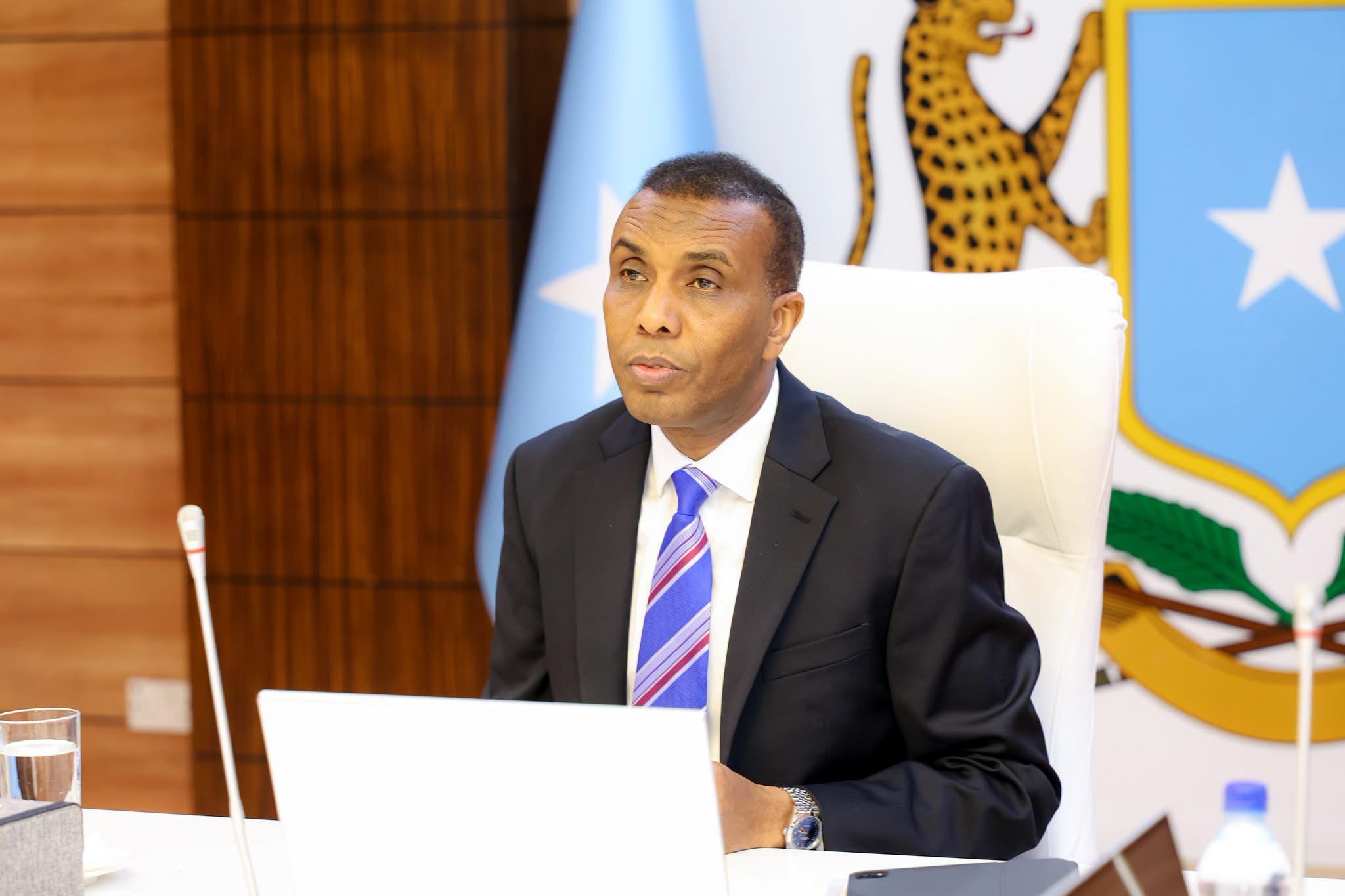 Mogadishu (Somali Report) — Somali Prime Minister Hamza Abdi Barre has ordered cabinet ministers and senior government officials to use only Somali passports when travelling on official government business, reinforcing a government policy aimed at emphasizing national identity among senior officeholders.
The directive was announced during the weekly Cabinet meeting in Mogadishu on Thursday, days after President Hassan Sheikh Mohamud instructed senior government officials holding foreign passports to surrender them or leave public office.
“Ministers and senior government officials must travel using the Federal Government of Somalia passport to uphold the dignity, prestige and reputation of the Somali state,” Barre told the Cabinet, according to the government.
The directive follows a series of disputes involving senior Somali officials and travel documents, particularly in relation to Kenya.
Two senior Somali officials have reportedly faced difficulties entering Kenya in recent months over questions surrounding the travel documents they were carrying. The incidents have brought renewed attention to the issue of dual citizenship and the use of foreign passports by Somali officials holding senior positions in government.
Passport Policy Gains Political Significance
President Hassan Sheikh recently ordered ministers and other senior government officials holding Kenyan passports to surrender those documents or resign from their government positions.
The move was presented as an effort to ensure that senior officeholders represent Somalia through its national identity while serving in public office.
Deputy Prime Minister Jibril Abdirashid Haji subsequently announced that he had voluntarily returned his Kenyan passport to Kenyan authorities. He described the decision as an administrative measure intended to ensure transparency and remove questions surrounding his official responsibilities.
Abdirashid said the passport had been genuine and lawfully obtained and emphasized that returning it was not prompted by a request from Kenyan authorities.
The decision followed his deportation from Nairobi in late June after Kenyan authorities denied him entry at Jomo Kenyatta International Airport. The incident triggered a diplomatic dispute and competing claims over his travel documents and alleged security concerns.
Abdirashid rejected allegations that he had engaged in activities threatening the security or sovereignty of Kenya or Somalia.
Kenyan authorities have not publicly provided a detailed explanation of the wider circumstances surrounding the incident.
New Somali Passport Under Review
During Thursday’s Cabinet meeting, ministers also reviewed progress on the rollout of Somalia’s third-generation polycarbonate electronic passport.
Somali Report · Newsletter
Your morning briefing on Somalia's biggest stories — politics, security, business, and the people shaping the region's future.
The government says the new passport is designed to strengthen the security of Somali travel documents, reduce the risk of forgery and modernize passport services.
The electronic passport initiative forms part of broader government efforts to strengthen state institutions and improve the delivery of public services.
For the government, encouraging senior officials to use Somali passports is also intended to demonstrate confidence in national institutions and symbols.
Barre praised Abdirashid for returning his Kenyan passport and urged other senior officials to similarly prioritize Somali travel documents when representing the country abroad.
Kenya-Somalia Relations
The passport controversy has unfolded against the backdrop of Somalia and Kenya’s longstanding political, economic and security relationship.
Kenya hosts a large Somali community and has played an important role in humanitarian assistance, regional security and efforts to address the threat posed by al-Shabaab. The two countries have also sought to deepen cooperation on trade, security, border management and regional integration.
However, recent incidents involving Somali officials have added sensitivity to relations between Mogadishu and Nairobi.
Last week, Somalia’s State Minister at the Office of the Presidency, Abshir Mohamed Ahmed, widely known as Abshir Bukhari, was also reportedly deported by Kenyan authorities after being denied entry into Nairobi. Kenyan authorities have not publicly explained the legal basis for the decision.
The incidents have raised questions about whether disputes over travel documents could have wider diplomatic consequences.
Somalia’s government has nevertheless continued to emphasize the importance of its relationship with Kenya.
The latest directive from the prime minister appears to place the issue within a broader effort to reinforce the use of Somali national documents by senior government officials.
It also comes as Somalia seeks to strengthen its state institutions and project a clearer national identity internationally.
For now, the government has not indicated that the directive applies to every Somali citizen holding multiple nationalities. Instead, the immediate focus is on cabinet ministers and senior officials travelling in their official capacity.
The government’s implementation of the policy, and whether additional restrictions on foreign passports will follow, remains to be seen.
About the Author
Fatuma Taxadar Yusuf is the Editor-in-Chief of Somali Report. She was the first woman to serve as an editor and media managing director in Somalia’s Puntland State. Previously, she worked with the BBC World Service and other leading media organizations in Somalia. She also serves as Deputy Chairperson of the Somalia Media Council, an independent body that regulates media standards and professional conduct in Somalia.
Somali President Hassan Sheikh heads to New York for UN General Assembly


