Somalia’s Deputy Prime Minister Jibril Abdirashid Haji has announced that he has voluntarily returned his Kenyan passport, describing the move as an administrative step to ensure transparency and reaffirm his loyalty to Somalia following his controversial deportation from Nairobi.
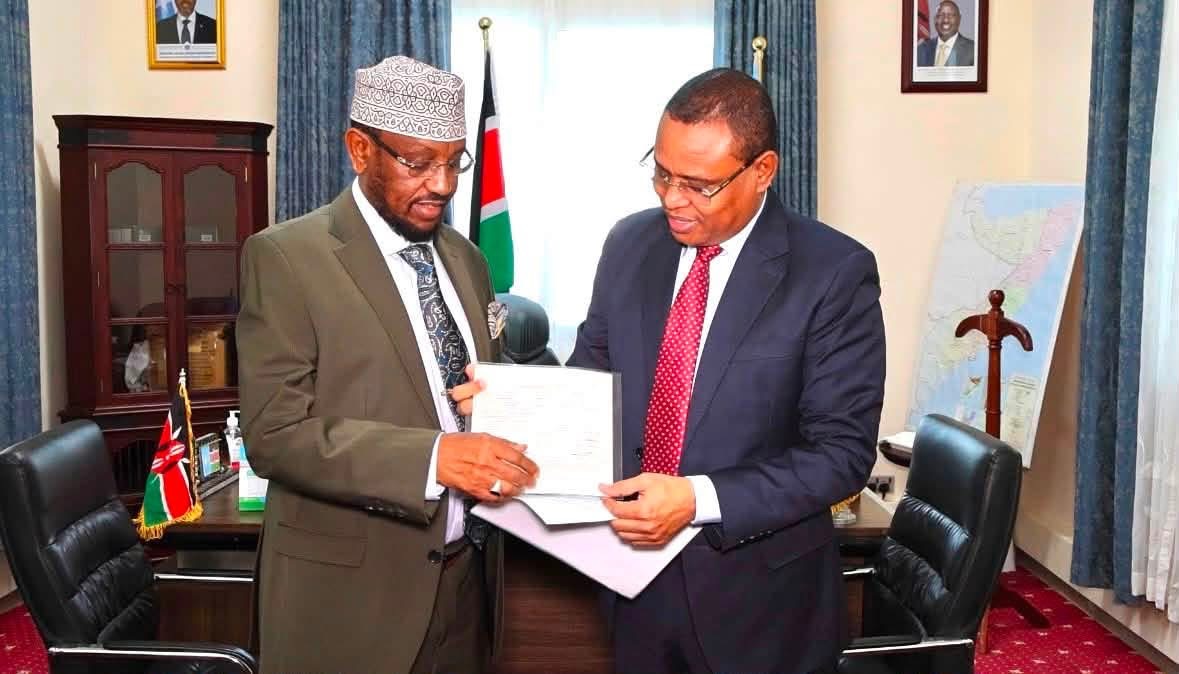 MOGADISHU (Somali Report) — Somalia’s Deputy Prime Minister Jibril Abdirashid Haji has announced that he has voluntarily returned his Kenyan passport to Kenyan authorities, saying the decision was made to uphold transparency in public office and remove any ambiguity surrounding his official responsibilities.
In a statement released on Monday, Abdirashid said the passport had been “genuine and lawfully obtained” and that its issuance and use complied with Kenyan laws and procedures. He stressed that returning the document was a voluntary administrative decision rather than the result of any legal dispute or request by Kenyan authorities.
“To uphold the highest principles of public service and ensure complete clarity regarding my official responsibilities, I have voluntarily returned this passport to the competent authorities of the Republic of Kenya,” he said.
“This step is entirely administrative and was not prompted by any dispute or request from any authority.”
The announcement comes weeks after the deputy prime minister was deported from Nairobi in an incident that strained relations between Somalia and Kenya and fueled speculation over his travel documents.
Kenyan authorities had alleged that Abdirashid possessed a Kenyan passport that had been fraudulently obtained and cited unspecified security concerns when denying him entry through Jomo Kenyatta International Airport in late June. He was subsequently placed on a return flight to Mogadishu.
At the time, Kenya’s Counter Terrorism Policing unit also accused the deputy prime minister of involvement in activities that threatened security near the Kenya-Somalia border, including alleged links to clan militias and instability in Baidoa.
Abdirashid strongly rejected those allegations, describing them as false, baseless and unsupported by evidence. He insisted he had never engaged in activities that undermined the security or sovereignty of either Somalia or Kenya.
Sunday’s statement appears to close one aspect of the controversy by confirming that he has relinquished his Kenyan passport while maintaining that it had been legally issued.
Somali Report · Newsletter
Your morning briefing on Somalia's biggest stories — politics, security, business, and the people shaping the region's future.
He expressed gratitude to Kenya for its longstanding support to Somalia and the Somali people.
“I extend my sincere appreciation to the Government and the people of Kenya for their longstanding hospitality and support to Somalis,” he said. “Their generosity and friendship will always be remembered with respect and gratitude.”
Abdirashid also reaffirmed his commitment to Somalia, saying his decision reflected his loyalty to the Federal Republic and his responsibilities as one of the country’s senior government officials.
“As Deputy Prime Minister, my commitment to the Federal Republic of Somalia remains unwavering,” he said. “Returning the passport reflects my dedication to maintaining absolute clarity in my public role and my steadfast loyalty to Somalia.”
Despite the diplomatic dispute, the deputy prime minister emphasized that he continued to hold Kenya and its institutions in high regard and remained committed to strengthening bilateral relations.
“I hold the Republic of Kenya and its institutions in the highest regard and remain committed to strengthening the enduring ties between our two nations,” he said.
The passport announcement follows a series of immigration-related incidents involving senior Somali officials. Last week, Kenyan authorities also deported Somalia’s State Minister at the Office of the Presidency, Abshir Mohamed Ahmed, widely known as Abshir Bukhari, after denying him entry into Nairobi. Kenyan authorities have not publicly explained the legal basis for that decision.
The back-to-back deportations have prompted questions about relations between Mogadishu and Nairobi despite recent commitments by President Hassan Sheikh Mohamud and Kenyan President William Ruto to deepen cooperation on security, trade, regional integration and counterterrorism.
Kenya remains one of Somalia’s closest regional partners, hosting a large Somali diaspora community while playing a central role in peacekeeping, humanitarian assistance and regional security cooperation. Although the latest statement signals Abdirashid’s desire to move beyond the passport controversy, it leaves unresolved the broader questions surrounding the circumstances of his deportation and the diplomatic tensions that followed.
About the Author
Fatuma Taxadar Yusuf is the Editor-in-Chief of Somali Report. She was the first woman to serve as an editor and media managing director in Somalia’s Puntland State. Previously, she worked with the BBC World Service and other leading media organizations in Somalia. She also serves as Deputy Chairperson of the Somalia Media Council, an independent body that regulates media standards and professional conduct in Somalia.
AUSSOM Commander Warns Al-Shabaab Still Poses Major Threat to Somalia


