Somali President Hassan Sheikh Mohamud arrived in southern Galkayo despite a warning from Puntland, addressing thousands of supporters amid heightened political and security tensions.
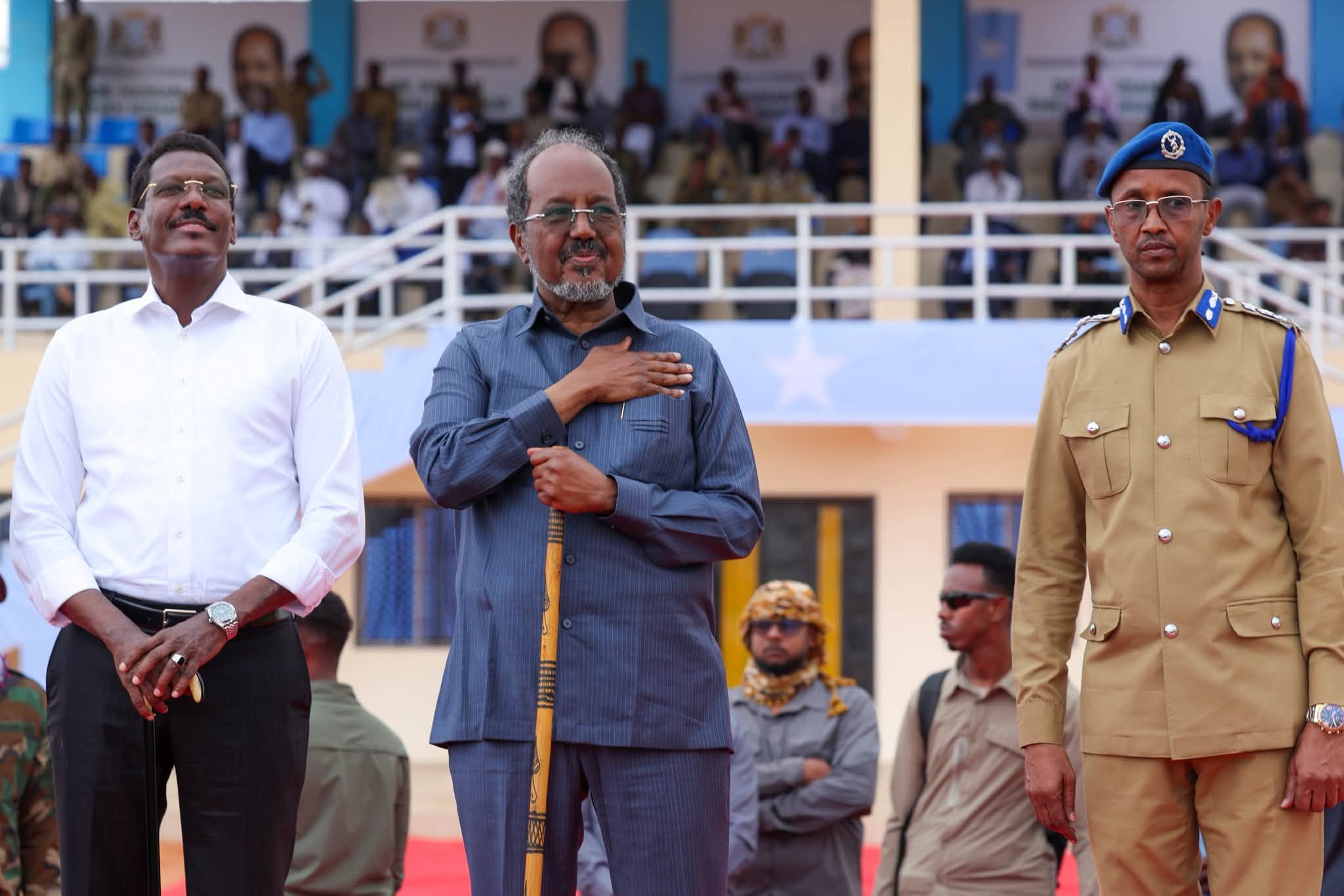 GALKAYO, Somalia (Somali Report) — Somali President Hassan Sheikh Mohamud was welcomed by thousands of people in the southern part of Galkayo on Monday, during a visit to Galmudug that his office said was aimed at promoting peace and strengthening engagement with local communities.
Mohamud arrived in the city and addressed crowds gathered at a football stadium, where residents and supporters had assembled to welcome the president. His visit comes at a particularly sensitive moment, with Galkayo still recovering from recent deadly clashes and political tensions rising between the federal government and Puntland.
The president's tour of Galmudug is focused on meeting local communities and discussing peace and security, according to his office. The visit is also intended to reinforce the federal government's engagement with communities in central Somalia, where political and security disputes have increasingly complicated relations between Mogadishu and federal member states.
Galkayo, a strategically important city in the Mudug region, is divided between areas administered by Galmudug to the south and Puntland to the north. The city has long been a flashpoint in disputes over territorial control, security and the distribution of political authority.
The president's visit comes less than two weeks after deadly clashes in the city, adding to concerns that political disagreements could aggravate local security tensions. Puntland had warned against Mohamud's planned visit and placed its security and defence forces on alert, according to reports
Puntland has accused the federal government of seeking to expand its political and security influence in areas it considers to fall within its sphere of authority. The dispute has intensified as Mogadishu and several federal member states remain divided over elections, constitutional changes and the balance of power between the central government and regional administrations.
Galmudug, meanwhile, rejected Puntland's concerns over Mohamud's planned visit, underscoring the competing political positions surrounding the president's trip.
Somali Report · Newsletter
Your morning briefing on Somalia's biggest stories — politics, security, business, and the people shaping the region's future.
Mohamud arrived in Galmudug on Friday and began his visit in Dhusamareb, the state's capital, before travelling onward to Galkayo. His arrival in the region followed Puntland's warning over the possibility of a presidential visit to the divided city.
The tensions surrounding the trip reflect a broader political crisis in Somalia, where the federal government has faced increasing resistance from regional administrations over its approach to governance and security.
Puntland's opposition to the visit has also highlighted the fragile security balance in Galkayo. The city has previously experienced armed confrontations between forces aligned with the two administrations, although local and international efforts have sought to preserve a fragile calm.
The United Nations has historically supported efforts to reduce tensions in Galkayo, including initiatives focused on troop withdrawals, removal of roadblocks and joint policing arrangements between the two sides of the city.
Mohamud's visit therefore carries significance beyond a routine presidential tour. His decision to address residents in southern Galkayo places the federal government at the centre of a highly sensitive political and security environment.
For supporters, the visit is an opportunity to promote dialogue and demonstrate the federal government's presence. For Puntland, however, the president's movement into the divided city has become another point of contention in an already strained relationship with Mogadishu.
The visit comes as Somalia faces wider political and security challenges, including renewed fighting in Baidoa and continuing disagreements between the federal government and regional authorities over the country's political future.
About the Author
Ahmed Omar is a senior journalist for Somali Report, based in Mogadishu. He has two decades of experience reporting on Somalia for international and local media. He covers politics, security, governance, business, trade, economic developments and regional affairs.
Mustafe Omer Re-elected for Third Term as President of Ethiopia’s Somali Region


