Somali soldiers have graduated from a year-long training programme in Galmudug funded by Saudi Arabia, as Somalia seeks to strengthen its national army and take greater responsibility for the country’s security.
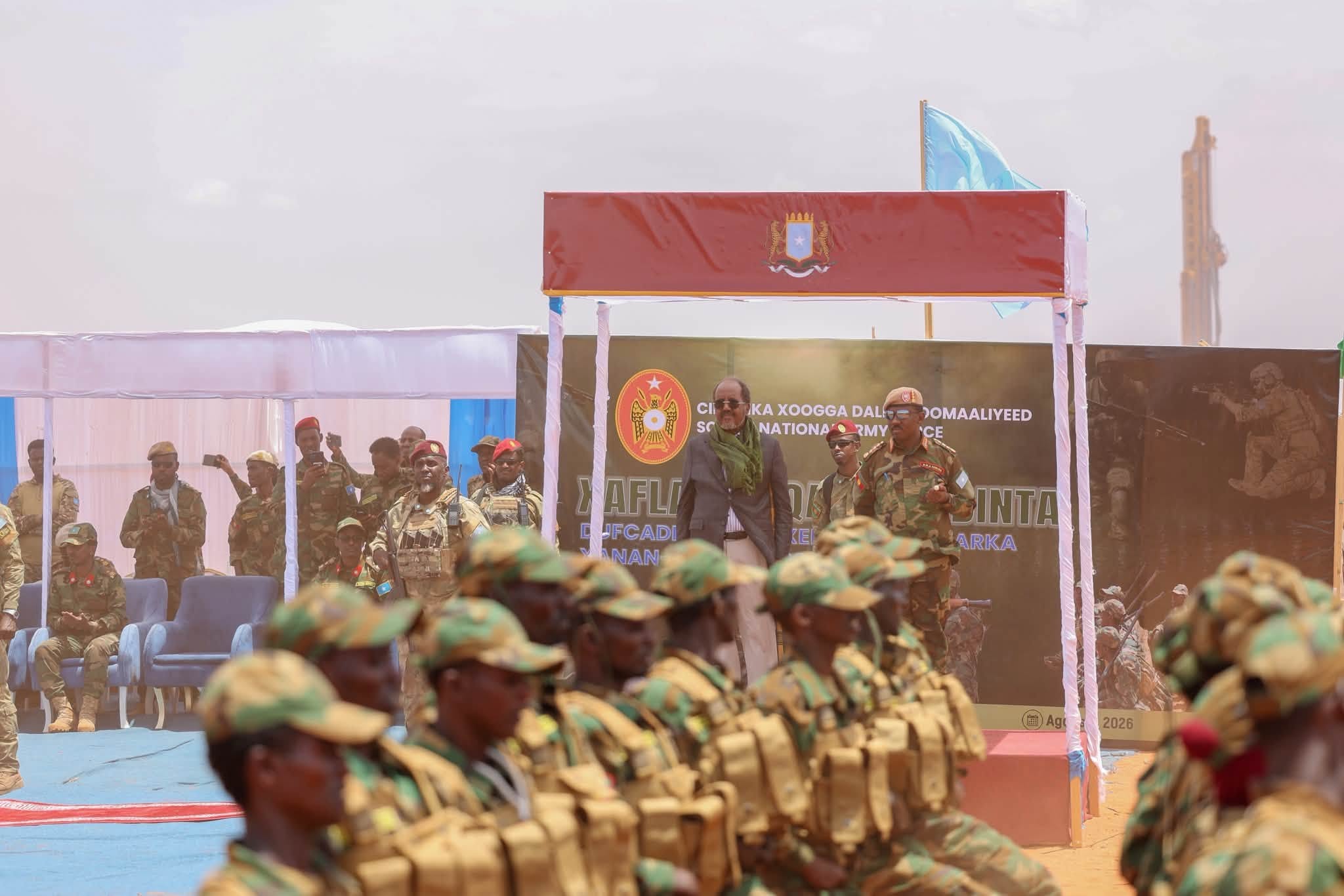 MOGADISHU, Somalia (Somali Report) — Somalia has graduated nearly 3,000 soldiers after almost a year of training at the Xananbuure military camp in the central Galgaduud regional state, in one of the country's largest military training batches since the collapse of the central government in 1991.
The training was funded by Saudi Arabia and conducted with the participation of military instructors from Ukraine, Romania and Sudan.
The soldiers were recruited from different parts of Somalia and trained in basic combat tactics, military discipline, weapons handling and other skills required for service in the Somali National Army.
The programme is part of an agreement reached between Somalia and Saudi Arabia in February under which up to 5,000 Somali soldiers are expected to receive military training.
Federal government officials, state leaders, senior military officers and Saudi representatives attended the ceremony marking the completion of the training.
President Hassan Sheikh Mohamud, who presided over the ceremony, described the graduating troops as a symbol of Somalia's efforts to rebuild state institutions and establish a national army capable of defending the country.
"These forces represent the recovery of statehood and the rebuilding of the Somali National Army," Hassan Sheikh said.
The president also said Somalia's ability to train large numbers of soldiers domestically demonstrated progress toward greater self-reliance in security matters.
The training comes as the federal government seeks to gradually transfer full responsibility for security operations to Somali forces, amid a broader transition involving the African Union mission in Somalia and the eventual reduction of international military support.
Somali Report · Newsletter
Your morning briefing on Somalia's biggest stories — politics, security, business, and the people shaping the region's future.
Somali forces have increasingly taken the lead in operations against Al-Shabaab. This al-Qaida-linked militant group has waged an insurgency for more than a decade and continues to operate in parts of central and southern Somalia.
The government has in recent years stepped up recruitment, training and efforts to equip the national army, arguing that a larger and better-trained force is essential if Somalia is to assume greater responsibility for its own security.
But expanding the army also presents significant challenges.
Maintaining thousands of newly trained troops will require regular salaries, weapons and ammunition, logistical supplies, medical support and continued professional training. Keeping soldiers deployed in remote and frontline areas has also historically posed difficulties for Somalia's security institutions.
The graduation of nearly 3,000 troops therefore represents both an opportunity and a test for the government, which must now integrate the soldiers into operational units and ensure that their training translates into effective military capabilities.
The Xananbuure programme is also significant because it demonstrates Somalia's growing capacity to conduct large-scale military training inside the country rather than relying entirely on foreign training facilities.
Officials say the broader objective is to create a national force capable of independently conducting security operations and protecting key population centers and strategic areas.
The move comes at a sensitive time for Somalia, where political tensions, insecurity and the gradual transition from international peacekeeping support continue to shape the country's security landscape.
For the newly graduated soldiers, the ceremony marked the beginning rather than the end of their role. Their ability to operate effectively in the field will depend on the government's capacity to provide sustained support and deploy them within a coherent national security strategy.
About the Author
Ahmed Omar is a senior journalist for Somali Report, based in Mogadishu. He has two decades of experience reporting on Somalia for international and local media. He covers politics, security, governance, business, trade, economic developments and regional affairs.
Puntland Officials Accuse UAE of Deadly Strike That Killed Four Family Members


