Somalia’s ground forces commander, General Sahal Abdullahi Omar, says Al-Shabaab is receiving external weapons, equipment and training as government forces continue military operations amid renewed fighting in the Bay region.
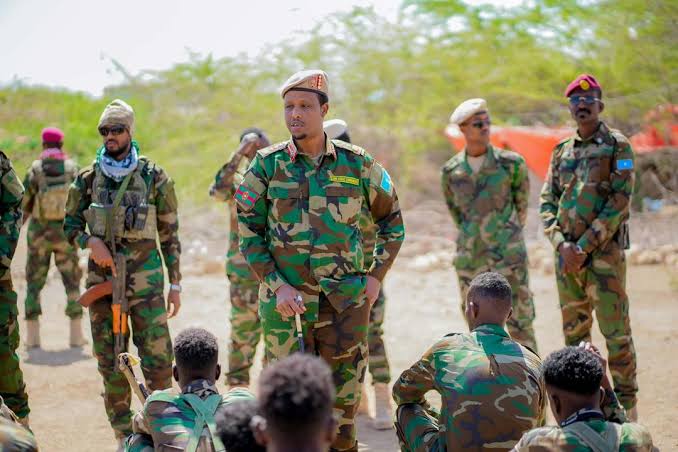
General Sahal Abdullahi Omar, commander of the Somali National Army’s ground forces, made the remarks during a visit on Wednesday to military front lines in the areas of Leego and Jamhuur, where he vowed to continue operations against the group.
He said Al-Shabaab was receiving external and technical support that enabled it to fight government forces across multiple locations, complicating Somalia’s efforts to defeat the insurgency.
“This is a hybrid war. It is a war in which many powers around the world are supporting the Khawarij and terrorists to fight the Somali National Army everywhere, providing them with equipment and training,” Sahal said.
The commander did not identify the countries or organisations he accused of supporting the militants, and provided no evidence to substantiate the allegations.
Al-Shabaab, which is affiliated with Al-Qaeda, has waged an insurgency against Somalia’s federal government for more than a decade, carrying out attacks on security forces, officials and civilians despite repeated military offensives.
Sahal also criticised politicians and social media users whom he accused of politicising the military campaign and spreading misleading information. He urged political actors to put aside their differences and prioritise support for troops fighting the insurgency.
He said the army would not withdraw from the campaign until it achieved its objective of removing Al-Shabaab from areas where the group remains active.
The commander also called on Somalis to support the armed forces through both words and actions, stressing the importance of public backing for military operations.
His remarks came days after Al-Shabaab claimed it had killed more than 200 Somali soldiers in the Jameeca area of Buurhakaba district in the southern Bay region.
Somali Report · Newsletter
Your morning briefing on Somalia's biggest stories — politics, security, business, and the people shaping the region's future.
The group said the soldiers had been advancing towards Buurhakaba in an attempt to restore government control over the town, which had been taken by forces loyal to former South West State president Abdiaziz Hassan Mohamed Laftagareen.
The casualty figure was attributed to Al-Shabaab and could not be independently verified.
The fighting comes amid broader instability in South West State, where forces aligned with Laftagareen have clashed with federal troops and forces loyal to the administration led by Sheikh Adan Mohamed Nur, known as Adan Madobe.
The political dispute has complicated security operations in parts of the region, where government forces have also been battling Al-Shabaab, which controls or operates in several rural areas.
Somalia’s military has repeatedly launched offensives to weaken the group, which has carried out bombings, targeted killings and attacks on military bases, as well as assaults on government installations in Mogadishu.
Despite losing several strategic locations in previous operations, Al-Shabaab has retained the ability to mount deadly attacks and exploit security gaps.
Sahal’s comments underline the government’s concerns about the resources available to the militants, although his allegations of external assistance remain unsubstantiated publicly.
The army chief did not provide a timeline for the latest operations or details of planned military movements around Buurhakaba.
The situation in the Bay region remains fluid, with competing armed forces and shifting territorial control raising concerns about further clashes and the potential impact on civilians.
About the Author
Ahmed Omar is a senior journalist for Somali Report, based in Mogadishu. He has two decades of experience reporting on Somalia for international and local media. He covers politics, security, governance, business, trade, economic developments and regional affairs.
