A court in Somaliland has sentenced politician Cabdiqaadir Maxamed Sharaay to one year in prison and journalist Cabdiraxmaan Cige to three months over a televised interview discussing Sharaay’s bid for Somalia’s presidency.
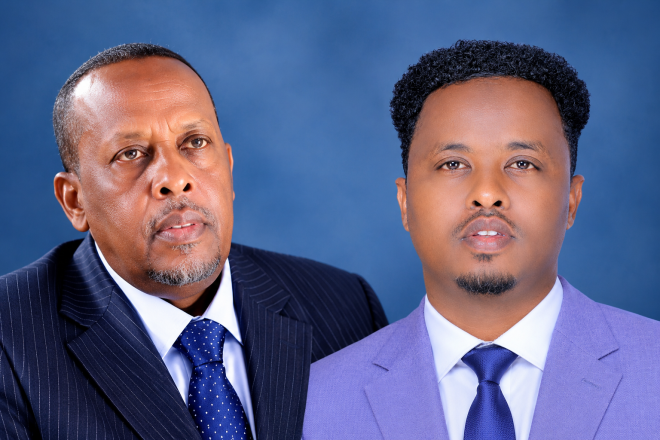 HARGEISA (Somali Report) — A regional court in Somaliland has sentenced politician Abdulkadir Mohamed Sharaay to one year in prison and journalist Cabdiraxmaan Cige to three months behind bars over a televised interview in which Sharaay discussed his ambition to run for president of Somalia.
The Maroodi-jeex Regional Court handed down the sentences after proceedings involving the politician and the journalist, both of whom had been detained in Hargeisa for a period before the ruling.
Sharaay attracted attention after appearing on Horn Cable TV, where he spoke about his political ambitions and expressed his intention to contest the presidency of the Federal Republic of Somalia.
The interview subsequently became the subject of legal proceedings, with journalist Cige also facing prosecution for conducting the programme and questioning the politician about his political plans.
During the court hearings, Sharaay told the judges that he supported Somaliland's sovereignty and regarded Somaliland and Somalia as two separate and independent countries.
He also presented evidence to the court that he had previously expressed the same position, apparently seeking to demonstrate that his political stance was consistent with his support for Somaliland's independence.
Despite his explanation, the court sentenced him to 12 months in prison. Cige received a separate three-month sentence.
The prosecution of the journalist has raised concerns among press freedom advocates, who have questioned the legal basis for detaining a reporter over an interview with a politician discussing his political ambitions.
Somali Report · Newsletter
Your morning briefing on Somalia's biggest stories — politics, security, business, and the people shaping the region's future.
Media rights organisations have previously expressed concern about Cige's detention, arguing that journalists should be able to interview political figures and report on matters of public interest without facing imprisonment simply for providing a platform for political discussion.
The case has drawn attention to the increasingly sensitive relationship between political expression, media freedom and Somaliland's position on its relationship with Somalia.
Somaliland declared independence from Somalia in 1991 following the collapse of the central government and has operated with its own political institutions, security forces and administrative structures. However, Somalia continues to regard Somaliland as part of its territory.
The political status of Somaliland remains a contentious issue, particularly when public figures discuss participation in political institutions in Mogadishu while living in the self-declared republic.
Sharaay's stated intention to seek Somalia's presidency has therefore placed his political ambitions at the centre of a debate over sovereignty and political identity.
The sentences come amid wider discussions about press freedom and the limits of media coverage of politically sensitive issues in Somaliland.
The case is likely to renew scrutiny of the treatment of journalists and political activists, particularly when their statements or reporting touch on the disputed relationship between Somaliland and the Federal Government of Somalia.
About the Author
Ahmed Omar is a senior journalist for Somali Report, based in Mogadishu. He has two decades of experience reporting on Somalia for international and local media. He covers politics, security, governance, business, trade, economic developments and regional affairs.
