The United Nations has expressed serious concern over Somaliland's execution of nine prisoners, warning that some of the trials failed to meet international standards for fair trial and due process.
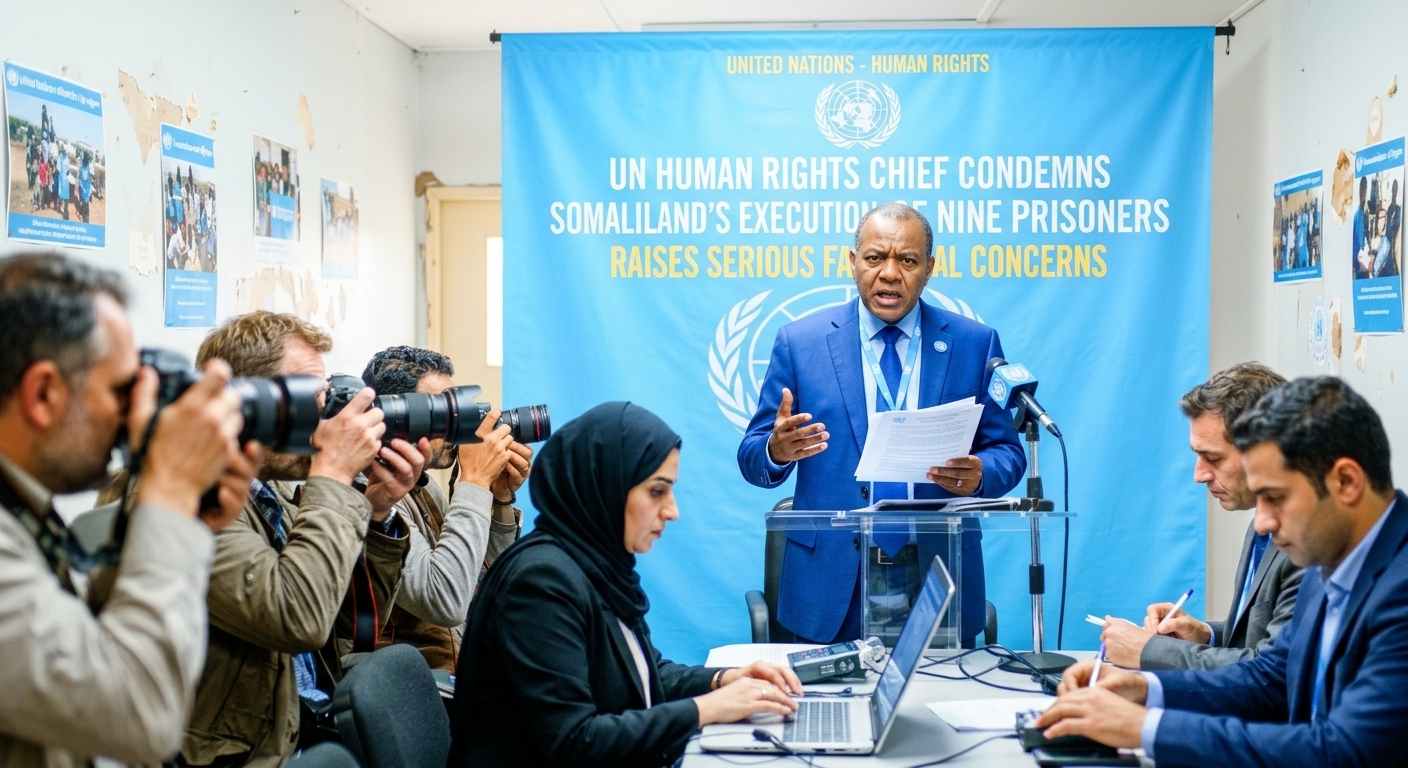
Seif Magango, spokesperson for the Office of the UN High Commissioner for Human Rights, said the nine men were executed by firing squad near Madheera Prison after military courts sentenced them to death.
“We are deeply concerned by the execution of nine men,” Magango said in a statement issued in Geneva, adding that the proceedings against some of those executed did not satisfy international guarantees of fair trial and due process.
The executions were carried out under the Islamic legal principle of qisas, or retributive justice, following convictions in separate murder cases. Somaliland President Abdirahman Mohamed Abdullahi, known as Cirro, had signed the orders authorising the sentences.
Reports following the executions said most of the nine men had been members of Somaliland's security forces, with some of their cases handled by military courts.
The UN human rights office called on Somaliland authorities to immediately halt any remaining executions and urged a formal moratorium on the death penalty across Somalia, with the ultimate goal of abolishing capital punishment.
The UN said the death penalty was fundamentally incompatible with human dignity and the right to life, as well as protections against cruel, inhuman or degrading punishment.
Magango also said available evidence did not demonstrate that capital punishment was an effective deterrent to crime.
Somali Report · Newsletter
Your morning briefing on Somalia's biggest stories — politics, security, business, and the people shaping the region's future.
The office reiterated its call for authorities to uphold the right to life and ensure that everyone facing criminal charges receives a fair trial in accordance with international human rights standards.
The executions have brought renewed attention to the use of capital punishment in Somaliland, which maintains its own judicial and security institutions despite lacking international recognition as an independent state.
Somaliland's criminal justice system draws on Somalia's General Penal Code, which remains in use in the territory, as well as Islamic law. Both provide the legal framework for dealing with intentional murder and the application of qisas.
Under Islamic jurisprudence, qisas gives the family of a murder victim the right to seek retribution, grant forgiveness or accept financial compensation, known as diya.
Somaliland authorities generally implement such sentences following court rulings and legal procedures, with the victim's family playing a central role in determining whether retribution should be carried out.
However, the UN's concerns focus not only on the death penalty itself but also on whether the trials leading to the executions met internationally recognised standards of justice.
The latest executions underscore the continuing divide between Somaliland's application of capital punishment under its domestic legal and religious framework and the UN's longstanding position calling for a worldwide moratorium and eventual abolition of the death penalty.
About the Author
Ahmed Omar is a senior journalist for Somali Report, based in Mogadishu. He has two decades of experience reporting on Somalia for international and local media. He covers politics, security, governance, business, trade, economic developments and regional affairs.
