UN human rights experts have condemned the removal of Somalia’s Supreme Court Chief Justice Baashe Yusuf Ahmed, calling the decision unlawful and demanding his immediate reinstatement while urging the government to protect judicial independence.
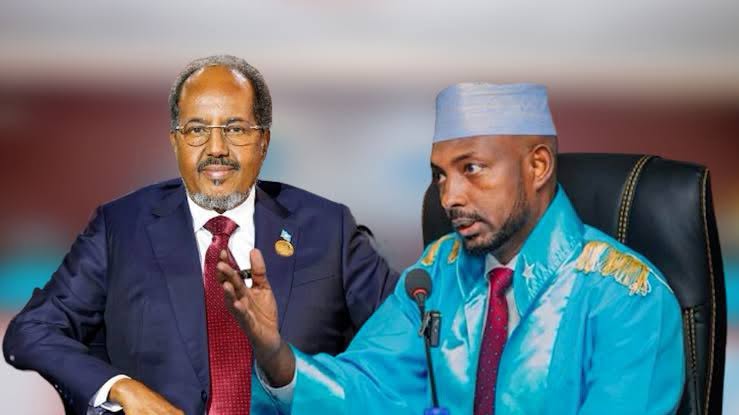
The experts also criticised the swearing-in of Ibrahim Idle Suleiman as Ahmed’s replacement, calling on Somali authorities to respect judicial independence, uphold the rule of law and ensure that judges can perform their duties without political interference.
In their intervention, the UN experts called for Ahmed’s reinstatement and urged the government to guarantee his safety, as well as that of other members of the judiciary.
The statement represents a significant international intervention in an escalating confrontation between Somalia’s executive and judicial branches, which has unfolded alongside a wider political dispute over constitutional amendments and the mandates of federal institutions.
President Hassan Sheikh Mohamud announced Ahmed’s removal on November 4 and reinstated Suleiman, who previously served as chief justice. The presidency said the decision followed complaints from judges, judicial staff and legal professionals about the administration of justice, and presented the change as part of broader judicial reforms.
However, the presidency did not publicly detail the allegations against Ahmed or explain whether the constitutional procedures required for removing a chief justice had been followed.
Somalia’s Supreme Court subsequently rejected the president’s decision, declaring the dismissal null and void and arguing that the president lacked the authority to remove the chief justice unilaterally.
The court also accused the presidency of attempting to obstruct proceedings in a constitutional case challenging amendments to the country’s provisional constitution and the mandates of federal institutions.
Somali Report · Newsletter
Your morning briefing on Somalia's biggest stories — politics, security, business, and the people shaping the region's future.
The dispute intensified after the Supreme Court ruled on November 5 that constitutional amendments extending presidential and parliamentary terms could not be applied retrospectively to the current officeholders. It said the president’s four-year mandate had expired in May and called on political stakeholders to agree on an electoral framework within 30 days, with elections to be held within 90 days.
The presidency has defended its decision to change the court’s leadership, citing the need to improve the administration of justice. However, the confrontation has raised wider questions about the separation of powers and the constitutional limits of presidential authority.
The UN experts’ intervention adds an international dimension to the dispute, placing renewed scrutiny on Somalia’s commitment to judicial independence and the protection of constitutional institutions.
It also increases diplomatic pressure on the federal government at a time when the country is facing political divisions over the electoral process and the legitimacy of its federal institutions.
For Somalia, the dispute carries implications beyond the positions of two senior judicial officials. The independence of the Supreme Court is central to resolving constitutional disagreements, interpreting the law and maintaining public confidence in state institutions.
Ahmed has also raised concerns about his personal security following his removal. He said he no longer felt safe in Mogadishu and accused the government of deploying security forces around the Supreme Court in a move he described as intimidation of judges. His allegations about the scale and purpose of the deployment could not be independently verified.
The UN experts’ demand for his reinstatement and guarantees for the safety of judges adds to growing international scrutiny of the government's handling of the judicial crisis.
The standoff now presents a major test of Somalia’s constitutional order, with questions over the implementation of court decisions, the authority of the presidency and the ability of state institutions to resolve political disputes through established legal procedures.
About the Author
Ahmed Omar is a senior journalist for Somali Report, based in Mogadishu. He has two decades of experience reporting on Somalia for international and local media. He covers politics, security, governance, business, trade, economic developments and regional affairs.
