Abdullahi Issa Mohamud, Somalia’s first Prime Minister, was a key figure in the country’s struggle for independence and self-rule. From his leadership in the Somali Youth League to his work at the United Nations, he helped shape Somalia’s early political foundations. His legacy continues to inspire interest in the nation’s path to modern statehood.
 Abdullahi Issa Mohamud, Somalia’s first Prime Minister and SYL leader, helped lead the country to independence.
Mogadishu (Somali Report) — Across the turbulent mid-20th century, as empires loosened their grip on Africa and Asia, a generation of nationalist leaders stepped forward to shape the futures of emerging states. In Somalia, one of the most consequential of these figures was Abdullahi Issa Mohamud, a leading voice in the Somali Youth League (SYL) and the country’s first Prime Minister.
Born in 1922 in Afgooye, just southwest of Mogadishu, Abdullahi Issa grew up in modest but socially respected surroundings. His father, Ciise Maxamuud Bidaar, came from lineages connected to Hobyo and Mareerey, while his mother, Mareero Diini Axmed, hailed from Caabudwaaq. Orphaned at a young age after the death of his father, he was raised by his mother, who played a central role in his upbringing.
From early on, Issa gravitated toward learning. He began with Quranic education in Afgooye before attending one of Mogadishu’s early Italian-run primary schools. By his mid-teens, he had moved to Marka, where he worked at the post office between 1939 and 1941—an early encounter with colonial administration that would later shape his political consciousness.
The British military occupation of southern Somalia in 1941 disrupted his employment, pushing Issa into trade. He travelled widely across southern Somalia as a merchant, gaining firsthand exposure to local grievances under colonial rule.
His formal entry into politics came in 1944 when he joined the Somali Youth Club in Beledweyne. There, he met key figures such as Aden Abdullah Osman and Sheikh Ali Jimale. His political rise was swift. Within a short period, he joined the central committee and later became Secretary-General of the movement, which evolved into the Somali Youth League (SYL) in 1947.
As Secretary-General, Issa helped transform the SYL into a national force, expanding its influence across Somali-inhabited regions and positioning it at the forefront of anti-colonial mobilization.
By the late 1940s, Issa had become one of the SYL’s most visible international representatives. In 1948, he was part of a delegation that presented Somali demands before the Four-Power Commission in Mogadishu.
A year later, he embarked on an extended diplomatic mission that took him to Paris, London, and eventually the United States. At Lake Success in New York, he took part in United Nations debates on Somalia’s future, advocating for a brief trusteeship followed by full independence.
During this period, Issa emerged as a prominent advocate of “Greater Somalia,” calling for the unification of all Somali-inhabited territories into a single political state. His speeches circulated widely in diplomatic circles and anti-colonial networks.
 Abdullahi Issa Mohamud addressing the United Nations. Note: This image has been created by AI-generated illustration.
Life in New York was far from comfortable. Financial hardship often left Issa struggling to afford accommodation, and he relied on support from Somali diaspora communities and sympathetic contacts.
Somali Report · Newsletter
Your morning briefing on Somalia's biggest stories — politics, security, business, and the people shaping the region's future.
Despite these challenges, he became an active voice in international debates on colonialism. He participated in radio broadcasts directed at audiences in the Horn of Africa and wrote extensively on the United Nations’ role in decolonization.
His intellectual work drew attention beyond Somali politics. He engaged with prominent thinkers, including W.E.B. Du Bois, and produced pamphlets critical of the global order, among them:
These writings positioned him within a wider global current of anti-colonial thought.
The United Nations’ 1949 decision to place Somalia under Italian trusteeship for ten years disappointed many nationalists, including Issa, who returned to Mogadishu soon after.
Yet political momentum within the SYL continued to build. By the mid-1950s, the party had secured major electoral victories. In 1956, Abdullahi Issa was appointed Prime Minister, becoming the first Somali to hold the office. He formed a small cabinet and later returned to the position following the 1959 elections.
On 1 July 1960, Somalia achieved independence through the unification of the former British and Italian territories. Although Issa was widely expected within SYL circles to lead the new government, political negotiations and constitutional arrangements resulted in a different outcome. Aden Abdullah Osman became President, while Issa was not appointed Prime Minister of the republic.
Despite this setback, he remained a key figure in national politics, holding several senior ministerial positions over the following decade:
He also served intermittently as a Member of Parliament.
The 1969 military coup led by Siad Barre marked a dramatic shift in Somali politics. Issa was briefly imprisoned in 1973 before being released and appointed Ambassador to Sweden in 1974, a position he held until 1983.
After retiring from public service, he settled in Rome, living in the country that had once ruled Somalia as a colony.
Abdullahi Issa Mohamud died in Rome on 11 March 1988 at the age of 65. His remains were returned to Mogadishu, where he was accorded a national funeral. The ceremony drew major political figures, reflecting his enduring place in Somalia’s political memory.
He is remembered as a founding architect of Somali independence, a disciplined administrator, and a leading intellectual voice of the anti-colonial era. His political journey—from post office clerk to prime minister and international diplomat—mirrors the broader story of Somalia’s emergence into modern statehood.
About the Author
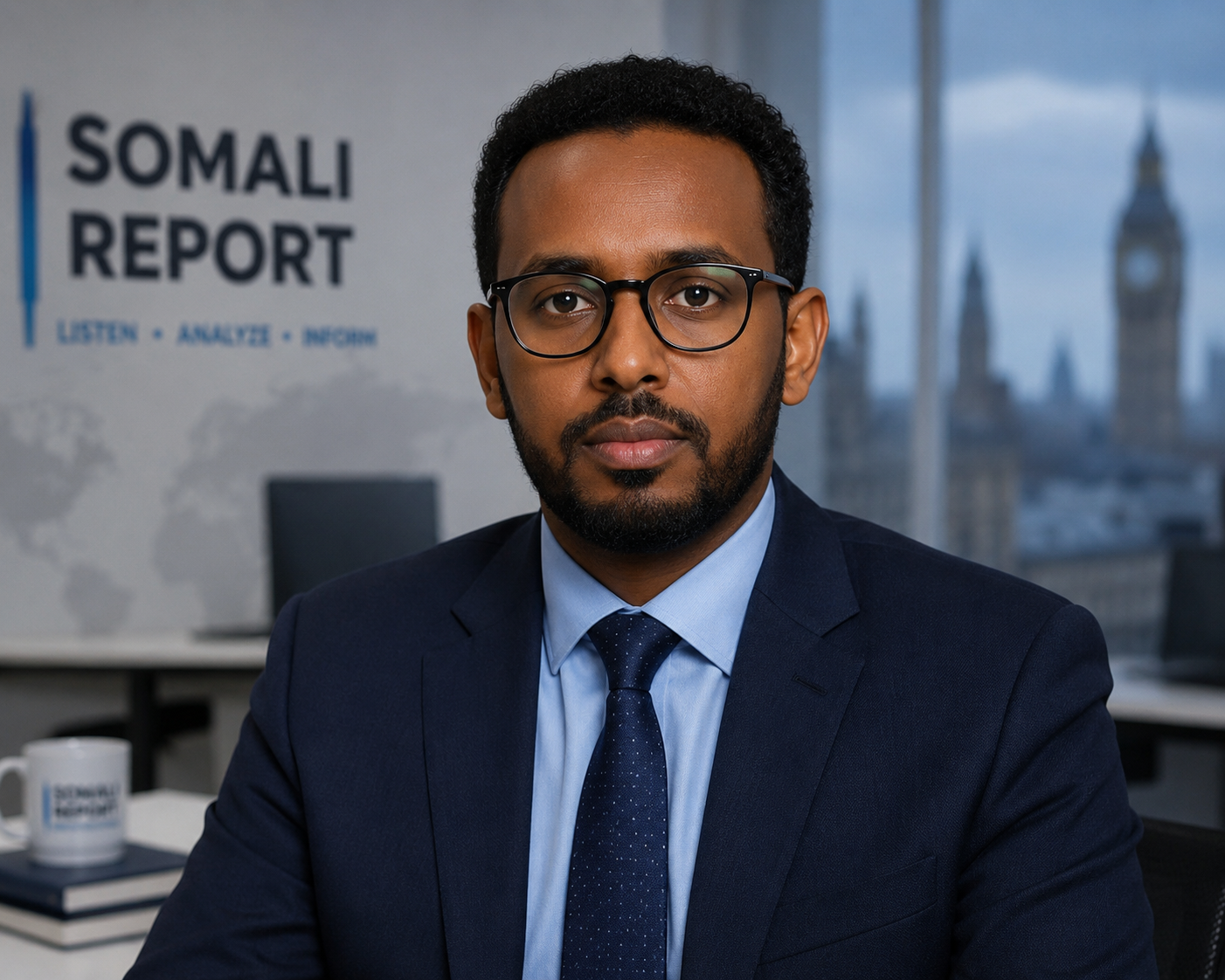
Mohamed Farah is a senior editor at Somali Report, based in London, covering geopolitics, trade, business, and security across the Horn of Africa and the Red Sea region.
How Somali-Swedish Winger Taha Ali Became Sweden’s Surprise Weapon


