Somalia President Hassan Sheikh Mohamud says Israel repeatedly sought relations with Somalia before recognising Somaliland, revealing new details about diplomatic contacts and warning that the move could deepen regional tensions in the Horn of Africa.
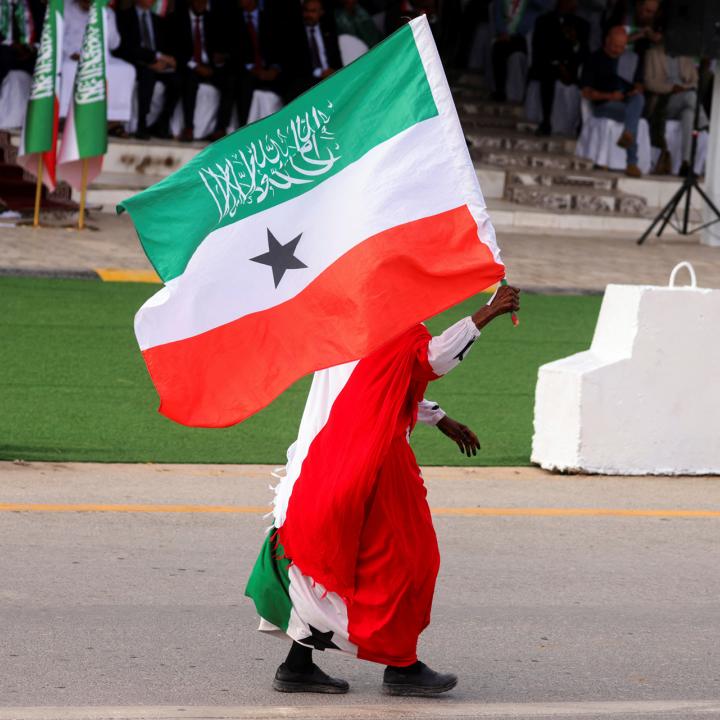 MOGADISHU (Somali Report) — Somali President Hassan Sheikh Mohamud has revealed that Israel repeatedly sought to establish relations with Somalia before formally recognizing Somaliland, but said Mogadishu rejected the overtures because of longstanding differences over matters of faith, religion, human rights, and humanitarian principles, as well as concerns about becoming entangled in regional conflicts.
Speaking in an interview with Dawan Media, Mohamud said Israeli officials had approached Somalia several times in an effort to open diplomatic channels before shifting their focus to Somaliland.
“Israel approached us several times and wanted us to establish relations,” Mohamud said. “We told them that the timing was not appropriate.”
The president’s comments offer the clearest public acknowledgment to date that contacts occurred between Somalia and Israel before Israel became the first country to formally recognize Somaliland in December 2025.
Mohamud said Somalia’s decision was guided by political, humanitarian, and religious considerations, as well as its traditional support for Palestinian statehood.
“We told them we have no animosity toward you,” he said, “but Somalia’s position is based on principle, faith, religion, human rights, humanitarian concerns, and our longstanding support for Palestinian rights.”
The president noted that several African countries maintain relations with Israel and stressed that every nation acts according to its own interests and principles. However, he said Somalia had consistently declined Israeli overtures and suggested that Israel subsequently turned its attention to Somaliland.
According to Mohamud, Israel’s recognition of Somaliland was driven by Israeli interests rather than a genuine effort to resolve Somaliland’s longstanding quest for international recognition.
“Israel has engaged in several wars and feels in danger, and is trying to respond to the threats it perceives,” he said. “It felt that parts of Somali territory could be used to reduce that danger.”
Israel’s recognition of Somaliland marked a major geopolitical development in the Horn of Africa, where competition for influence around the Red Sea and the Gulf of Aden has intensified in recent years. The move was celebrated in Hargeisa as a historic diplomatic breakthrough after more than three decades of seeking international recognition.
Somaliland declared independence from Somalia in 1991 following the collapse of the Somali state, but until Israel’s decision, no United Nations member state had formally recognized it as a sovereign country.
Mogadishu strongly rejected the move, describing it as a violation of Somalia’s territorial integrity and sovereignty.
Mohamud dismissed the recognition as politically motivated and unlikely to produce wider international acceptance of Somaliland.
“Somaliland has not received recognition for more than 30 years, and it will not receive it now,” he said. “This is not recognition. It is a trap.”
He warned that the move could create significant security risks by drawing Somalia into regional rivalries and conflicts that do not serve its national interests.
He said Somalia would not allow itself to become a platform for proxy confrontations between Israel and its regional adversaries, warning that such tensions could destabilize the country without delivering any political or strategic benefit.
“Somalia will not be dragged into wars, political rivalies, or strategic agendas that do not serve its national interest,” he said.
Somali Report · Newsletter
Your morning briefing on Somalia's biggest stories — politics, security, business, and the people shaping the region's future.
He also reiterated Mogadishu’s position that Israel’s recognition of Somaliland is invalid and should not be viewed as a legitimate change to Somalia’s internationally recognized borders.
Just days before recognizing Somaliland in December, Israeli Deputy Foreign Minister Sharren Haskel publicly stated that Israel maintained “certain communication” with Somalia despite the absence of diplomatic relations.
Speaking to Israeli broadcaster i24NEWS in December 2025, Haskel linked the contacts to growing concerns about security in the Red Sea region and the Horn of Africa. She argued that instability in Somalia could have consequences for global trade routes, fisheries, and maritime security.
However, Somali officials immediately rejected the claim.
State Minister for Foreign Affairs Ali Mohamed Omar, known as Ali Balcad, said Somalia had no diplomatic or political relationship with Israel and insisted that the country’s position had not changed.
“There is no relationship between Somalia and Israel,” Balcad said at the time.
The issue has gained additional significance due to growing concerns about security threats in the Bab al-Mandab Strait, one of the world’s most important maritime corridors. International attention has focused on reports of increasing cooperation between Yemen’s Houthi movement and Al-Shabaab militants in Somalia, although analysts note that the relationship appears largely transactional rather than ideological.
Mohamud suggested that Israel’s growing interest in Somaliland and the wider Horn of Africa should be viewed within this broader regional context.
He said Somalia’s opposition to normalization with Israel remains rooted in support for Palestinian rights and the pursuit of a two-state solution.
Earlier, the Somali president also reiterated Somalia’s rejection of any proposals involving the relocation of Palestinians from Gaza to Somali territory or Somaliland, an idea that has periodically surfaced in international media reports.
Somalia has consistently stated that it supports Palestinian self-determination and opposes forced displacement.
Despite the tensions generated by Israel’s recognition of Somaliland, Mohamud said his government remains committed to resolving differences with Somaliland through dialogue rather than confrontation.
“We weighed the options of force and dialogue,” he said. “In the end, we chose dialogue and persuasion.”
He stressed that Somalia would continue defending its unity through diplomatic and legal channels while remaining open to discussions with Somaliland.
“The position of the federal government has not changed,” Mohamud said. “Somalia’s unity and territorial integrity are not negotiable.”
As geopolitical competition intensifies across the Red Sea and the Horn of Africa, the dispute over Somaliland’s recognition is likely to remain a major diplomatic flashpoint, with implications extending far beyond the longstanding disagreement between Mogadishu and Hargeisa.
About the Author

Mohamed Farah is a senior editor at Somali Report, based in London, covering geopolitics, trade, business, and security across the Horn of Africa and the Red Sea region.
Somalia joins IGAD ministers for regional talks in Djibouti


