Somaliland President Abdirahman Mohamed Abdullahi (Cirro) has arrived in Israel on Sunday for a landmark state visit, becoming one of the few Muslim-majority leaders to engage in high-level diplomacy with the country. The visit includes the opening of Somaliland’s embassy in Jerusalem.
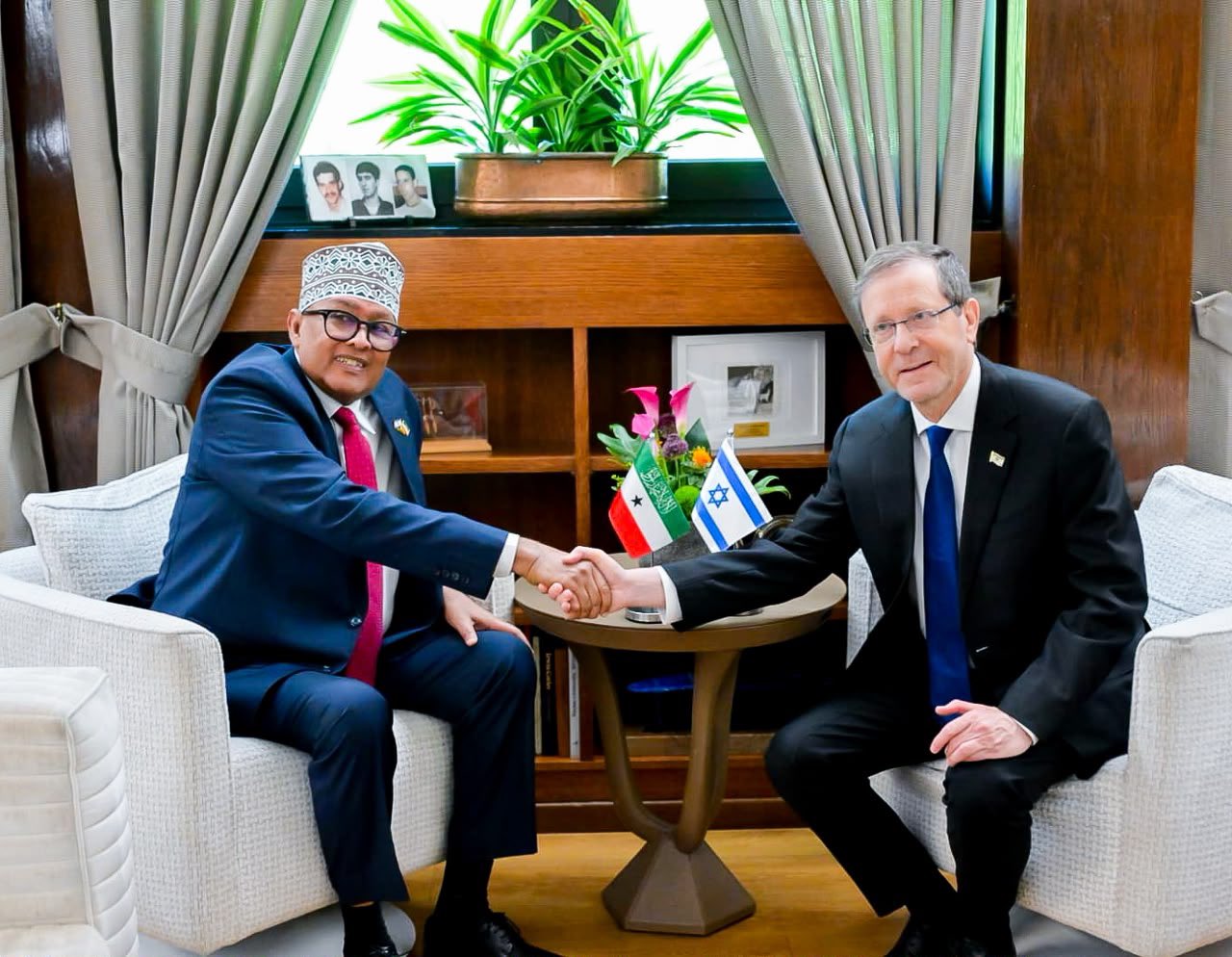
JERUSALEM (Somali Report) — Somaliland President Abdirahman Mohamed Abdullahi, widely known as Cirro, has arrived in Israel on Sunday for a historic state visit that places him among a small group of leaders from Muslim-majority countries and territories who have made high-profile visits to the Jewish state.
The trip marks the first official visit by a Somaliland head of state to Israel and comes nearly six months after Israel became the first United Nations member state to formally recognize Somaliland as an independent country on December 26, 2025.
President Abdullahi’s visit is being viewed as a major milestone in the rapidly expanding relationship between Somaliland and Israel following decades during which Somaliland sought international recognition after declaring independence from Somalia in 1991.
The Somaliland leader is expected to hold talks with Israeli President Isaac Herzog, Prime Minister Benjamin Netanyahu, and Foreign Minister Gideon Sa’ar on a range of issues including security cooperation, trade, investment, agriculture, water management, renewable energy, and technology.
A central moment of the visit will be the official opening of Somaliland’s embassy in Jerusalem, marking the establishment of full diplomatic relations between the two sides. The move follows the appointment of Dr. Mohamed Hagi as Somaliland’s first ambassador to Israel and further underscores the growing diplomatic partnership between Hargeisa and Jerusalem.
According to officials familiar with the program, President Abdullahi will also visit several of Israel’s most symbolic national sites, including Yad Vashem, the country’s Holocaust memorial and museum. The visit will include tours of the Holocaust History Museum, the Children’s Memorial, the Book of Names, and the Hall of Remembrance.
He is also expected to lay a wreath at the grave of Theodor Herzl, the founder of modern political Zionism, and meet representatives of Israel’s business community during a series of investment and economic forums.
Supporters of the growing relationship argue that closer cooperation could bring significant benefits to both sides. Israeli expertise in water technology, agriculture, renewable energy, and innovation is viewed as particularly valuable for Somaliland’s development ambitions, while Somaliland offers strategic access to one of the world’s most important maritime corridors along the Gulf of Aden and the Bab al-Mandab Strait.
The visit follows a series of diplomatic exchanges that accelerated after Israel’s recognition of Somaliland.
In January 2026, Israeli Foreign Minister Gideon Sa’ar traveled to Hargeisa, where he met President Abdullahi and discussed ways to expand political, economic, and security cooperation. During that visit, Abdullahi accepted an invitation from Prime Minister Netanyahu to visit Israel.
Somali Report · Newsletter
Your morning briefing on Somalia's biggest stories — politics, security, business, and the people shaping the region's future.
Israel later appointed veteran diplomat Michael Lotem as its first ambassador to Hargeisa, while Somaliland moved ahead with plans to establish its diplomatic mission in Jerusalem.
The visit also places Abdullahi in a rare diplomatic category. Only a handful of leaders from Muslim-majority countries have made landmark visits to Israel.
Among the most notable was Egyptian President Anwar Sadat, whose historic 1977 visit to Jerusalem broke decades of Arab-Israeli hostility and paved the way for the Camp David Accords and the Egypt-Israel Peace Treaty. More recently, Chadian former President Idriss Déby visited Israel in 2018,helping restore diplomatic ties between the two countries after decades of separation.
While supporters describe the Somaliland president’s visit as a diplomatic breakthrough, critics have strongly condemned the move.
Former Mandera Senator Billow Kerrow described the visit as a “dark day” for Somaliland, arguing that the opening of an embassy in Jerusalem contradicts longstanding international positions on the city’s status. He also criticized Somaliland’s growing ties with Israel amid the ongoing conflict in Gaza.
The visit has likewise drawn attention in Somalia, whose federal government continues to regard Somaliland as part of its sovereign territory. Somali President Hassan Sheikh Mohamud recently revealed that Israel had previously approached Somalia about establishing diplomatic relations before ultimately recognizing Somaliland.
Mohamud said Somalia declined those overtures, citing support for longstanding including faith and human rights concerns.
Despite the criticism, Somaliland officials view the visit as part of a broader effort to expand international engagement and strengthen partnerships with countries willing to recognize its sovereignty.
As geopolitical competition intensifies across the Red Sea and the Horn of Africa, Somaliland’s strategic location and growing ties with Israel have attracted increasing international attention.
For Somaliland, the visit represents more than a diplomatic ceremony. It symbolizes a new phase in its pursuit of international legitimacy and a deepening partnership with the first country to formally recognize its independence.
Whether the move encourages other nations to follow Israel’s lead remains uncertain. However, President Abdullahi’s arrival in Israel marks one of the most significant diplomatic moments in Somaliland’s modern history.
About the Author
Omar Adam is a Senior Reporter for Somali Report based in Addis Ababa. He reports on Ethiopian politics, security, business, and economic affairs, with a special focus on the Somali Region and the experiences, governance, and development of Somali communities across Ethiopia.
Somalia joins IGAD ministers for regional talks in Djibouti


