The Somali Future Council has called for a national rescue initiative, accusing the federal government of deepening political uncertainty and urging all stakeholders to agree on an inclusive electoral framework as Somalia's political tensions continue to rise.
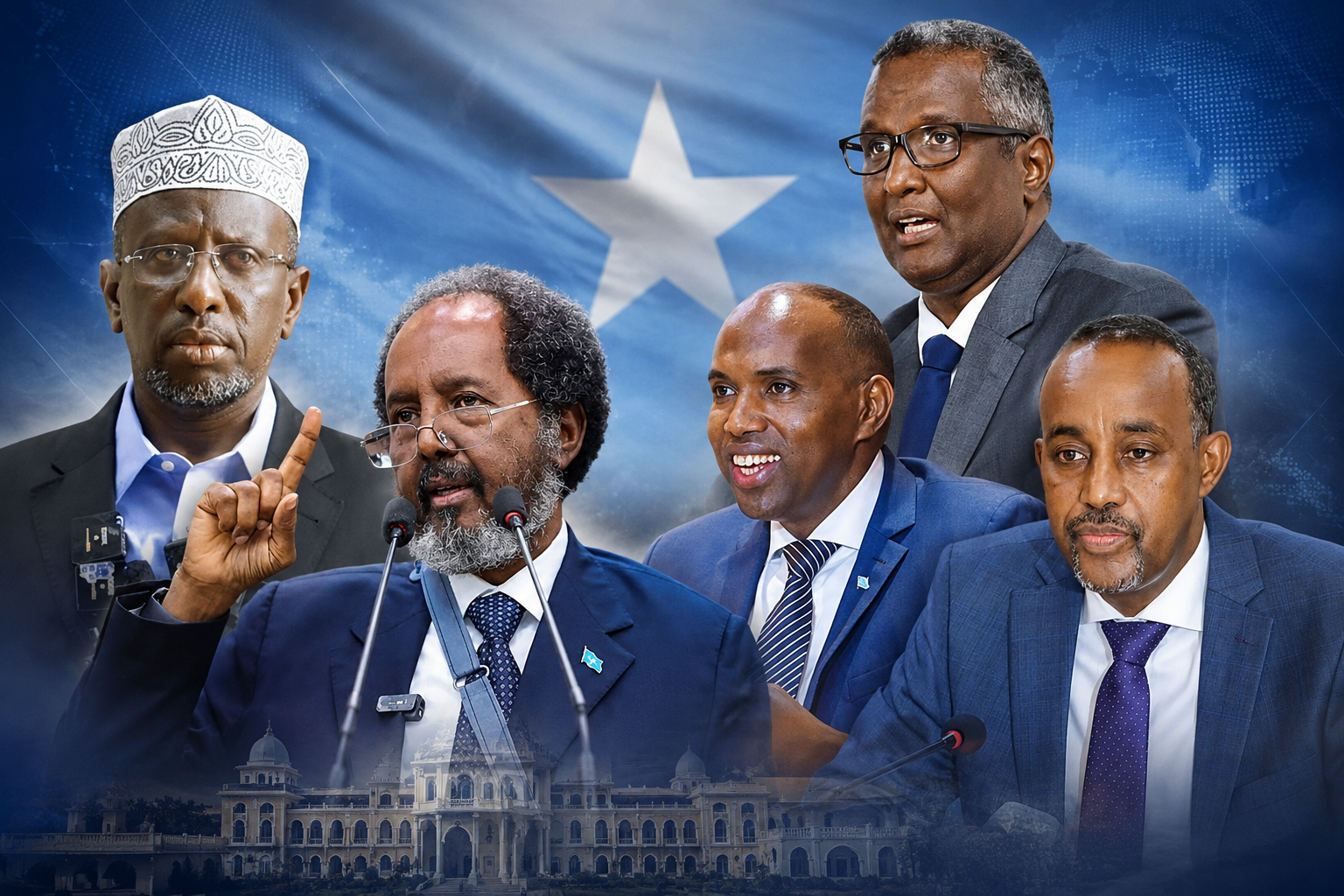 MOGADISHU, Somalia – The Somali Future Council has called for what it described as a national rescue initiative, warning that Somalia has entered a critical political period and urging government leaders, opposition figures, and other national stakeholders to reach a consensus on an inclusive electoral framework.
Speaking during a press conference in Mogadishu on Thursday, members of the council including several prominent opposition leaders criticized the administration of President Hassan Sheikh Mohamud, accusing it of leading the country into political uncertainty and continuing to govern under what they described as a disputed legal mandate.
Former President Sheikh Sharif Sheikh Ahmed told reporters that Somalia was at a decisive moment in its political transition, arguing that the government's constitutional term had expired without agreement on a nationally accepted electoral process.
"I believe the current situation, where the government's term has ended and there is no consensual electoral process in place, is unfortunate," Sheikh Sharif said. "Countries are expected to learn from past experiences. Remaining in the same political position every day damages not only the Somali people but also the country's standing before the international community."
The former president further warned that Somalia risks repeating some of the conditions that contributed to Afghanistan's collapse, citing political divisions and corruption as major threats to national stability.
"The amount of money invested in Somalia is far less than what was spent in Afghanistan," he said. "Yet the leadership has failed to build political consensus. The two major factors behind Afghanistan's collapse political disunity and corruption are now visible in Somalia, and I believe corruption here may even be worse."
Former Prime Minister Hassan Ali Khaire also addressed the gathering, accusing the current administration of weakening Somalia's relationship with international partners through prolonged political uncertainty.
According to Khaire, the country's diplomatic standing has deteriorated in recent months, with some international security assistance reportedly being affected.
Somali Report · Newsletter
Your morning briefing on Somalia's biggest stories — politics, security, business, and the people shaping the region's future.
"Somalia's relationship with the international community is facing serious challenges," Khaire said. "Support for the African peace support mission and assistance to the elite Danab Special Forces have been reduced because of the political uncertainty created by a government whose term has expired."
The Somali Future Council urged the Somali public, political leaders, civil society groups, and all national stakeholders to prioritize dialogue over confrontation, arguing that only an inclusive political settlement can deliver elections accepted by all sides.
Council leaders warned that failure to reach consensus could deepen political divisions and increase the risk of renewed security instability at a time when Somalia continues to confront threats from armed groups while advancing state-building efforts.
They emphasized that preserving national stability requires an agreement capable of protecting constitutional institutions, maintaining public confidence, and ensuring a peaceful democratic transition.
The Federal Government of Somalia had not issued an official response to the council's allegations and recommendations at the time of publication.
Political observers expect discussions between government officials, opposition groups, and international partners to intensify in the coming days as pressure grows for a negotiated electoral framework ahead of Somalia's next political transition.
The latest statement underscores widening political divisions over the country's electoral roadmap, highlighting the continuing debate over how Somalia should move toward elections while maintaining constitutional order, political stability, and security.
About the Author
Bashir Guhad is a reporter at Somali Report covering politics, security, business, and trade across the Somali region.
Somalia joins IGAD ministers for regional talks in Djibouti


