Thousands of registered voters across Galmudug are casting ballots in local council elections, marking another major step in Somalia's transition toward a one-person, one-vote electoral system amid heightened security and nationwide attention.
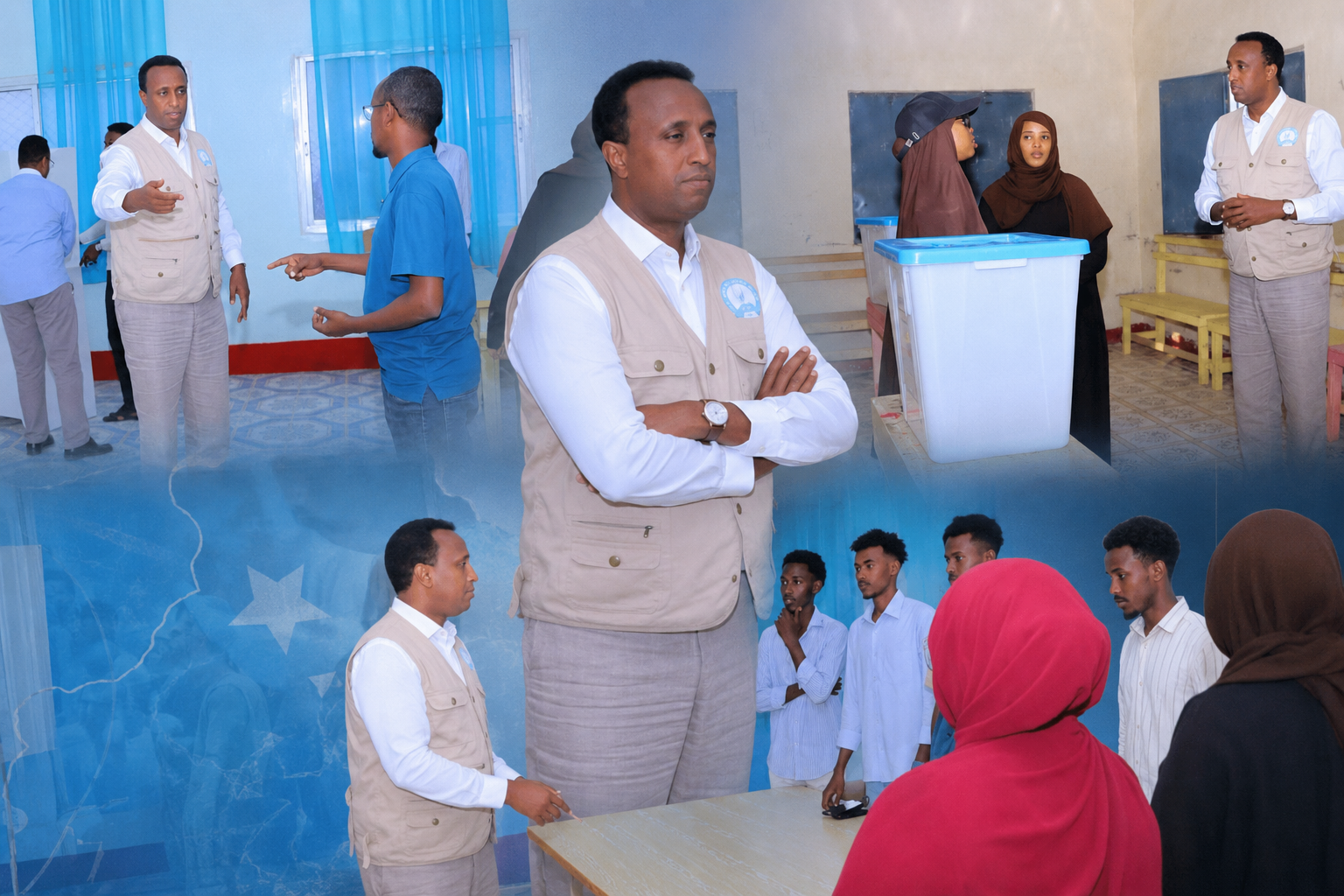 DHUUSAMAREEB, Somalia – Thousands of voters across Somalia's Galmudug State headed to polling stations on Thursday morning to elect members of local councils in a vote widely viewed as another milestone in the country's transition toward a one-person, one-vote democratic system.
The election is being held across 11 districts, where registered voters are choosing representatives who will serve on local councils responsible for municipal governance, development planning, and the delivery of essential public services. Officials described the polls as a significant step in Somalia's broader efforts to replace the country's decades-old indirect electoral model with direct elections.
Polling stations opened after election authorities confirmed that ballot papers, ballot boxes, voter registers, and other election materials had been delivered to all designated voting centers. Security forces were deployed around polling stations and along major roads to safeguard voters, election workers, and electoral facilities throughout the voting process.
Voting is taking place in Dhuusamareeb, Galkayo, Adado, Guriel, Abudwaq, Balanbale, Hobyo, Wisil, Baxdo, and Xeraale. Authorities said Galhareeri could also join the process if it fulfills the remaining electoral requirements established by the National Independent Electoral Commission (NIEC).
Only citizens whose names appear on the official voter register are eligible to vote. Election officials have required all voters to present valid identification before receiving ballot papers, a measure aimed at safeguarding the integrity and credibility of the election.
The local council elections represent another phase of Somalia's ongoing electoral reforms, which seek to establish universal suffrage after years of indirect voting based largely on clan representation. Although clan structures continue to influence candidate nominations in some areas, Thursday's vote allows citizens to directly choose their local representatives for the first time in many communities.
Somali Report · Newsletter
Your morning briefing on Somalia's biggest stories — politics, security, business, and the people shaping the region's future.
Authorities have repeatedly emphasized that the success of the election will be measured not only by voter turnout but also by the transparency, security, and credibility of the process. Election officials urged residents to participate peacefully and cooperate with security personnel to ensure a smooth voting day.
Political analysts say the Galmudug elections could become an important benchmark for Somalia's democratic transition. A peaceful and credible vote would likely strengthen public confidence in direct elections and encourage similar electoral processes across other Federal Member States ahead of future national polls.
The election also comes as Somalia continues efforts to build democratic institutions capable of supporting regular elections at local, regional, and national levels. Successive federal administrations have pledged to expand direct voting as part of wider political reforms intended to increase public participation and strengthen accountability in government.
Once polling stations close, election officials are expected to begin counting ballots immediately under the supervision of accredited electoral staff. Preliminary results are anticipated after verification and tabulation are completed, while the electoral commission is expected to provide regular updates on voter turnout, the security situation, and official results as the process unfolds.
The outcome of the local council elections is expected to shape municipal leadership across Galmudug while serving as another important test of Somalia's ambition to institutionalize one-person, one-vote elections after decades of conflict and political transition.
About the Author
Bashir Guhad is a reporter at Somali Report covering politics, security, business, and trade across the Somali region.