Former Somali President Sharif Sheikh Ahmed has defended the United Arab Emirates’ longstanding partnership with Somalia, rejecting allegations that Abu Dhabi is backing opposition politicians. He warned that worsening ties with the UAE could undermine Somalia’s security, economy and diplomatic interests while calling for dialogue over confrontation.
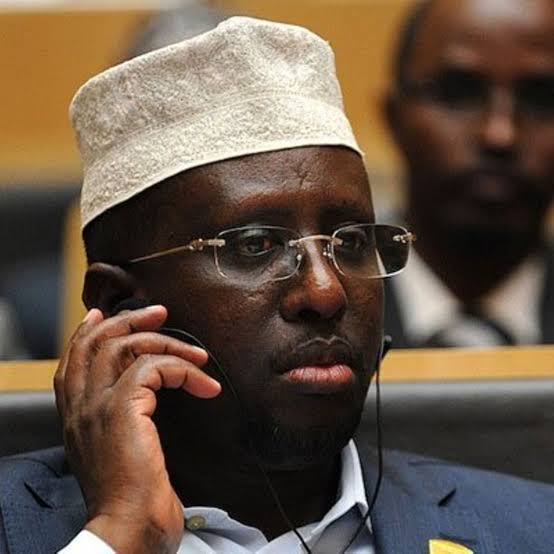 MOGADISHU (Somali Report) —Former Somali president Sharif Sheikh Ahmed has defended the United Arab Emirates' longstanding relationship with Somalia, rejecting allegations that UAE is backing opposition politicians and warning that deteriorating relations with the Gulf state risk harming Somalia's national interests.
Speaking in a wide-ranging interview with local Somali media, Sharif said his personal residence in the UAE should not be interpreted as evidence of a political alliance with Emirati authorities, arguing instead that the relationship between Somalia and the UAE predates current political disputes and has historically benefited Somalis.
"I have no political relationship with the UAE," Sharif said. "The relationship is an ordinary one. The UAE welcomed me, my children and my family, and I am grateful for that."
The former president said he had lived in the UAE for around a decade after leaving office, but insisted this did not mean he received political backing from UAE.
Sharif argued that the UAE has historically been among Somalia's closest Arab partners, pointing to decades of economic assistance, humanitarian support and investment dating back to the era of the late UAE founding president Sheikh Zayed bin Sultan Al Nahyan and former Somali leader Mohamed Siad Barre.
He said generations of Somali traders had built businesses in the Emirates and that the country had remained open to Somalis throughout years of conflict and state collapse.
"The UAE has always been one of the countries that stood by Somalis," he said, adding that successive Somali governments had benefited from Emirati support regardless of political differences.
Sharif also recalled that during his presidency the UAE voluntarily provided approximately five million dollars each month to help support Somalia's government budget.
He further credited the UAE with financing the training, equipment and logistical support of around 10,000 Somali security personnel under the current federal government, arguing that such contributions should be acknowledged rather than dismissed.
"Those who funded 10,000 soldiers yesterday should not simply be accused today," he said adding he thinks that MogadishuForces for stabilization were funded by the UAE.
Criticism of Somalia-UAE tensions
Sharif criticised what he described as an increasingly confrontational approach towards the UAE by Somali authorities, saying diplomatic disagreements should be managed through dialogue rather than public accusations.
He argued that countries with far deeper political disagreements continue maintaining diplomatic relations and said Somalia should learn how to manage conflicts without undermining long-term partnerships.
"It is neither diplomacy nor good politics," he said, referring to recent Somali government decisions affecting relations with the UAE. "It is poor judgement."
Sharif also rejected claims that the UAE was responsible for Somalia's internal political divisions, saying accusations should be supported by evidence rather than speculation.
"When Somalia fails to solve its own problems, blaming others is not the answer," he said.
He argued that Somalia's leadership needed a better understanding of international diplomacy and conflict management, warning that unnecessary disputes with foreign partners could ultimately weaken the country's interests.
Opposition rejects election process
Beyond foreign policy, Sharif devoted much of the interview to Somalia's domestic political crisis ahead of expected elections.
Somali Report · Newsletter
Your morning briefing on Somalia's biggest stories — politics, security, business, and the people shaping the region's future.
Now one of the country's leading opposition figures, Sharif reiterated his support for a universal one-person-one-vote electoral system but argued that the current electoral framework lacks political consensus and risks creating further instability.
He cited recent confrontations in Mogadishu, including protests that turned violent after clashes between government security forces and opposition supporters, resulting in deaths, injuries and vehicles being burned.
Sharif criticised the use of force against demonstrators, saying political disagreements should never be resolved through violence.
"There is no wisdom in people dying," he said.
He warned that Somalia's current electoral arrangements risk dividing the country instead of uniting it and urged political leaders to reach a negotiated settlement before elections proceed.
Constitutional concerns
Sharif also repeated his opposition to proposed constitutional amendments, saying changes should not be used to extend presidential terms or alter the political balance without broad national agreement.
He has previously accused President Hassan Sheikh Mohamud's administration of pursuing constitutional reforms that could prolong the president's stay in office, an allegation the government has rejected.
The former president is part of an opposition alliance that includes former prime ministers Hassan Ali Khaire and Mohamed Hussein Roble, as well as veteran politician Abdirahman Abdishakur Warsame.
Somaliland recognition
Sharif also criticised recent moves by Israel to recognise Somaliland and plans to establish diplomatic representation there, Qudus/Hebron describing the development as harmful to Somalia's territorial integrity.
While acknowledging longstanding grievances in Somaliland, he insisted the future of the self-declared republic should be resolved through negotiations between Somalis rather than external recognition.
"I believe Somalia remains one country," he said. "Dialogue should be given every opportunity."
Sharif argued that reconciliation between Mogadishu and Hargeisa remains possible if both sides demonstrate flexibility, compromise and political goodwill.
Reflecting on Somalia's leadership
The former president concluded by saying Somalia's greatest challenge has consistently been political leadership rather than its people.
He said Somalis had repeatedly demonstrated resilience despite decades of conflict but needed leaders capable of prioritising national unity, reconciliation and long-term development over political confrontation.
Sharif, a former schoolteacher who rose to prominence during the Islamic Courts Union before serving as Somalia's president from 2009 to 2012, remains one of the country's most influential opposition politicians as debate intensifies over the country's political future.
About the Author
Aden Warsame is a Senior Reporter at Somali Report, covering politics, security, diplomacy, business, and regional affairs across Somalia and the Horn of Africa.
Somali PM Congratulates Sagal Abdi-Wali on Historic Election to UK Parliament


