The United States has rejected speculation that it is preparing to withdraw from Somalia, but AFRICOM Commander Gen. Dagvin R.M. Anderson says future American support will increasingly depend on Somalia taking greater responsibility for its own security, maintaining political stability, and sustaining gains against al-Shabaab.
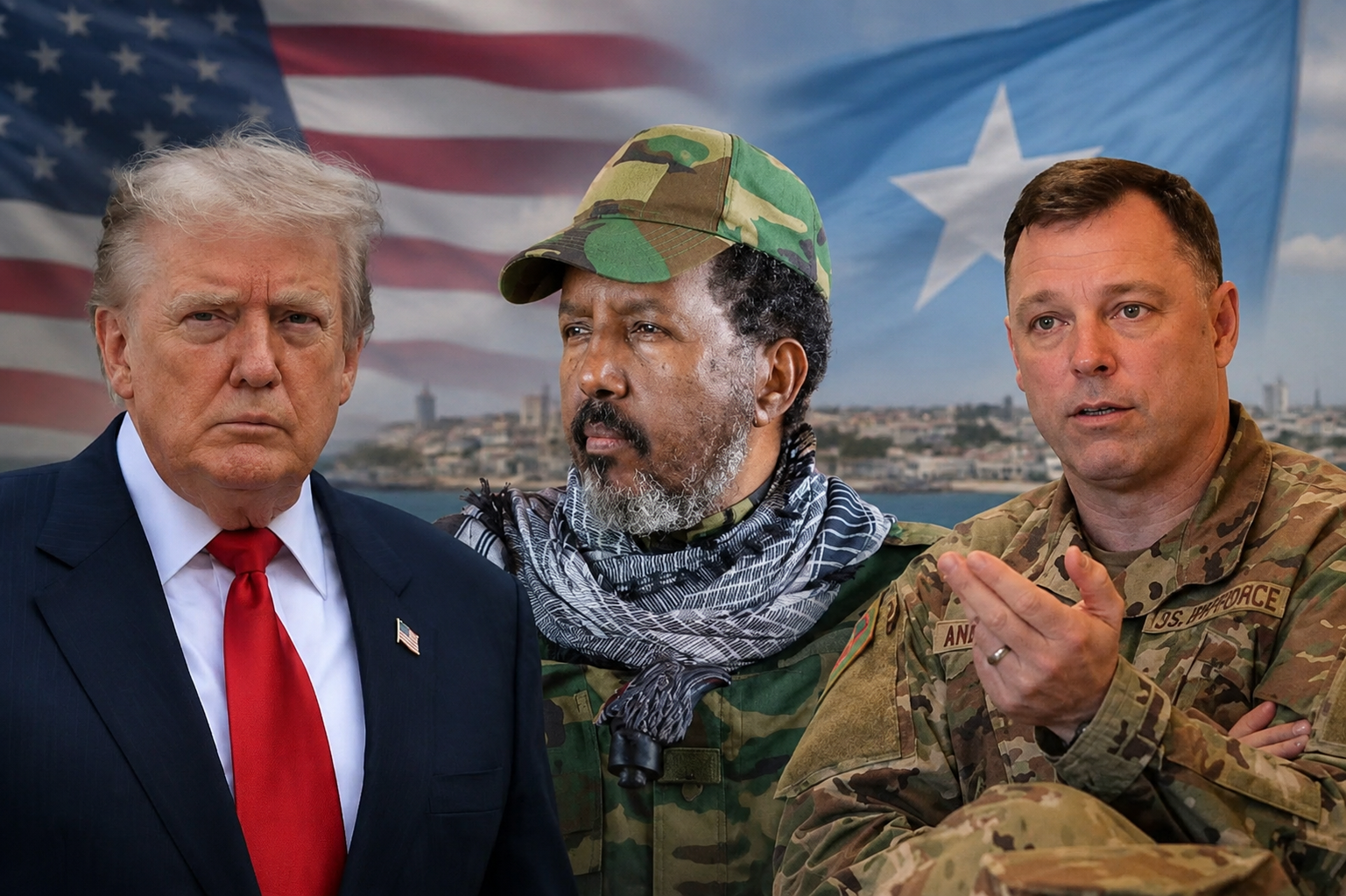 MOGADISHU (Somali Report) — The United States has rejected speculation that it is preparing to scale back or withdraw its security partnership with Somalia, but Washington’s top military commander for Africa has made clear that continued American support will increasingly depend on Somalia taking greater responsibility for its own security and overcoming political instability.
Speaking during a visit to Mogadishu, U.S. Africa Command (AFRICOM) Commander Gen. Dagvin R.M. Anderson said the United States remains committed to Somalia’s fight against terrorism but expects Somali authorities to lead efforts to secure the country and preserve recent military gains.
“The United States has not turned its back on Somalia,” Anderson said. “We’ve been committed here for several years. We have engaged, I think, very constructively.”
His remarks address months of speculation over the future of U.S. involvement in Somalia as Washington reassesses global security priorities while conflicts in Ukraine and the Middle East continue to demand military resources.
Anderson highlighted the U.S.-backed development of the elite Danab Special Forces as one of the strongest examples of bilateral security cooperation.
“We helped build the Danab, one of the most capable forces on the continent,” he said. “We have completed that. We have built that force, and it is here, and it’s ready to be used for counterterrorism.”
However, he stressed that Somalia must now sustain and strengthen the force on its own.
“But now it’s up to Somalia to sustain that force, to continue that force, to build it and continue to make it effective going into the future,” he said.
The AFRICOM commander acknowledged that policymakers in Washington are increasingly questioning how long the United States should remain heavily engaged after years of military assistance.
“There are people in Washington who say, ‘We’ve been here for several years. At what point does Somalia become independent and take care of these issues?’”
He warned that continued U.S. engagement would depend not only on military progress but also on political stability inside Somalia.
“If Somalia steps up and the government takes the lead on this, we will continue to be there because there is mutual interest,” Anderson said. “But if we can’t see that, and the political instability and the political infighting continue, then it’s going to be very hard for us to continue to stay engaged.”
Somali Report · Newsletter
Your morning briefing on Somalia's biggest stories — politics, security, business, and the people shaping the region's future.
Anderson described Somalia as strategically important because of its location at the gateway to the Red Sea and the wider Horn of Africa, saying instability in the country has historically affected global shipping, migration and regional security.
“The Horn of Africa is critically important to the commerce of the world,” he said, noting that piracy and insecurity had previously disrupted international trade and created humanitarian crises beyond Somalia’s borders.
He also acknowledged that AFRICOM faces growing competition for military resources as the United States responds to conflicts elsewhere.
“As long as we can continue to show progress against a mutual threat, which is terrorism… I can justify keeping those resources here,” Anderson said. “But if those resources are used elsewhere for other things and not for the terrorist fight, then I will have a hard time justifying keeping them here.”
The general argued that military operations alone cannot deliver lasting stability.
Reflecting on previous campaigns against al-Shabaab, Anderson noted that some areas cleared by Somali and partner forces had later fallen back under militant influence because governance failed to follow security gains.
“We need Somalia to bring the governance,” he said. “We need Somalia to create the stability to allow the prosperity.”
The interview comes as the United States continues intensive counterterrorism operations in Somalia. According to data compiled by the New America Foundation, U.S. airstrikes targeting al-Shabaab and Islamic State militants have increased significantly since President Donald Trump returned to office, placing his administration on pace to exceed the number of strikes carried out during his first term.
Washington has invested billions of dollars in Somalia over the past two decades through military training, intelligence sharing, humanitarian assistance and support for elite forces such as Danab. At the same time, the African Union Support and Stabilization Mission in Somalia (AUSSOM) faces growing financial uncertainty as Somalia prepares to assume greater responsibility for national security.
Despite questions about America’s long-term role, Anderson insisted the United States remains committed to Somalia’s success.
“The United States has and will continue to help those who are willing to help themselves,” he said.
About the Author
Fatuma Taxadar Yusuf is the Editor-in-Chief of Somali Report. She was the first woman to serve as an editor and media managing director in Somalia’s Puntland State. Previously, she worked with the BBC World Service and other leading media organizations in Somalia. She also serves as Deputy Chairperson of the Somalia Media Council, an independent body that regulates media standards and professional conduct in Somalia.
Somalia joins IGAD ministers for regional talks in Djibouti


