The UN Security Council is set to discuss the future of the African Union mission in Somalia as funding shortages, uncertainty over US support and security challenges threaten its operations.
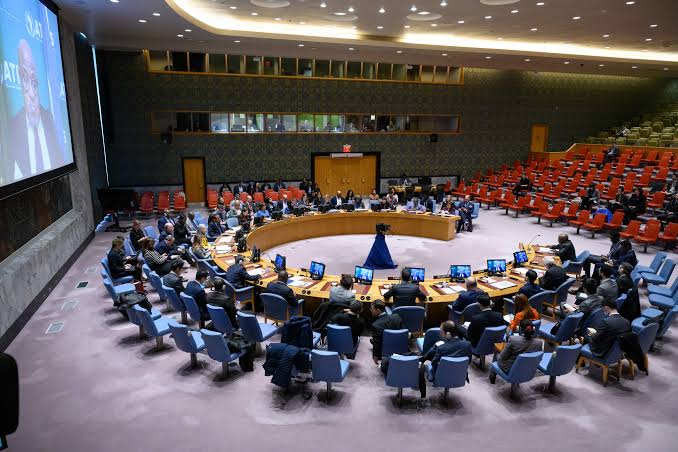
The private meeting, scheduled under the agenda item on the situation in Somalia, will bring together senior UN and African Union officials to assess the mission's activities and the challenges surrounding its continued presence in the country.
Assistant Secretary-General for Africa Martin Kimani and the African Union Commission's Special Representative for Somalia and Head of AUSSOM, El Hadji Ibrahima Diene, are expected to brief council members, according to Security Council Report.
The discussions come as AUSSOM faces mounting financial and logistical difficulties, particularly uncertainty surrounding the future of support provided by the UN Support Office in Somalia (UNSOS), which supplies essential logistical assistance to the African Union mission.
In its latest report, the UN Secretary-General said UNSOS had reduced expenditure by 25 percent against its approved budget of $520.6 million for 2025/26. The General Assembly subsequently approved a reduced budget of $481.4 million for the 2026/27 financial year.
The financial constraints have also affected logistical assistance to Somali security forces operating alongside AUSSOM. Support for fuel and food deliveries was temporarily suspended between May and July before resuming following a £1 million contribution from the United Kingdom in August.
UNSOS expects to maintain the current level of assistance through December, but the Secretary-General has warned that persistent funding gaps threaten the continuity and predictability of support.
The future of the mission has also been complicated by disagreements over its financing arrangements.
The United States previously informed the African Union that it would discontinue its support for UNSOS beyond the current AUSSOM authorisation period, which expires on December 31. Washington opposed a request by troop-contributing countries for sustained support over 18 to 24 months, instead proposing a 12-month drawdown period to allow the UN office to wind down its operations.
Somali Report · Newsletter
Your morning briefing on Somalia's biggest stories — politics, security, business, and the people shaping the region's future.
However, Security Council Report said Washington had reportedly decided on November 15 to support a one-year renewal of the mandates of both AUSSOM and UNSOS in 2027, signalling a possible shift in its earlier position.
The reported change is expected to feature prominently in Tuesday's discussions, although the United States has stressed that continued support should not be interpreted as an open-ended commitment.
AUSSOM's troop-contributing countries, which include Uganda, Burundi, Djibouti, Ethiopia and Egypt, have called for an orderly and phased withdrawal, with sufficient financial support to strengthen Somali security institutions and facilitate the transfer of responsibilities.
At an extraordinary summit in Kampala in July, the countries requested sustained international assistance for 18 to 24 months to allow the transition to proceed without creating a security vacuum.
The security situation in Somalia is another major concern. AUSSOM continues to support Somali forces in operations against Al-Shabaab, which remains a significant threat despite sustained military campaigns.
The Security Council meeting also comes against the backdrop of Somalia's deepening political and constitutional crisis, with disagreements between the federal government and opposition groups threatening political stability and cooperation between national and regional authorities.
Council members are expected to emphasise the importance of coordination between the United Nations, African Union and troop-contributing countries, while encouraging Somali political stakeholders to resolve their differences through dialogue.
The discussions are expected to help shape negotiations ahead of the renewal of AUSSOM's mandate in December, as international partners consider how to maintain security support while preparing for a gradual transition to Somali-led security arrangements.
About the Author
Ahmed Omar is a senior journalist for Somali Report, based in Mogadishu. He has two decades of experience reporting on Somalia for international and local media. He covers politics, security, governance, business, trade, economic developments and regional affairs.
