Somalia and the Islamic Development Bank Group signed a three-year, $45 million cooperation framework to support infrastructure, health, agriculture and job training from 2026 to 2028.
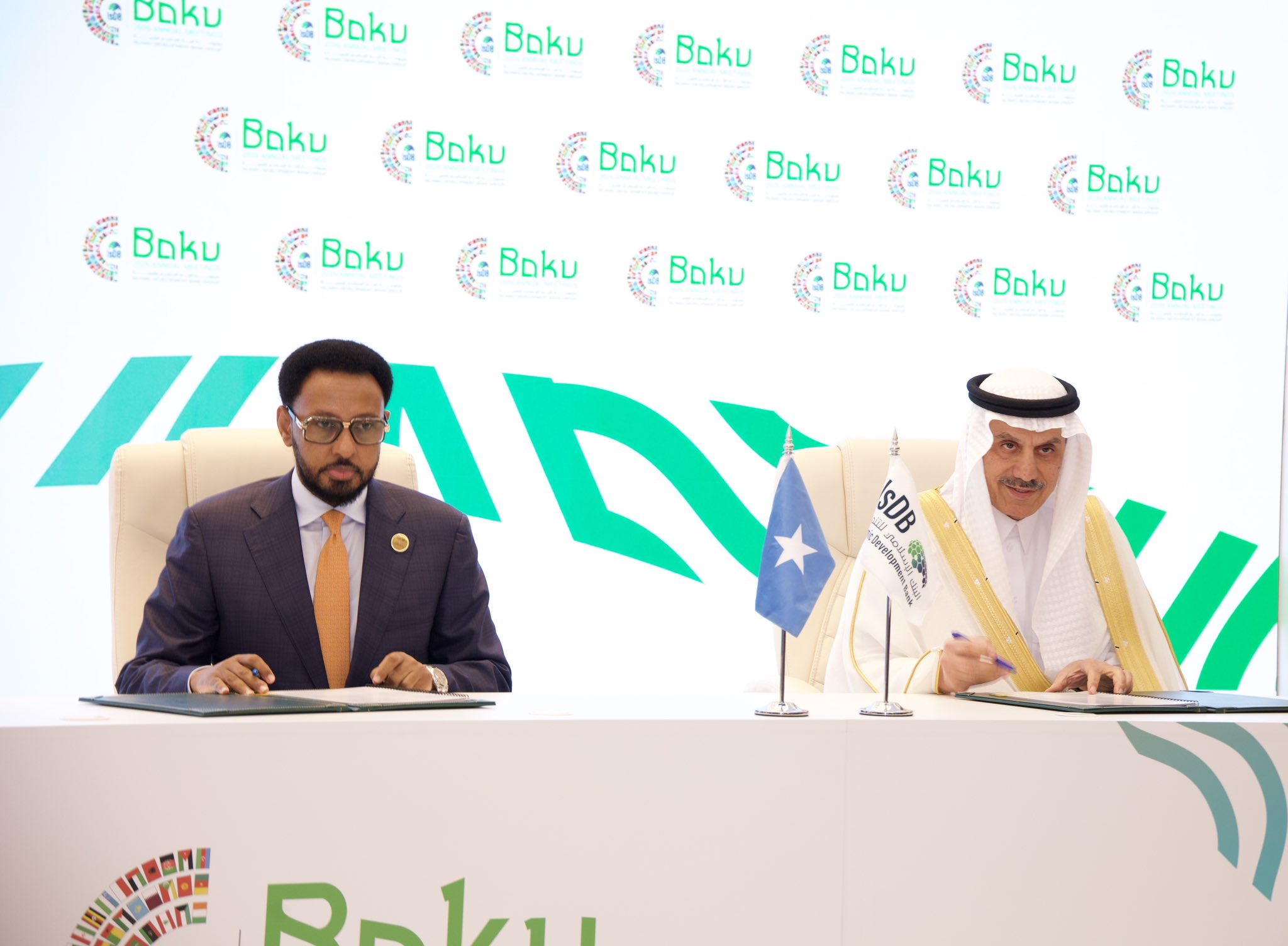
Baku (Somali Report) — Somalia and the Islamic Development Bank Group have signed a three-year cooperation framework that will guide $45 million in development financing from 2026 to 2028, Somali officials said Friday.
The Country Engagement Framework was signed in Baku by Somali Finance Minister Bihi Iman Egeh and Islamic Development Bank President Muhammad Al Jasser. It comes as Somalia seeks to rebuild its economy, expand basic services and attract new investment after decades of conflict, political fragility and climate shocks.
The financing will focus on two broad areas: economic infrastructure and human capacity development. Officials said energy and agriculture will be central to the infrastructure component, with the aim of improving productivity, supporting growth and reducing poverty in one of the world’s most aid-dependent economies.
The second pillar will target health services, vocational training and skills development, with a particular focus on women and young people. Somalia has one of the youngest populations in the region, but limited access to formal employment, training and public services has slowed efforts to turn that demographic profile into an economic advantage.
Egeh said the agreement marked a new stage in Somalia’s relationship with the Islamic Development Bank after the country completed the Heavily Indebted Poor Countries debt relief process.
Somali Report · Newsletter
Your morning briefing on Somalia's biggest stories — politics, security, business, and the people shaping the region's future.
“The Somalia-IsDB Country Engagement Framework 2026-28 marks an important milestone in our post-HIPC partnership with IsDB,” Egeh said. “This $45 million package will help advance resilient infrastructure, human capital development and economic transformation, supporting Somalia’s long-term growth and development ambitions.”
Somalia reached the completion point under the HIPC initiative in 2023, unlocking major debt relief and allowing the government to reengage more fully with international lenders. Since then, Mogadishu has sought to convert debt relief into new financing for roads, power, agriculture, health and education.
But the economic picture remains difficult. The World Bank said Somalia’s growth slowed to an estimated 3% in 2025, down from about 4% in 2023 and 2024. It cited declining foreign aid, drought conditions and rising living costs as major pressures on households and businesses. Medium-term growth is expected to remain modest, with projections of about 2.8% to 3.1%.
Those pressures have sharpened the government’s need for concessional financing and long-term development partnerships. Somalia remains vulnerable to drought, flooding, food insecurity and weak domestic revenue collection. Large parts of the country also continue to face insecurity from al-Shabab, limiting the reach of state institutions and investment.
Officials said the new framework is aligned with Somalia’s national development priorities and will provide a roadmap for cooperation with the Islamic Development Bank over the next three years.
The challenge will be turning the agreement into visible projects that improve livelihoods in a country where economic recovery remains real but fragile.
About the Author
Osman Hassan is a Senior Editor at the Somali Report based in Nairobi with over 15 years of experience in journalism. He has worked with local and international media outlets in Somalia and is an award-winning journalist. His reporting focuses on politics, security, and regional affairs in the Horn of Africa.
Seven Ethiopian Opposition Groups Form Alliance to Oust Abiy Government


