Somaliland has announced new measures to strengthen government cybersecurity after hackers targeted the Ministry of Foreign Affairs’ website, exposing growing concerns over digital threats linked to regional geopolitical tensions and the territory’s expanding international partnerships.
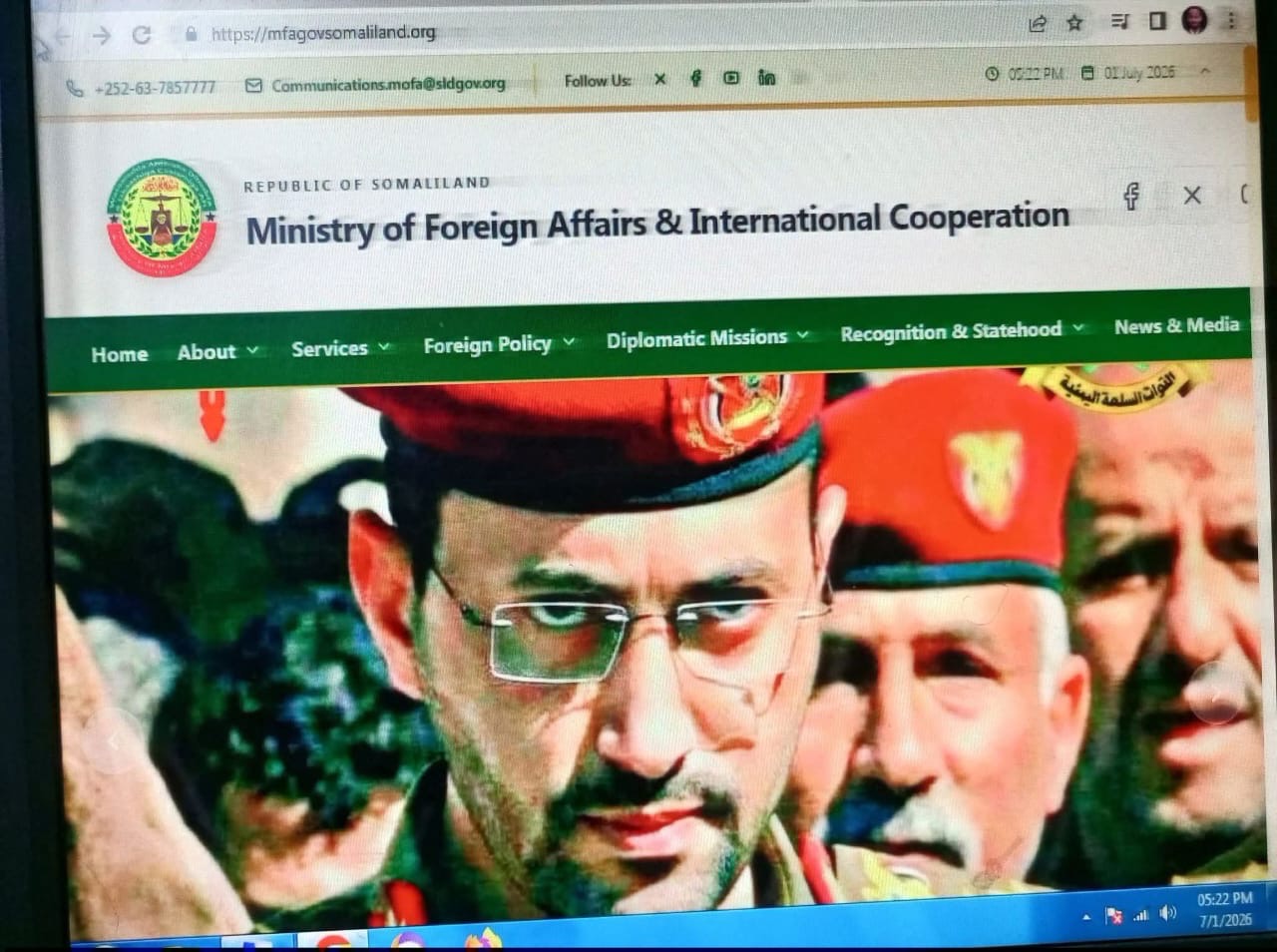 HARGEISA (Somali Report) — Somaliland has announced a nationwide effort to strengthen the cybersecurity of government institutions following a recent cyberattack that compromised the official website of its Ministry of Foreign Affairs, highlighting growing concerns over the territory’s vulnerability to politically motivated digital attacks.
The decision comes just weeks after a hacker group calling itself the Islamic Cyber Resistance Axis claimed responsibility for defacing the Foreign Ministry’s website, replacing its homepage with political messages and images linked to Yemen’s Houthi movement.
Although the attack did not appear to compromise sensitive government systems or banking infrastructure, officials say it exposed weaknesses that require immediate attention as Somaliland expands its digital services and international engagement.
During Wednesday’s Cabinet meeting, Minister of Communication and Technology Dr. Abdisaalan Hussein Awale briefed ministers on a comprehensive national cybersecurity strategy aimed at protecting government networks and critical digital infrastructure.
According to a government statement, the ministry has begun conducting a nationwide assessment of public institutions to identify vulnerabilities and improve the resilience of government information systems against future cyberattacks.
The strategy prioritizes the protection of national data, strengthening government digital infrastructure, reducing the risks posed by organized cyber threats, and introducing modern cybersecurity technologies to ensure the continuity and reliability of public digital services.
The minister compared cybersecurity to traditional national defence, arguing that protecting digital infrastructure has become just as important as maintaining military and police forces.
“In today’s world, countries require not only armies and police to safeguard national security but also strong cyber defences capable of protecting government institutions and national interests,” he told cabinet members.
The move follows an attack that attracted international attention after hackers temporarily took control of Somaliland’s Foreign Ministry website and published images of armed fighters together with political slogans associated with the Iran-backed “Axis of Resistance.”
The same group also claimed responsibility for targeting Somaliland’s Central Bank website.
Somali Report · Newsletter
Your morning briefing on Somalia's biggest stories — politics, security, business, and the people shaping the region's future.
Cybersecurity experts, however, stressed that the attack appeared limited to publicly accessible websites rather than core government systems.
Speaking previously to Somali Report, cybersecurity specialist Bashir Hashi Dhoore, founder of CyberBridge Institute, said website defacement should not be confused with a breach of confidential government databases or financial systems.
“A website being defaced does not necessarily mean sensitive information has been stolen,” he said. “These attacks are often designed to spread propaganda, embarrass governments and attract attention rather than compromise secure internal networks.”
Analysts say the incident reflects a broader trend in which cyberattacks increasingly accompany geopolitical disputes across the Horn of Africa and the Red Sea region.
The hacking occurred months after Israel became the first United Nations member state to formally recognize Somaliland as an independent state, followed by the establishment of diplomatic relations and announcements of cooperation in security, technology, healthcare and investment.
The Houthis have repeatedly condemned Israel’s growing presence in Somaliland, warning that any Israeli military or intelligence activity in the territory would be considered a legitimate target because of Somaliland’s strategic position near the Bab el-Mandeb Strait.
While Somaliland authorities have not directly linked the attack to any foreign government or armed group, officials acknowledge that the incident demonstrates how regional political rivalries increasingly extend into cyberspace.
As Somaliland continues pursuing international partnerships and expanding digital government services, officials say strengthening cybersecurity has become an urgent national priority aimed at protecting both government institutions and public confidence in digital services.
The government has not disclosed when the cybersecurity assessment will be completed but says implementation of new protective measures has already begun.
About the Author
Khadar Abdi is the Somaliland Correspondent for Somali Report. He covers politics, security, governance, business, trade, economic developments, and regional affairs across Somaliland.
Somali Cabinet Moves to Enforce New Constitution, Sets Two-Month Deadline for Draft Law


