Somalia has launched the registration of political parties ahead of the 2027 federal elections, as a dispute between the government and opposition over the proposed one-person, one-vote system continues.
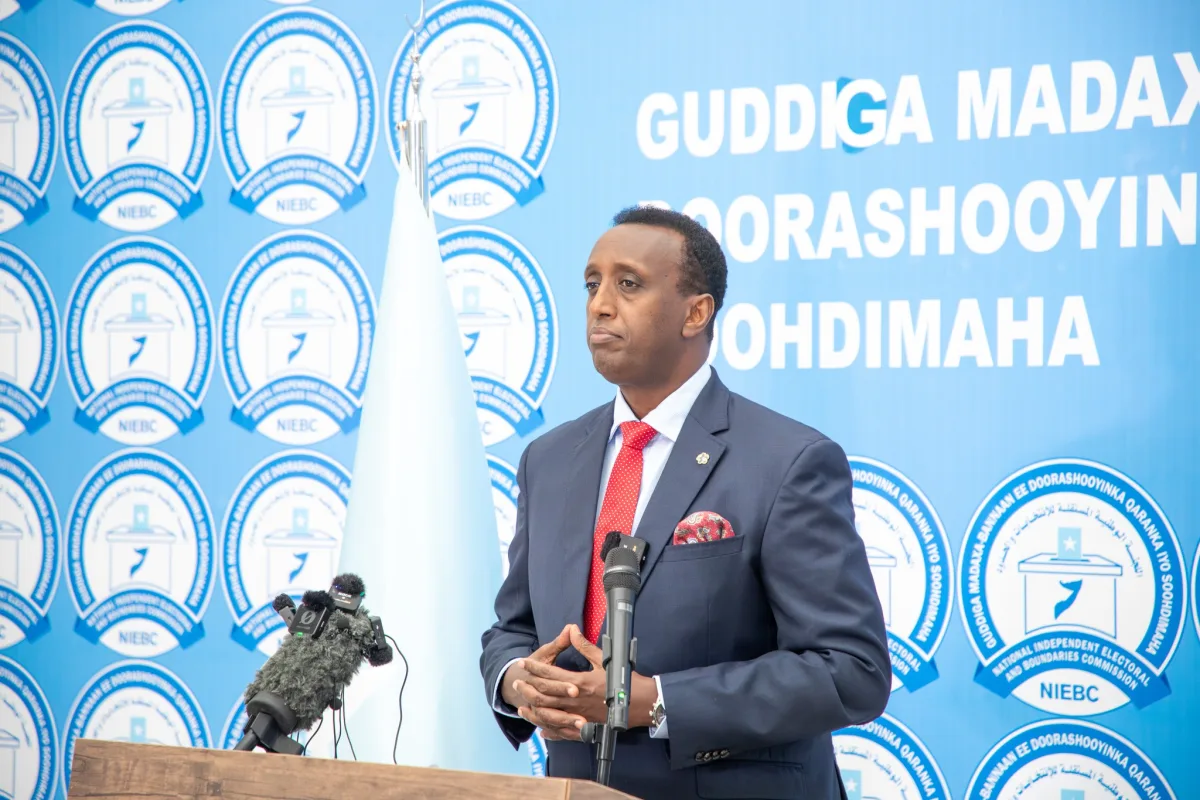 MOGADISHU (Somali Report) — Somalia's National Independent Electoral and Boundaries Commission began registering political parties on Sunday, marking the first formal step in preparations for federal elections scheduled for 2027, amid an ongoing dispute between the government and opposition over the proposed electoral system.
The registration process, announced earlier by the commission, will run for 22 days, ending on November 22. The commission has urged political parties, political stakeholders and anyone interested in contesting the elections to take advantage of the registration period.
The exercise is part of a broader electoral timetable that sets April 15, 2027, for elections to both houses of the federal parliament, followed by the presidential election on May 15.
The commission's plan envisages a direct voting system, commonly known as one person, one vote, under which citizens would directly elect their representatives rather than relying on the indirect clan-based electoral model used in previous elections.
The government has defended the proposed system as an important step towards expanding democratic participation and allowing Somali citizens to exercise their voting rights directly.
However, the proposed electoral arrangements remain contentious, with opposition groups rejecting the process being pursued by the commission and demanding a political agreement before further steps are taken.
Opposition leaders have argued that the electoral framework and constitutional amendments should first be discussed and agreed upon by all major political stakeholders to avoid a unilateral process that could deepen divisions in the country.
Somali Report · Newsletter
Your morning briefing on Somalia's biggest stories — politics, security, business, and the people shaping the region's future.
The disagreement centres on the transition from Somalia's indirect electoral system to direct voting, as well as broader questions surrounding constitutional changes and the political arrangements governing the next elections.
The opposition has maintained that an inclusive agreement is necessary to establish a mutually accepted electoral framework, while the government has continued to advance its one-person, one-vote agenda.
Under the commission's timetable, political parties are expected to submit their lists of parliamentary candidates by November 22, 2026. The official election campaign is scheduled to begin on February 27, 2027, ahead of the parliamentary and presidential polls.
The registration exercise is therefore taking place against a backdrop of heightened political tensions, with the government and opposition yet to reach a common position on how the next elections should be conducted.
Somalia has relied on an indirect clan-based electoral model for successive election cycles, in which clan elders and electoral delegates select lawmakers, who in turn elect the president.
The proposed transition to direct elections represents a significant change in the country's political system, but its implementation remains a major point of disagreement among political leaders.
With the 2027 election dates approaching, the ability of the federal government, opposition groups and electoral authorities to reach a political understanding is likely to be central to the country's preparations for the next electoral cycle.
About the Author
Ahmed Omar is a senior journalist for Somali Report, based in Mogadishu. He has two decades of experience reporting on Somalia for international and local media. He covers politics, security, governance, business, trade, economic developments and regional affairs.
