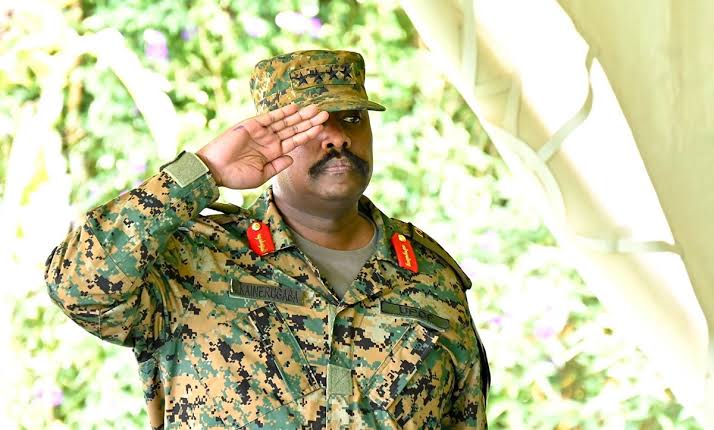
Uganda has rejected Somalia's request to keep its troops under a new security agreement, with military chief Muhoozi Kainerugaba announcing the start of a withdrawal after two decades of military involvement.
Somali President Hassan Sheikh Mohamud discussed the future of Uganda's military presence with his Ugandan counterpart, Yoweri Museveni, during a visit to Uganda, but Kampala has indicated that it intends to proceed with the withdrawal.
The decision became clearer after Uganda's military chief, General Muhoozi Kainerugaba, announced that Ugandan forces had started pulling out of Somalia while Hassan was still in Kampala.
"We have started withdrawing our UPDF troops from Somalia after 20 years of sacrifice in lives and blood. We are handing over the country's security to our Somali brothers," Kainerugaba said in a statement.
His announcement appeared to contradict Mogadishu's efforts to secure a new arrangement that would allow Ugandan troops to remain in Somalia under a bilateral security framework.
Uganda is one of the largest troop contributors to the African Union mission in Somalia and has played a central role in supporting Somali government forces in the fight against Al-Shabaab, the Al-Qaeda-linked armed group that has waged an insurgency for more than 15 years.
Ugandan troops are deployed in the capital, Mogadishu, and the southern region of Lower Shabelle, where they have been responsible for protecting strategic government infrastructure, including the international airport and seaport.
Their presence has also been important in securing military positions along frontline areas and supporting operations against Al-Shabaab, which continues to control parts of southern and central Somalia despite years of military campaigns.
The withdrawal could create additional security challenges for Somalia at a sensitive time, as federal forces continue operations against the group while the country faces political disagreements over the electoral process and the future of its security arrangements.
Somali Report · Newsletter
Your morning briefing on Somalia's biggest stories — politics, security, business, and the people shaping the region's future.
Uganda's decision also comes amid broader changes to the African Union's security engagement in Somalia, as the African Union Support and Stabilization Mission in Somalia (AUSSOM) faces financial and logistical difficulties.
The mission replaced the African Union Transition Mission in Somalia (ATMIS) in January 2025, with a mandate to support Somali security forces, protect key installations and help the government extend its authority across the country.
However, the mission has faced persistent funding shortages, raising concerns about its ability to sustain operations and maintain troop deployments.
Uganda's announcement leaves questions about the timing and scale of the withdrawal, as well as how Somali authorities intend to replace the departing forces and maintain security around critical installations.
The Ugandan military chief did not provide a detailed timetable for the withdrawal or specify how many troops would be involved in the initial phase.
For Mogadishu, the development presents a diplomatic and security challenge, particularly as the government seeks to establish alternative security arrangements while accelerating the transfer of responsibilities from international forces to Somali institutions.
Uganda has been involved in the African Union's military operations in Somalia since 2007, making it one of the longest-standing foreign military contributors to the country's stabilisation efforts.
Its departure would mark a significant change in the international security presence in Somalia, where the government continues to depend on external military support in its campaign against Al-Shabaab.
About the Author
Ahmed Omar is a senior journalist for Somali Report, based in Mogadishu. He has two decades of experience reporting on Somalia for international and local media. He covers politics, security, governance, business, trade, economic developments and regional affairs.
