Somalia’s intelligence agency says nine Al-Shabab militants, including two senior commanders, were killed in a planned operation near Jowhar with support from international partners.
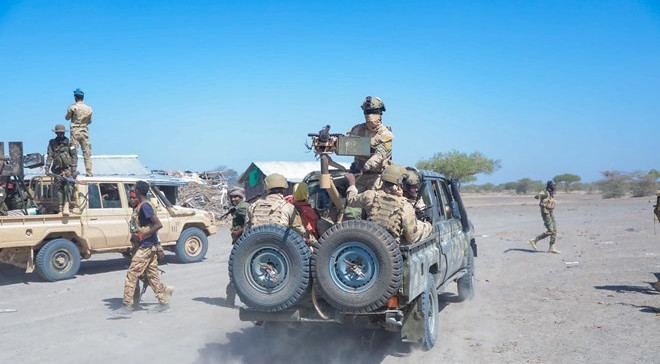 JOWHAR, Somalia (Somali Report) — Somalia’s National Intelligence and Security Agency (NISA) said Saturday that nine Al-Shabab militants, including two senior commanders, were killed in a planned operation near Jowhar in central Somalia, with support from international partners.
The operation took place in the Warciise area, about 25 kilometers (15 miles) from Jowhar, the capital of Hirshabelle state, NISA said in a statement.
The agency identified the two commanders as Ahmed Ali Jimale, whom it described as Al-Shabab’s commander for Jowhar district, and Geedi Mohamed Nur Adde, who was said to oversee the group’s activities in the Dumaaye and Dabagaalo areas.
NISA said intelligence officers had tracked the two men and monitored their movements for some time before the operation was carried out.
Seven other Al-Shabab members were also killed, according to the agency. NISA said they belonged to the group’s so-called Hisba militia in Warciise and were accompanying the commanders who were targeted.
“The operation went according to plan,” NISA said, describing the casualties as a major blow to Al-Shabab. The agency did not provide details on the nature of the operation, the international partners involved, or whether government forces suffered casualties.
NISA said the operation was part of broader efforts to weaken Al-Shabab by targeting its leadership and networks used to organize attacks and other militant activities.
The agency urged residents to report suspected security threats and provide information that could help authorities prevent attacks.
Al-Shabab, an Al-Qaida-linked militant group, has waged an insurgency against Somalia’s federal government for more than a decade and remains capable of carrying out deadly attacks despite repeated military offensives.
Somali Report · Newsletter
Your morning briefing on Somalia's biggest stories — politics, security, business, and the people shaping the region's future.
The group has lost some territory during government-led operations but has also demonstrated an ability to regroup and retake areas after Somali forces withdraw. A July 2026 report by the International Crisis Group revealed that Al-Shabaab has reversed most of the government's territorial gains from the 2022–2023 military offensives, pushing the conflict into a renewed stalemate. While federal forces secure Mogadishu, militants have recaptured key towns and central regions.
A major Somali military offensive began after President Hassan Sheikh Mohamud was elected in May 2022, with government forces and allied local militias capturing several towns and rural areas from Al-Shabab in central Somalia. However, Al-Shabab later regained control of several areas seized during that offensive, highlighting the difficulties Somalia faces in holding territory after military advances.
The government has increasingly relied on international security partners, including African Union forces, to help train and support Somali troops as it seeks to assume greater responsibility for national security.
The United States has been Somalia’s main international security partner, providing military assistance, intelligence support and airstrikes against Al-Shabab. Washington has also supported the African Union’s security role in Somalia.
But the future of that support is facing uncertainty. The United States has said it will halt funding for the African Union forces supporting the Somali government’s fight against Al-Shabab by December 2026, putting additional pressure on Somalia and its international partners to establish sustainable financing for security operations.
The African Union Support and Stabilization Mission in Somalia, known as AUSSOM, is also facing financial constraints as Somalia prepares to take on greater responsibility for security.
The funding challenges have raised concerns that any reduction in international support could create security gaps that Al-Shabab could exploit.
For the Somali government, the ability to hold territory captured from the militants remains a central challenge as it seeks to build a stronger national army and gradually reduce reliance on foreign forces.
NISA’s latest operation underscores the continued focus on targeting Al-Shabab commanders and disrupting the group’s networks as Somalia prepares for a potentially significant shift in its security arrangements by the end of 2026.
About the Author
Ahmed Omar is a senior journalist for Somali Report, based in Mogadishu. He has two decades of experience reporting on Somalia for international and local media. He covers politics, security, governance, business, trade, economic developments and regional affairs.
Heavy Fighting Rocks Baidoa as Laftagareen Forces Push Into the City


