Former Somali Prime Minister Abdi Farah Shirdon (Saacid) has outlined five priorities for rebuilding Somalia, calling for constitutional consensus, national reconciliation, lasting security, unity and stronger government institutions.
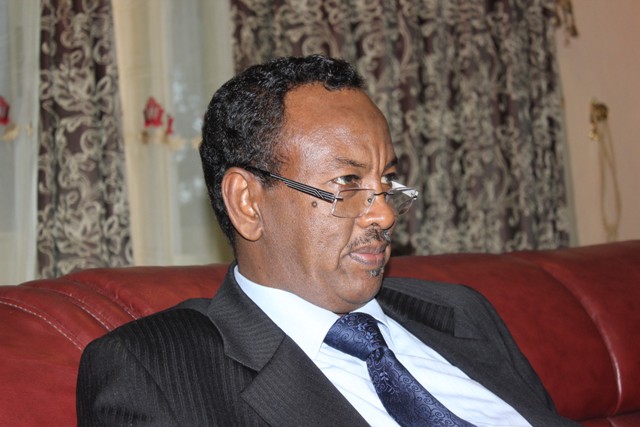 MOGADISHU (Somali Report) — Former Somali prime minister Abdi Farah Shirdon, widely known as Saacid, has outlined five priorities he says are essential to rescuing and rebuilding Somalia's Third Republic, as the country faces political divisions and persistent challenges in state-building.
In a statement published on his X account, Shirdon said Somalia's future statehood should rest on a constitution based on national consensus, genuine reconciliation, sustainable security, national unity and the development of capable government institutions.
The former premier stressed that the country's constitution must be founded on an agreement accepted by Somalis, arguing that broad consensus was necessary to establish a stable political order and strengthen the legitimacy of state institutions.
He also called for genuine national reconciliation, saying efforts to restore public trust and strengthen social cohesion were essential to overcoming the divisions that have shaped Somalia's political landscape.
Shirdon identified sustainable security as another central pillar of a functioning Somali state, highlighting the need for lasting stability as the country continues to confront security threats and the challenges of rebuilding its institutions.
National unity, he said, was equally important to preserving the country's statehood and ensuring that political disagreements did not undermine the foundations of the republic.
The fifth priority focused on strengthening government institutions, which he said must have the capacity and independence needed to fulfil their responsibilities effectively, transparently and accountably.
Somali Report · Newsletter
Your morning briefing on Somalia's biggest stories — politics, security, business, and the people shaping the region's future.
Shirdon said the five priorities were interconnected and should be pursued together to lay the foundations for a functioning Somali government.
His remarks come as Somalia faces renewed political tensions over constitutional amendments, the proposed electoral system and relations between the federal government and opposition figures.
The government of President Hassan Sheikh Mohamud has pushed ahead with constitutional changes and preparations for a transition towards a one-person, one-vote electoral system, while opposition groups have challenged aspects of the process and called for broader political agreement.
The disagreements have raised concerns about the country's ability to reach consensus on the constitutional and electoral arrangements ahead of the next federal elections.
Somalia has struggled for decades to establish stable institutions following the collapse of the central government in 1991, with successive administrations facing political fragmentation, insecurity and disputes over power-sharing between federal and regional authorities.
Shirdon served as prime minister from November 2012 to December 2013 under former president Hassan Sheikh Mohamud, during the early years of the internationally backed federal government.
His latest intervention adds to calls from Somali political figures for a broader agreement on the country's constitutional future, national reconciliation and the institutions needed to sustain the federal state.
About the Author
Ahmed Omar is a senior journalist for Somali Report, based in Mogadishu. He has two decades of experience reporting on Somalia for international and local media. He covers politics, security, governance, business, trade, economic developments and regional affairs.
