Ethiopia's naval chief warns the landlocked nation could consider military action to reclaim Red Sea access if diplomatic and legal channels fail, stoking regional security concerns in the Horn of Africa.
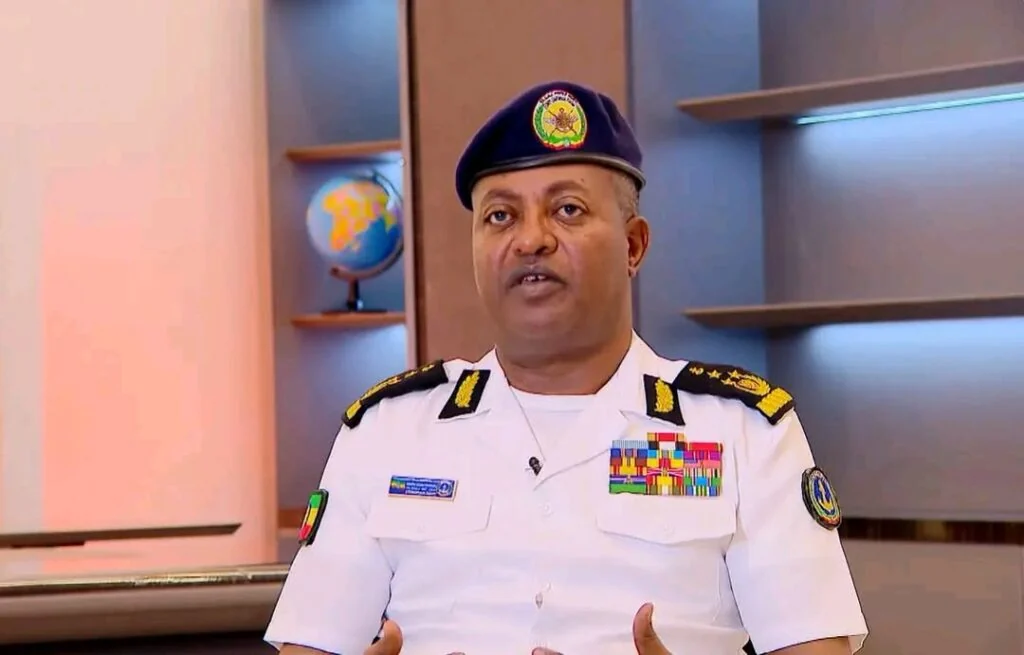 ADDIS ABABA (Somali Report] — Ethiopia has renewed its demand for access to the Red Sea, with its naval chief warning that the landlocked country could consider using force if diplomatic and legal efforts to secure a maritime outlet fail.
Admiral Kindu Gezu said Ethiopia remained committed to pursuing access through peaceful means but suggested military action was an alternative, raising concerns that the country's long-running dispute over sea access could further destabilise the Horn of Africa.
“Our demand is clear. We believe that the people and government of Ethiopia will do everything in their power, through diplomatic and legal channels, to reclaim the port that we lost unlawfully,” Gezu said.
He said Ethiopia faced two possible choices if diplomacy failed: accept its landlocked status or use force to regain what he described as its historic territory along the Red Sea.
“If diplomacy fails, we are left with two options,” he said. “The first is to silently accept that we will not regain our rights to the Red Sea, remaining a landlocked country and continuing to face hunger and insecurity, despite being only 60 kilometres from the sea. The other is to return by force to our homeland on the Red Sea.”
Gezu's remarks appeared to leave open the possibility of military action, although he did not announce any specific plans or identify a target for such an operation.
The naval chief also argued that the Eritrean ports of Assab and Massawa historically belonged to Ethiopia, describing Eritrea's independence as an unjust and unlawful separation.
Ethiopia lost direct access to the sea after Eritrea became independent in 1993, leaving Africa's second-most populous country dependent on neighbouring states for access to international shipping routes. It now relies heavily on the port of Djibouti for its imports and exports.
Prime Minister Abiy Ahmed has repeatedly described access to the sea as a strategic necessity for Ethiopia, arguing that the country's large population and economic ambitions require reliable maritime access.
Somali Report · Newsletter
Your morning briefing on Somalia's biggest stories — politics, security, business, and the people shaping the region's future.
His government has said it wants to secure such access through negotiations and peaceful arrangements, but its statements have caused unease among neighbouring countries, particularly Eritrea and Somalia.
In January 2024, Ethiopia signed a controversial memorandum of understanding with Somaliland, a breakaway region of Somalia, seeking access to the coast in exchange for possible recognition of its independence. Somalia rejected the agreement as a violation of its sovereignty and territorial integrity, prompting a diplomatic crisis between the two countries.
The dispute was later eased by a declaration signed in Ankara in December 2024, in which Ethiopia and Somalia agreed to pursue commercial access to the sea under Somalia's sovereign authority.
However, Gezu's latest comments have renewed questions about Ethiopia's long-term intentions and the potential consequences for regional security.
Eritrea, which fought a devastating border war with Ethiopia between 1998 and 2000, has remained wary of statements by Ethiopian officials about maritime access and the country's historical claims to the Red Sea coast.
The Horn of Africa is already facing multiple security and political challenges, including tensions between neighbouring states, conflicts and fragile diplomatic arrangements.
Ethiopia's renewed rhetoric comes as regional governments seek to prevent disagreements over ports, territory and access to strategic waterways from escalating into a wider confrontation.
About the Author
Ahmed Omar is a senior journalist for Somali Report, based in Mogadishu. He has two decades of experience reporting on Somalia for international and local media. He covers politics, security, governance, business, trade, economic developments and regional affairs.
