Somalia's government says its national army is prepared to take over positions vacated by Ugandan troops serving in the African Union mission, dismissing concerns that the withdrawal could undermine security.
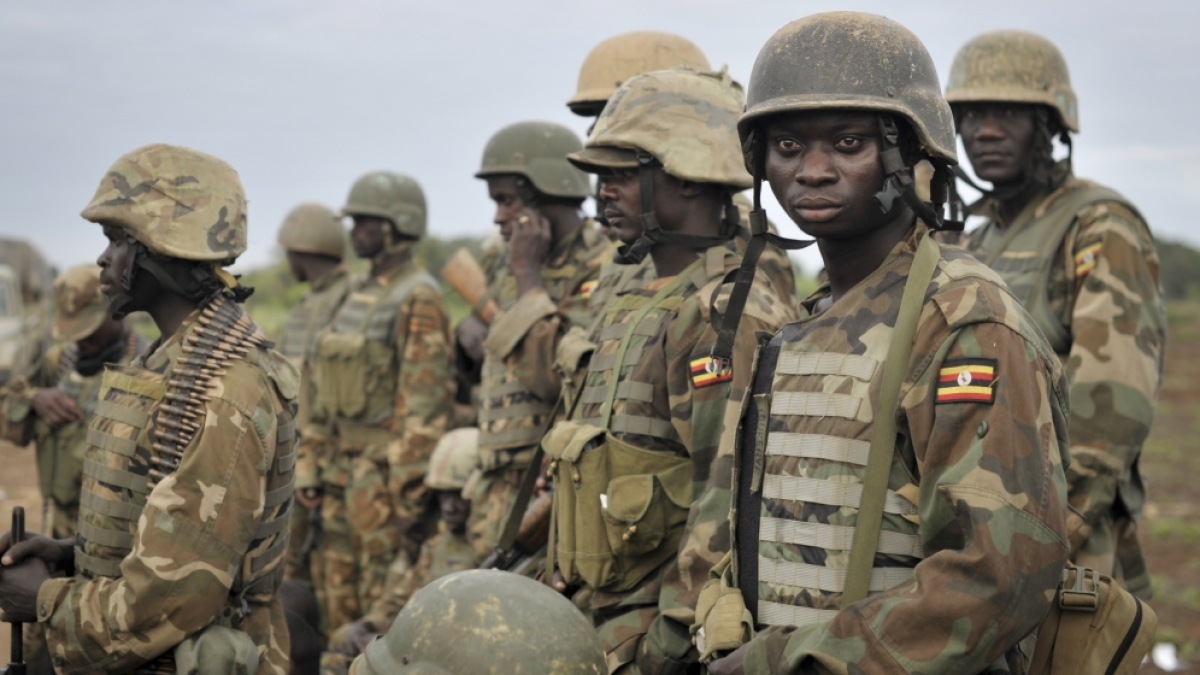 MOGADISHU (Somali Report) — Somali government has no concerns about the planned withdrawal of Ugandan troops serving in the African Union peace support mission, the information minister said, insisting that national forces are prepared to take over positions vacated by foreign soldiers.
Information Minister Abdifitaah Qaasim Mahmoud said the government had spent recent years strengthening and training the Somali National Army, with some troops recently returning home after completing training abroad.
He said Ugandan forces had already handed over some of their positions directly to Somali soldiers, describing the transition as part of broader efforts to transfer security responsibilities to national forces.
"We have no concerns that this will change the country's security situation or affect the areas these forces are leaving," Mahmoud said.
He argued that foreign troops were deployed to Somalia for a specific period and were never intended to remain in the country indefinitely.
Their departure, he added, should not be interpreted as evidence that Somalia lacks the military capacity to defend itself or the international partnerships needed to support its security.
"Somalia's security cannot depend on the continued presence of foreign troops," he said, stressing that the government had made significant investments in building the capabilities of its national forces over the past five years.
The minister's remarks came amid a debate over Somalia's readiness to assume full responsibility for areas currently secured by African Union forces, particularly following Uganda's announcement of plans to withdraw some of its troops.
Uganda is one of the main troop-contributing countries to the African Union Support and Stabilization Mission in Somalia (AUSSOM), which supports Somali forces in operations against Al-Shabaab, the al-Qaeda-linked armed group.
Somali Report · Newsletter
Your morning briefing on Somalia's biggest stories — politics, security, business, and the people shaping the region's future.
Mahmoud also challenged comments made by Somali lawmaker Kooshin during a discussion hosted by BBC Somali, in which the legislator questioned whether Somali forces were ready to take full control of positions being vacated by Ugandan troops.
Kooshin had argued that security in Mogadishu and parts of the Lower and Middle Shabelle regions remained dependent on the presence of African Union peacekeepers.
The minister questioned the lawmaker's account of territories that had reportedly fallen back under Al-Shabaab's control, asking whether those areas had originally been liberated solely by Somali government forces or with the support of international troops.
He maintained that Somali national forces had played a leading role in liberating large areas from the militant group, citing military operations along the corridor between Mogadishu and Harardhere as an example.
His comments appeared aimed at countering concerns that the departure of Ugandan troops could create security gaps that Al-Shabaab might exploit.
Somalia has been battling the group for more than a decade, with the militants continuing to carry out attacks against government forces, security installations and civilians despite repeated military offensives.
The transition to Somali-led security has remained a central objective of the federal government and its international partners, although questions persist over the army's operational capacity, logistics, equipment and ability to hold territory after military operations.
Uganda's planned drawdown comes as AUSSOM faces broader challenges over funding and the future configuration of international security support for Somalia.
The success of the transition will depend not only on the withdrawal of foreign troops but also on whether Somali forces can maintain security and prevent Al-Shabaab from regaining territory in areas handed over to national authorities.
About the Author
Ahmed Omar is a senior journalist for Somali Report, based in Mogadishu. He has two decades of experience reporting on Somalia for international and local media. He covers politics, security, governance, business, trade, economic developments and regional affairs.
