Gallup’s 2026 Global Safety Report found that 74% of surveyed adults in Somalia feel safe walking alone at night, compared with 71% in the UK and France and 64% in Australia. Somalia also recorded a higher score than Kenya and Ethiopia, despite its continuing security challenges.
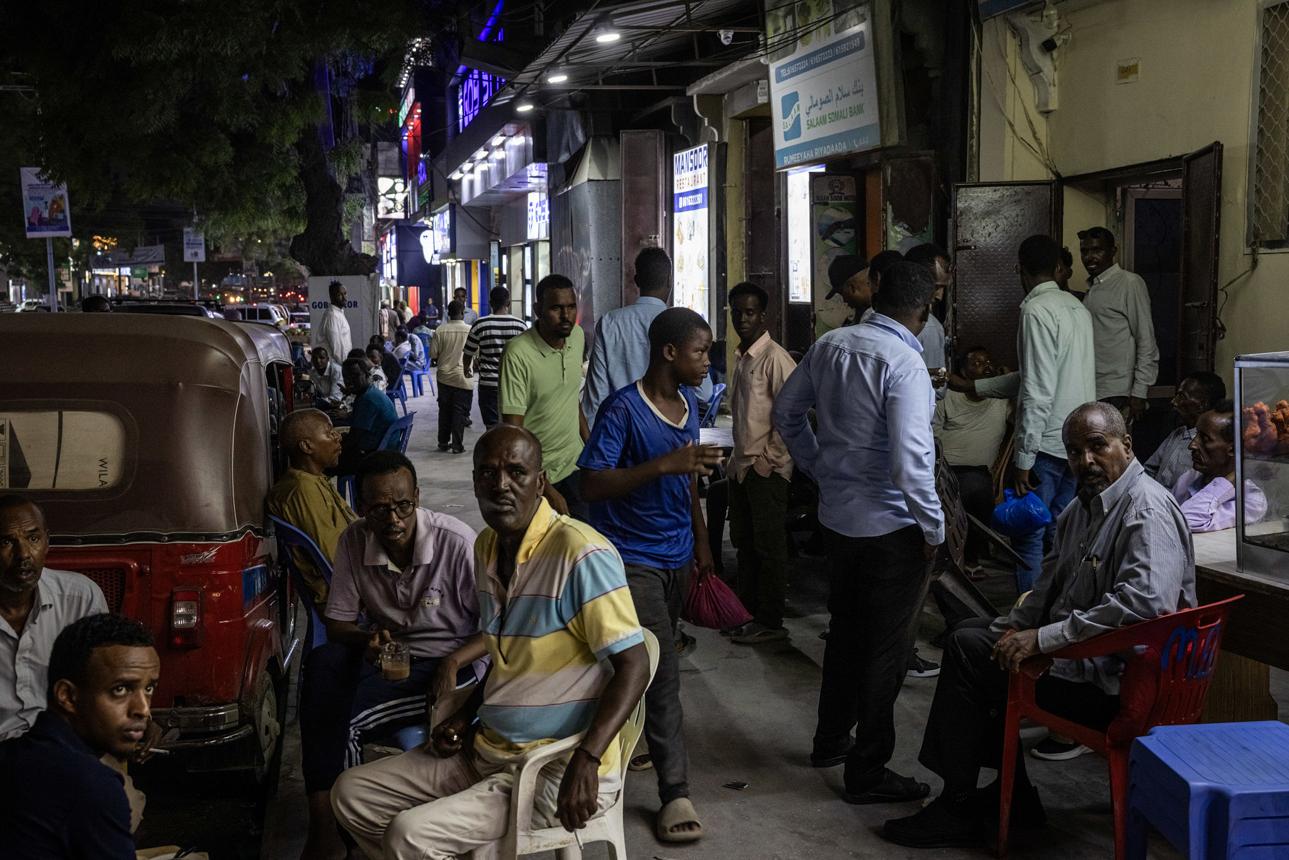 WASHINGTON, D.C. (Somali Report) — Somalia ranks safer than UK, France and Australia in global night-time safety survey
A Gallup study found that 74% of Somali respondents feel safe walking alone at night, placing the country ahead of several Western nations despite its continuing security challenges.
Somalia has recorded a higher level of perceived night-time personal safety than the United Kingdom, France and Australia, according to a new global survey, an unexpected finding given the country’s prolonged struggle with armed conflict and insecurity.
The 2026 Global Safety Report by US-based research organisation Gallup found that 74% of adults surveyed in Somalia said they felt safe walking alone at night in the area where they live.
The figure was higher than the 71% recorded in both the UK and France, and the 64% reported in Australia. Somalia also ranked ahead of Russia, which recorded 72%, and Israel, at 70%.
The findings place Somalia first in sub-Saharan Africa for perceived night-time safety, despite continuing attacks by Al-Shabaab and wider security challenges facing the Horn of Africa nation.
The results offer a striking contrast between how people experience security in their immediate surroundings and the wider international picture of countries affected by conflict.
Gallup’s survey asked respondents a specific question: whether they felt safe walking alone at night in the city or area where they lived. It was designed to measure people’s perceptions of everyday personal security rather than assess the overall security situation in their countries.
Somalia leads sub-Saharan Africa
Somalia’s 74% result was the highest among countries surveyed in sub-Saharan Africa.
Tanzania followed with 72%, while Mali recorded 70%. Comoros and Niger each registered 68%.
In contrast, Somalia’s score was considerably higher than those reported in several countries often associated with political stability and stronger democratic institutions.
South Africa recorded 35%, Lesotho 37% and Botswana just 28%, the lowest result among the 140 countries and territories included in the report.
The findings also put Somalia ahead of its East African neighbours. Ethiopia recorded 64%, while Kenya registered 50%, compared with Somalia’s 74%. The results mean Somalia scored 10 percentage points higher than Ethiopia and 24 points above Kenya in the survey of perceived night-time safety. Djibouti was not included in the published country-level figures available for comparison.
The figures highlight the differences between perceptions of personal safety across regions. Across sub-Saharan Africa, 54% of adults said they felt safe walking alone at night, compared with the global average of 69%.
Somalia’s result therefore stood 20 percentage points above the regional average.
Saudi Arabia among world’s safest
The report also recorded exceptionally high levels of perceived safety in several Gulf countries.
The United Arab Emirates and Singapore jointly recorded 96%, the highest figures globally, while Saudi Arabia followed at 95%.
Kuwait registered 93% and Bahrain 92%, placing four Gulf Cooperation Council countries among the world’s highest-scoring nations.
Somali Report · Newsletter
Your morning briefing on Somalia's biggest stories — politics, security, business, and the people shaping the region's future.
Saudi Arabia’s result is particularly notable given the regional tensions and conflict involving Iran, Israel and the United States in 2026.
Gallup said follow-up interviews conducted after the conflict began found that perceptions of personal safety in Saudi Arabia and Bahrain remained high.
The organisation described the Gulf countries’ performance as especially notable given the wider instability in the region.
Why conflict does not always determine how safe people feel
Gallup’s research highlights an important distinction between national security threats and people’s everyday experiences.
A country can face armed conflict while residents in some communities continue to feel relatively secure in their neighbourhoods. Conversely, countries without major armed conflicts can experience high levels of concern about crime and personal safety.
The report examined the relationship between perceived safety, national prosperity, homicide rates and armed conflict.
Researchers found that national prosperity and homicide rates were more consistently associated with how safe people felt walking alone at night than the severity of armed conflict.
Armed conflict, however, had a stronger relationship with whether people identified safety and security as their country’s most important problem.
Gallup said the findings demonstrated that personal safety perceptions and concerns about national security do not necessarily move together.
Important limitations to the Somalia findings
The results should not be interpreted as evidence that Somalia is objectively safer than Britain, France or Australia.
Gallup measured people’s responses about their immediate surroundings. It did not establish that Somalia has lower crime rates, fewer security threats or a safer national environment than those countries.
There are also limitations to the survey’s coverage in Somalia. Insecurity prevented researchers from accessing areas representing approximately 29% of the country’s population, meaning that some communities were not included in the interviews.
The findings therefore reflect the experiences of people reached by the survey rather than every part of Somalia.
Gallup’s 2026 report was based on interviews with 143,620 people aged 15 and above across 140 countries and territories, with the main survey data collected in 2025.
Worldwide, 69% of adults said they felt safe walking alone at night, down from 73% in 2024, although the figure remained nine percentage points above the level recorded in 2014.
For Somalia, the results provide an unusual international comparison: despite persistent security challenges, a larger share of surveyed residents reported feeling safe in their neighbourhoods after dark than respondents in several established Western democracies.
The findings underline the difference between a country’s international security reputation and how people perceive their own everyday safety.
About the Author
Khadar Abdi is the Somaliland Correspondent for Somali Report. He covers politics, security, governance, business, trade, economic developments, and regional affairs across Somaliland.
