Somalia is mourning Ali Abdullahi Cosoble, the first president of Hirshabelle State, who has died in Egypt at the age of 65 after an illness. His death has drawn tributes from President Hassan Sheikh Mohamud and other senior officials.
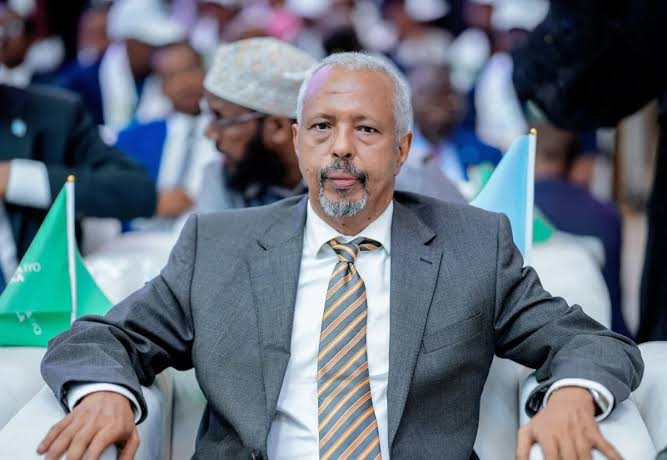
Cosoble died on Sunday evening at a hospital in Egypt, where he had been receiving medical treatment in recent days. He was 65.
Somali President Hassan Sheikh Mohamud expressed condolences over his death, joining other federal and regional leaders in mourning the former president. Hirshabelle's current leader, Ali Abdullahi Hussein Guudlawe, also offered condolences to his family and the Somali people, according to the state-run Somali National News Agency.
Cosoble was among the political figures involved in the formation of Hirshabelle, which was established in 2016 through the merger of the central regions of Hiiraan and Middle Shabelle. The administration became the latest federal member state to join Somalia's federal system.
Born in Mogadishu on June 15, 1961, Cosoble studied in the United States, graduating from Sam Houston State University. Before entering politics, he worked with several institutions, including the Somali Development Bank and international aid organisation Oxfam.
He served as a member of Somalia's Transitional Federal Parliament from 2004 to 2012 and was appointed federal minister of education in 2005. He later became one of the leading figures in the political process that established Hirshabelle.
On October 17, 2016, lawmakers in the regional capital Jowhar elected Cosoble as the state's first president. He secured 61 votes, defeating rival candidate Mohamed Abdi Waare, who received 36 votes. Ali Guudlawe was elected vice-president.
His time in office was short, however. On August 14, 2017, Hirshabelle lawmakers voted to remove him following disagreements with members of his administration and parliament. Mohamed Abdi Waare was subsequently elected as his successor.
Somali Report · Newsletter
Your morning briefing on Somalia's biggest stories — politics, security, business, and the people shaping the region's future.
Political influence
Despite leaving office, Cosoble remained an influential figure in Hirshabelle politics. Until his death, he chaired the Hawadle community's political council and continued to participate in discussions over the region's political future.
In September 2026, he led a delegation to Mogadishu that met with Guudlawe and publicly supported his re-election for a second term. The group also backed former Hiiraan governor Abdirahman Abdifatah Hassan Afrah for the position of vice-president.
Cosoble argued that political appointments should be based on competence, public support and the ability to contribute to development, rather than clan claims alone.
His position differed from that of some traditional elders in Hiiraan, particularly those who wanted the presidency to move to their side of the region under a new political power-sharing arrangement.
On October 24, lawmakers in Jowhar re-elected Guudlawe for another five-year term, with 81 votes, while Afrah was elected vice-president. Some traditional elders in Beledweyne later rejected the outcome and called for a broader conference to discuss the region's political future.
Cosoble's death marks the passing of one of the key political figures involved in the establishment of Hirshabelle and the development of Somalia's federal system.
His contribution to the state's formation and his continued involvement in regional politics made him a significant figure in the political history of central Somalia.
About the Author
Ahmed Omar is a senior journalist for Somali Report, based in Mogadishu. He has two decades of experience reporting on Somalia for international and local media. He covers politics, security, governance, business, trade, economic developments and regional affairs.
