Galmudug leader Liban Ahmed Hassan has opened Somalia's Humanitarian Forum in Dhusamareb, bringing together government officials, UN representatives and aid agencies to address humanitarian challenges, disaster preparedness, water security and climate change.
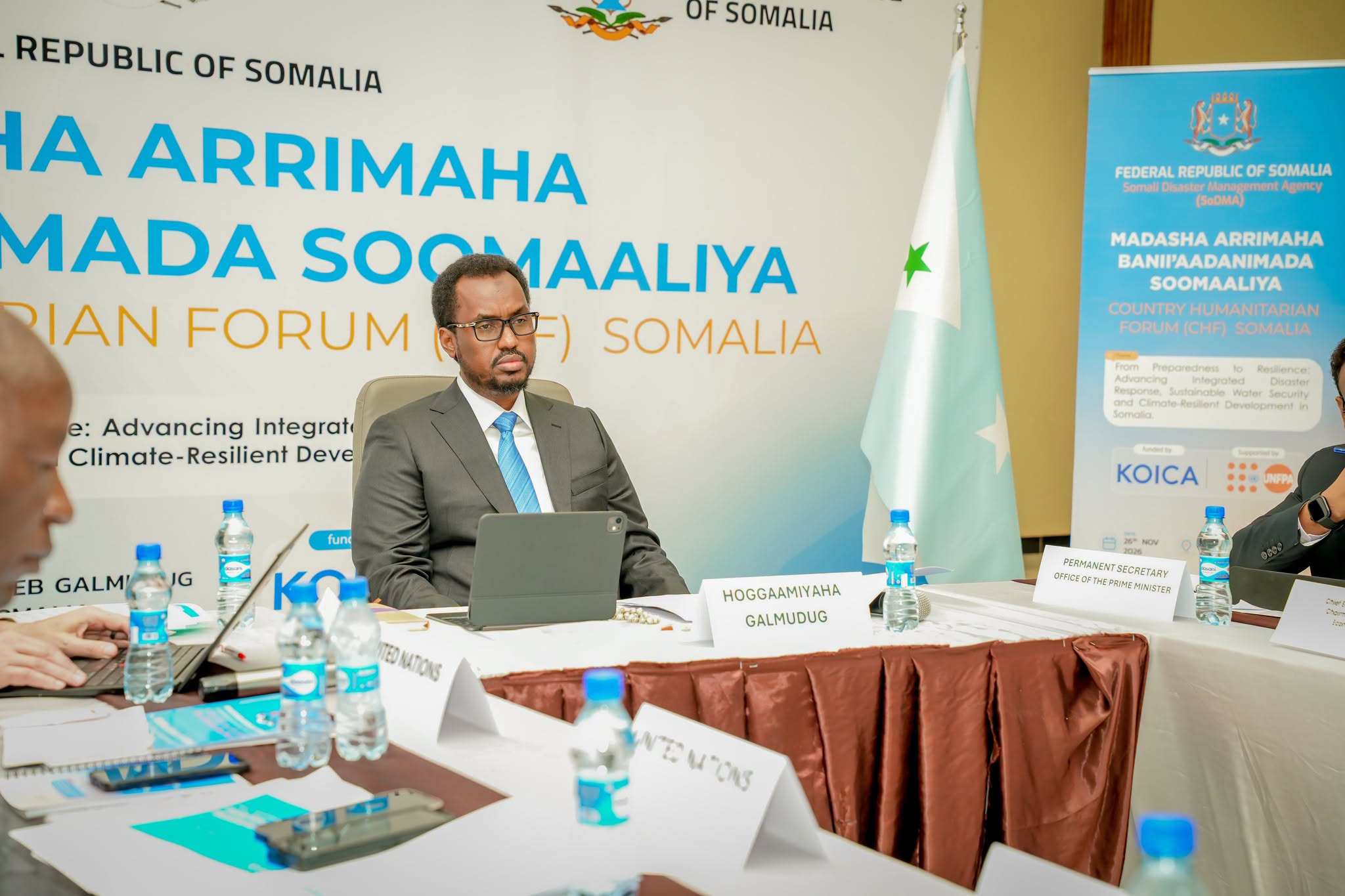
The conference is focused on strengthening disaster preparedness, improving emergency response, securing water supplies and building community resilience against the effects of climate change.
Among those attending are Somalia's National Disaster Management Agency (SoDMA) commissioner, Mahmoud Moallim Abdulle, senior federal government officials and representatives of humanitarian organisations.
The UN delegation is led by George Conway, the deputy special representative of the UN secretary-general and resident and humanitarian coordinator for Somalia.
The forum is being held under the theme "Disaster Preparedness and Resilience Building: Strengthening Emergency Response, Water Security and Climate Change Adaptation in Somalia".
Organisers said discussions would focus on the country's humanitarian situation and ways to improve coordination between government institutions, international partners and aid organisations in responding to emergencies.
Somalia continues to face recurring humanitarian crises driven by droughts, floods, conflict and displacement, with climate-related shocks placing additional pressure on already vulnerable communities.
Participants are expected to examine measures to strengthen early warning systems, improve preparedness and ensure that humanitarian assistance reaches communities affected by natural disasters and other emergencies.
Somali Report · Newsletter
Your morning briefing on Somalia's biggest stories — politics, security, business, and the people shaping the region's future.
Water security is also expected to feature prominently in the discussions, particularly as changing rainfall patterns and prolonged dry spells continue to affect access to water for households, livestock and agricultural activities.
The forum will also explore ways to strengthen the ability of Somali communities to withstand climate shocks through sustainable development initiatives and improved disaster management systems.
Government officials and humanitarian partners are expected to discuss how to improve institutional capacity and cooperation to ensure a more coordinated response to emergencies.
The involvement of federal and regional authorities, alongside UN agencies and humanitarian organisations, highlights the importance of joint efforts in addressing Somalia's complex humanitarian needs.
The conference comes as Somalia continues to grapple with the long-term consequences of repeated climate shocks, which have disrupted livelihoods, increased food insecurity and forced families to leave their homes in search of assistance.
Humanitarian organisations have repeatedly warned that vulnerable communities remain exposed to overlapping crises, making investment in disaster preparedness and resilience increasingly important.
The Dhusamareb meeting is expected to provide an opportunity for authorities and international partners to review existing humanitarian priorities and identify practical measures to improve preparedness, response and long-term resilience across the country.
About the Author
Ahmed Omar is a senior journalist for Somali Report, based in Mogadishu. He has two decades of experience reporting on Somalia for international and local media. He covers politics, security, governance, business, trade, economic developments and regional affairs.
