The UAE's campaign to secure the UN secretary-general position is facing mounting international opposition, with criticism over Abu Dhabi's alleged support for Sudan's RSF forces threatening candidate Lana Nusseibeh's chances.
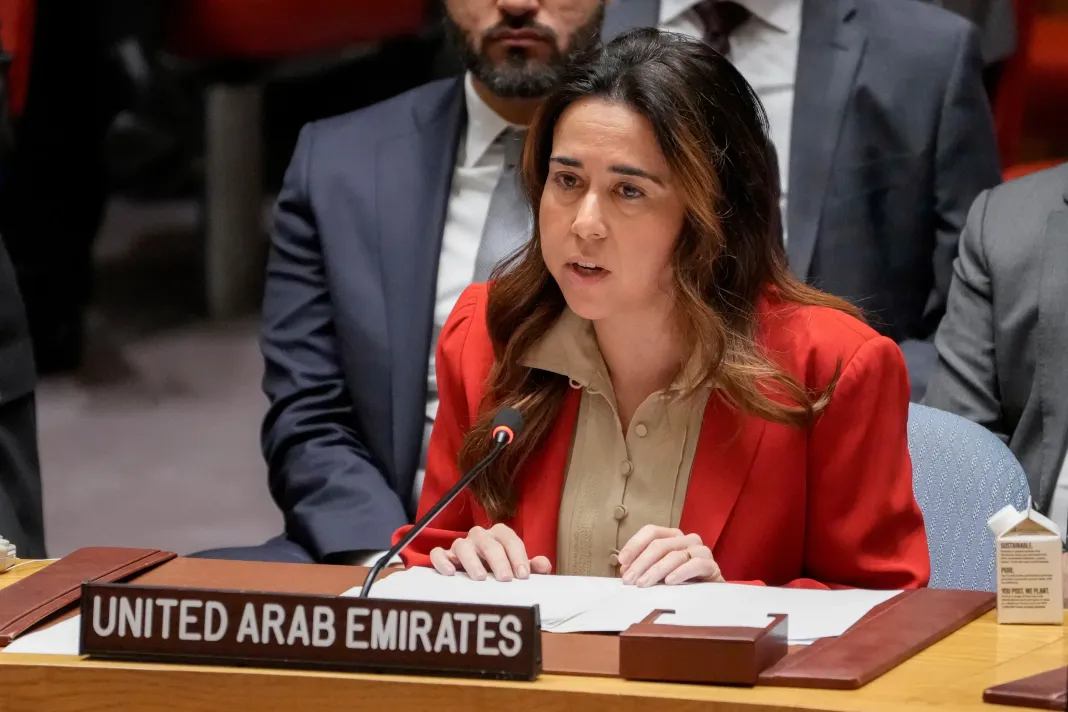 NEW YORK (Somali Report) — The United Arab Emirates' campaign to secure the position of United Nations secretary-general is facing growing international opposition, with its candidate Lana Nusseibeh struggling to gain support amid mounting criticism of Abu Dhabi's foreign policy and alleged involvement in conflicts in Africa and the Middle East.
Nusseibeh, the UAE's nominee for the world's top diplomatic post, has encountered resistance from major powers, British lawmakers, human rights organisations and Sudanese campaigners, who argue that Abu Dhabi should be held accountable for its alleged role in the devastating conflict in Sudan.
The campaign faces a crucial test on November 30, when the 15-member UN Security Council is expected to hold its tenth informal straw poll to assess the candidates seeking to succeed outgoing Secretary-General Antonio Guterres.
In the ninth round, held on November 20, Nusseibeh received seven votes in the "encouraged" category, six in the "discouraged" category and two expressing no opinion, according to Security Council Report.
She trailed Costa Rica's Rebeca Grynspan, who received 10 encouraging votes, and Argentina's Rafael Grossi, who secured eight.
The results also showed that three of the five permanent Security Council members had cast discouraging votes against Nusseibeh, highlighting the difficulty facing her campaign.
Under the UN selection process, a candidate must secure the support of at least nine Security Council members and avoid opposition from any of the five permanent members — Britain, China, France, Russia and the United States — before the council can recommend a nominee to the General Assembly.
Sudan conflict casts shadow over candidacy
The strongest criticism of the UAE's campaign centres on allegations that Abu Dhabi has supported Sudan's paramilitary Rapid Support Forces (RSF), led by Mohamed Hamdan Dagalo, widely known as Hemedti.
The conflict between the RSF and Sudan's regular army erupted in April 2023, killing tens of thousands of people and displacing millions in a war that has triggered one of the world's worst humanitarian crises.
Investigations and reports by international organisations have raised allegations that weapons and other military supplies reached the RSF through networks linked to the UAE. Abu Dhabi has repeatedly denied providing military support to the paramilitary group.
In early 2024, UN experts described as credible reports that weapons had been transported to Sudan's Darfur region through eastern Chad.
Somali Report · Newsletter
Your morning briefing on Somalia's biggest stories — politics, security, business, and the people shaping the region's future.
Amnesty International said in May 2025 that advanced Chinese-made weapons used by the RSF were likely re-exported by the UAE, potentially violating the UN arms embargo on Darfur.
Further allegations emerged in 2026 over the recruitment of Colombian nationals to fight alongside the RSF through security networks linked to the Emirates.
The controversy has raised questions about Nusseibeh's previous role as a senior Emirati diplomat defending her government's policies and responding to international criticism over Sudan.
Although she has pledged to serve independently if appointed, critics question whether her candidacy would reassure victims seeking impartial UN investigations and accountability.
Pressure builds in Britain
Opposition has also gathered momentum in Britain, where 66 lawmakers have reportedly urged Foreign Secretary Ed Miliband to oppose Nusseibeh's appointment, citing the UAE's alleged involvement in Sudan and Yemen.
The issue presents a diplomatic challenge for Prime Minister Andy Burnham's government, which must balance Britain's strategic and commercial relations with Abu Dhabi against concerns over international law and human rights.
An opinion article published by The Guardian on November 25 warned against allowing diplomatic interests to take precedence over international principles.
With Guterres due to leave office on December 31, the leadership contest is entering a decisive phase.
The November 30 poll could further expose divisions among the Security Council's permanent members and complicate efforts to agree on a successor.
For the UAE, the challenge is no longer simply securing enough votes for its candidate, but overcoming questions about its regional policies and whether Nusseibeh can command the confidence of the wider international community.
About the Author
Ahmed Omar is a senior journalist for Somali Report, based in Mogadishu. He has two decades of experience reporting on Somalia for international and local media. He covers politics, security, governance, business, trade, economic developments and regional affairs.
