Mohamed Yusuf, a father of five, died from severe injuries sustained in an alleged attack by a passenger in Minnesota. The death has renewed calls for a hate crime investigation as prosecutors consider the next steps in the case.
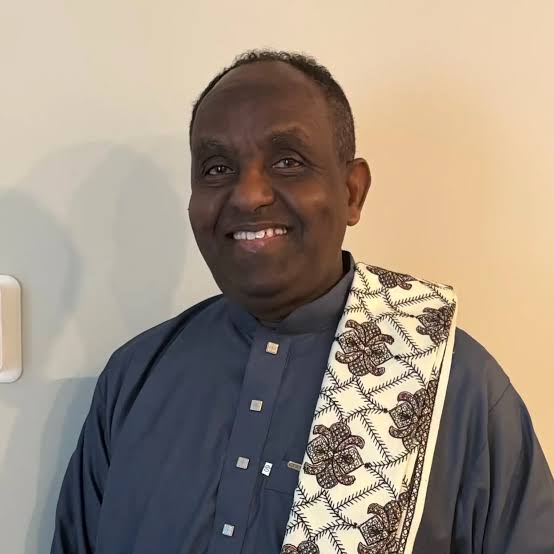 MINNEAPOLIS (Somali Report) – A Somali American Uber driver and father of five has died, two weeks after suffering life-threatening injuries in a brutal attack by a passenger in Minnesota.
Mohamed Yusuf died on Saturday morning at Hennepin County Medical Center, according to the Minnesota chapter of the Council on American-Islamic Relations (CAIR-MN). His family confirmed that he succumbed to injuries sustained in the November 14 assault.
Yusuf had been fighting for his life in hospital for two weeks, undergoing multiple surgeries after suffering severe injuries, including broken ribs, a broken leg, spinal injuries, a collapsed lung and extensive internal bleeding. Several of his organs were reportedly removed.
He leaves behind his wife, five children and other family members.
“We are heartbroken by the loss of Mohamed Yusuf. This is a shocking and painful moment for our community,” CAIR-Minnesota Executive Director Jaylani Hussein said in a statement.
“We pray for his soul and for strength for his family, and we will continue standing with them as they seek answers and justice.”
Minneapolis City Council Vice President Jamal Osman also expressed his condolences, describing Yusuf as a father of five who was simply doing his job when he was attacked.
“He was a father of five, a Somali American and an Uber driver just doing his job. He was attacked in Hopkins two weeks ago, after a rider told him he did not like the name Mohamed,” Osman said in a statement posted on Facebook.
“He fought for his life in the hospital for two weeks. Today, his family lost him.”
Passenger accused of killing driver
A 25-year-old man, identified by prosecutors as Samit Apurva Patel, has been charged in connection with the attack.
Patel, of Hopkins, was initially charged with attempted second-degree murder and first-degree carjacking. The charges could be amended following Yusuf’s death, although prosecutors have not publicly confirmed whether they will seek an upgrade.
According to the criminal complaint, Yusuf picked up Patel after the latter had been out drinking. The two were travelling in Yusuf’s Uber vehicle when the alleged assault took place.
Yusuf was reportedly speaking to his brother on the phone during the incident. Investigators later found a phone still connected to the call, allowing them to identify his brother as a witness to part of the encounter.
Somali Report · Newsletter
Your morning briefing on Somalia's biggest stories — politics, security, business, and the people shaping the region's future.
According to the complaint, Yusuf’s brother heard Patel ask the driver his name before allegedly responding: “I don’t like that name.”
Prosecutors allege Patel strangled Yusuf with a seatbelt and subsequently used the driver’s vehicle to run him over. The allegations have not been tested in court.
Police were alerted after Patel’s parents reportedly requested a welfare check, saying he appeared intoxicated and distressed. Authorities later found Yusuf’s vehicle outside the family’s home. Uber records helped investigators establish that Yusuf had picked up Patel.
Patel was granted release after posting an $800,000 bond. His conditions include electronic home monitoring and abstaining from alcohol and drugs.
Calls for hate crime investigation
Yusuf’s death has intensified calls from Somali American community members and civil rights advocates for the attack to be investigated as a possible hate crime.
CAIR-MN and other community representatives had previously urged local and federal authorities to examine whether anti-Muslim or anti-Somali bias played a role.
Hennepin County Attorney Mary Moriarty said her office had not pursued a bias enhancement when charging Patel because the available evidence did not meet the required legal threshold.
Minnesota does not have a standalone hate crime statute, but state law allows prosecutors to seek enhanced sentences when they can prove beyond a reasonable doubt that an offence was motivated by bias.
“We cannot criminally charge someone who may hold biased beliefs; that’s the crux of our First Amendment,” Moriarty said. “We must be able to prove beyond a reasonable doubt that the criminal act was motivated by those biased beliefs.”
The distinction has become central to the community’s demands for accountability, particularly following reports of the alleged exchange about Yusuf’s name.
Yusuf’s family is expected to hold a news conference on Monday to share further details about his death. CAIR-MN has also announced plans to support the family and the wider community as they mourn his loss.
The case has drawn attention to the vulnerability of ride-hailing drivers, many of whom work late hours and interact with passengers they have never met.
For Yusuf’s family, however, the immediate concern is mourning a husband and father whose life was cut short while working to support his loved ones.
About the Author

Mohamed Farah is a senior editor at Somali Report, based in London, covering geopolitics, trade, business, and security across the Horn of Africa and the Red Sea region.
