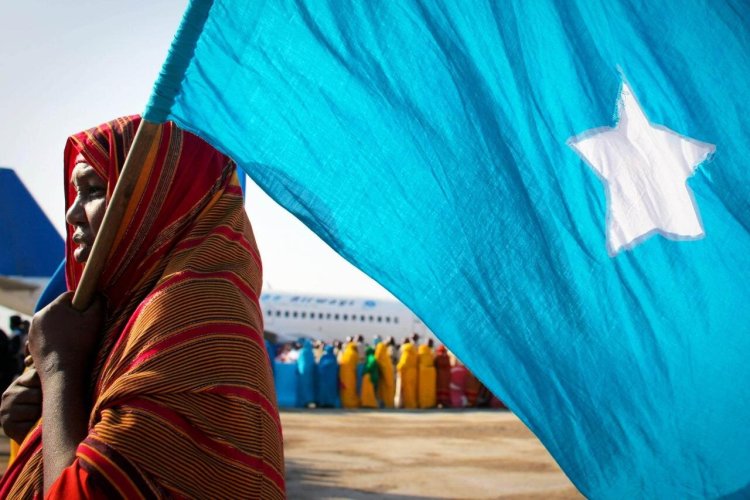
Ethiopia's Somali Regional State has secured the third-largest regional allocation under the country's record 2.34 trillion birr ($14.5 billion) federal budget. The region will receive 51.9 billion birr ($322 million), ranking behind Oromia and Amhara.
 Ethiopian Finance Minister Ahmed Shide unveils Ethiopia's record budget. Photo: CGTN.
ADDIS ABABA, (Somali Report) — Ethiopia's Somali Regional State has secured the third-largest allocation among the country's regional administrations under a record-breaking federal budget approved for the 2026/27 fiscal year, underscoring the region's growing economic and strategic importance within the country.
The Ethiopian Council of Ministers recently approved a federal budget worth 2.34 trillion birr, equivalent to approximately $14.5 billion, making it the largest spending plan in the country's history. The budget, which has been submitted to the House of People's Representatives for final approval, is designed to support Ethiopia's ongoing economic reforms, infrastructure expansion, debt management efforts, and long-term development objectives through 2031.
Under the spending plan, 520.5 billion birr has been earmarked for Ethiopia's 12 regional states and two city administrations. Of that amount, the Somali Region will receive 51.9 billion birr, or approximately $322 million, ranking behind only Oromia and Amhara regions.
Oromia received the largest regional allocation at 179.3 billion birr, while Amhara was allocated 112.4 billion birr. The Somali Region's allocation places it ahead of several other major regional administrations, including South Ethiopia, which received 36.5 billion birr, Tigray with 31.3 billion birr, and Central Ethiopia with 30.9 billion birr.
The allocation reflects the Somali Region's status as one of Ethiopia's largest federal states both in terms of territory and economic potential. Covering a vast area along Ethiopia's eastern frontier, the region plays a central role in livestock production, one of the country's most important export sectors. It also serves as a critical gateway for cross-border trade with neighboring Somalia, Djibouti, and Kenya.
For years, regional leaders have argued that the Somali Region's geographic size, population distribution, infrastructure needs, and economic significance warrant greater federal investment. The latest allocation appears to reinforce that position, providing regional authorities with additional resources to support development programs and public services.
The budget increase comes at a time when Ethiopia is pursuing a broad package of economic reforms backed by international financial institutions, including the International Monetary Fund and the World Bank. Since 2024, the government has implemented significant policy changes aimed at stabilizing the economy, attracting investment, and addressing long-standing macroeconomic challenges.
Somali Report · Newsletter
Your morning briefing on Somalia's biggest stories — politics, security, business, and the people shaping the region's future.
These reforms have included the adoption of a more market-based exchange rate system, modernization of monetary policy, easing certain foreign exchange restrictions, and efforts to improve public finance management. The government hopes these measures will create conditions for stronger private sector growth and increased foreign investment.
Despite those efforts, Ethiopia continues to face substantial economic pressures. Inflation remains elevated, foreign currency shortages persist, and the country continues to manage the effects of a sovereign debt default that occurred in 2023. Public debt remains a major concern for policymakers.
Budget documents show that debt servicing will be the largest single expenditure category in the upcoming fiscal year. The federal government has allocated 542.1 billion birr for domestic and external debt repayments, representing more than 43 percent of recurrent expenditure. Of that amount, 293.3 billion birr will go toward external debt obligations, while 248.7 billion birr is allocated for domestic debt payments.
Nevertheless, Ethiopian authorities remain optimistic about the country's economic outlook. The International Monetary Fund estimates economic growth of around 9.3 percent for the current fiscal year, while government projections place growth above 10 percent. Officials believe continued reforms and investment spending will help sustain economic expansion in the coming years.
For the Somali Region, the new allocation could support critical investments in infrastructure, education, healthcare, water projects, and economic development initiatives. Improved road networks and trade corridors are also expected to remain priorities given the region's strategic location along major commercial routes linking Ethiopia to ports in neighboring countries.
As Ethiopia embarks on its most ambitious budget in history, the Somali Region's position as the third-largest recipient of federal funding highlights its growing role in the country's development agenda. With increased financial resources and continued economic reforms, regional authorities will be expected to translate the funding into tangible improvements that benefit communities across the region.
The budget now awaits parliamentary approval before taking effect at the start of Ethiopia's new fiscal year in July.
About the Author
Omar Adam is a Senior Reporter for Somali Report based in Addis Ababa. He reports on Ethiopian politics, security, business, and economic affairs, with a special focus on the Somali Region and the experiences, governance, and development of Somali communities across Ethiopia.
China Opens Duty-Free Market to Somali Fish as Somalia Secures Landmark Trade Deal