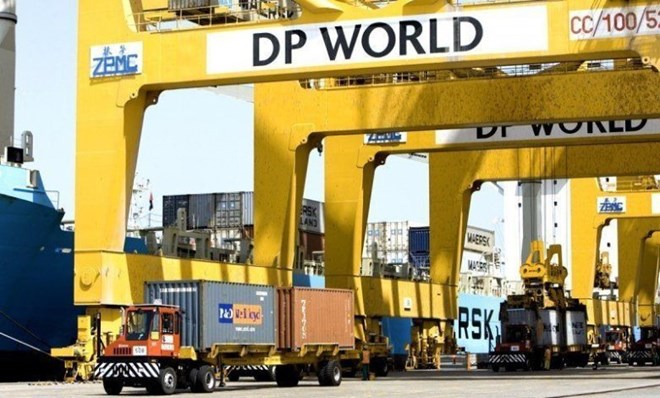
Djibouti has been ranked Africa’s third-best performing port in the World Bank’s 2025 Container Port Performance Index, while Mogadishu Port climbed ahead of Mombasa and Dar es Salaam, highlighting the growing competitiveness of Horn of Africa maritime hubs.
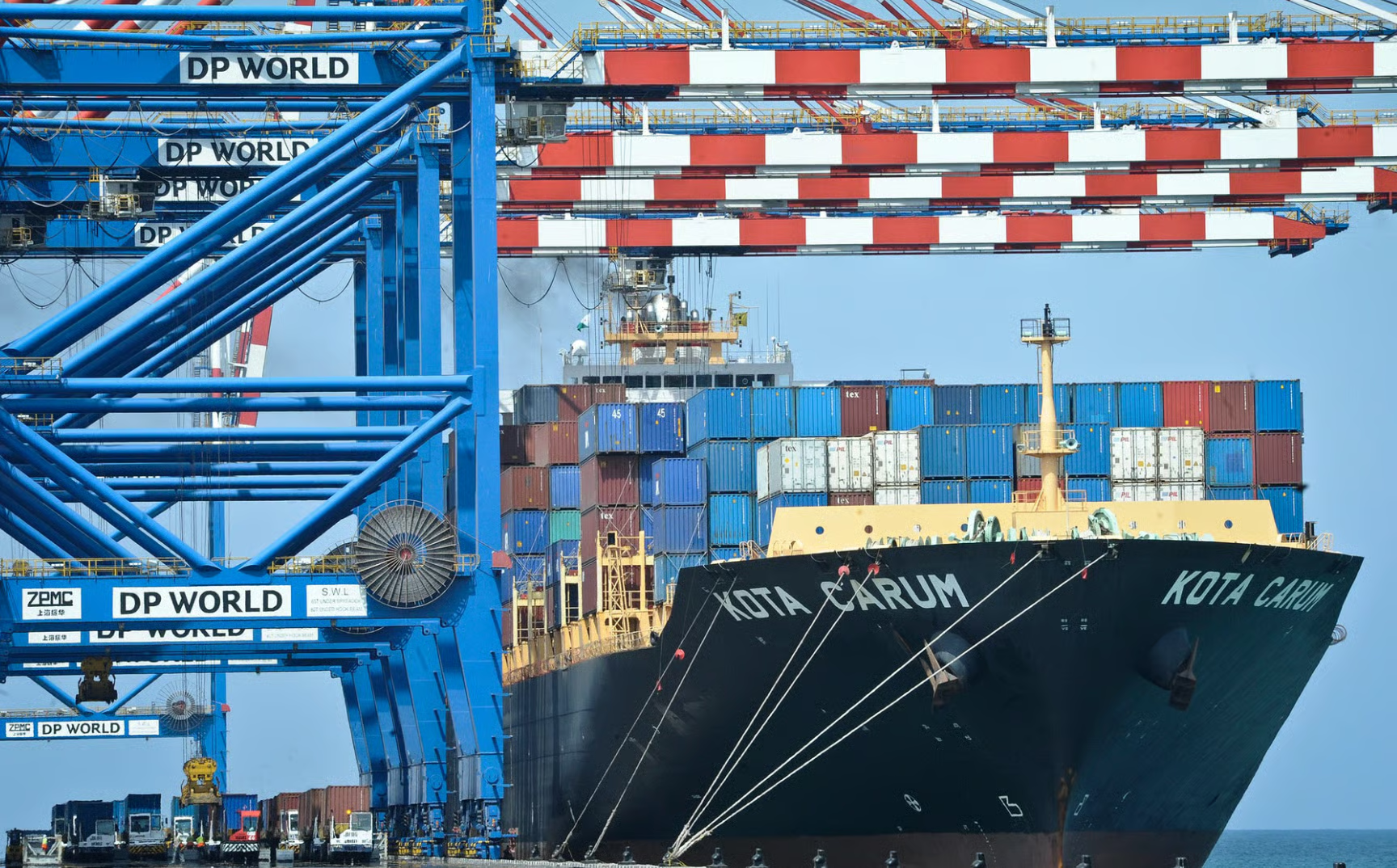 Doraleh Container Terminal at Djibouti Port in 2013. © Vincent Fournier/JA.
MOGADISHU/ DJIBOUTI (Somali Report) — Djibouti Port has been ranked the third-best performing seaport in Africa, while Somalia’s Mogadishu Port has recorded one of the most notable improvements in the latest World Bank Container Port Performance Index (CPPI) 2025, overtaking several long-established regional hubs including Mombasa and Dar es Salaam in key efficiency indicators.
The CPPI 2025 report, jointly compiled by the World Bank and S&P Global Market Intelligence, evaluates 400 ports worldwide based on vessel turnaround efficiency, including the time between arrival at anchorage and departure after cargo operations.
Djibouti Port scored 62.6 points, placing it behind only Morocco’s Tanger Med and Egypt’s Port Said, and ranking third in Africa and 53rd globally.
The achievement was strongly welcomed by the Djibouti Ports and Free Zones Authority (APZFD), which credited years of investment in operational efficiency, infrastructure modernization, and reduced vessel waiting times.
Aboubaker Omar Hadi, Chairman of the Djibouti Ports & Free Zones Authority and Great Horn Investment Holding, said the ranking reflects sustained institutional effort.
“The Container Port Performance Index 2025 (CPPI) ranking is the result of our performance in Pilot to Pilot turnaround time of vessels, years of consistent hard work and a collective commitment to improving the competitiveness of our ports,” Hadi said. “It reflects the dedication of everyone who has contributed to this journey and shows that our efforts are delivering tangible results.”
He added that Djibouti sees the recognition not as an endpoint but as a stepping stone toward further modernization of port infrastructure and services.
The Doraleh Container Terminal, located at the entrance of the Red Sea, continues to be the backbone of Djibouti’s logistics performance, serving as a key transshipment hub for regional and global trade.
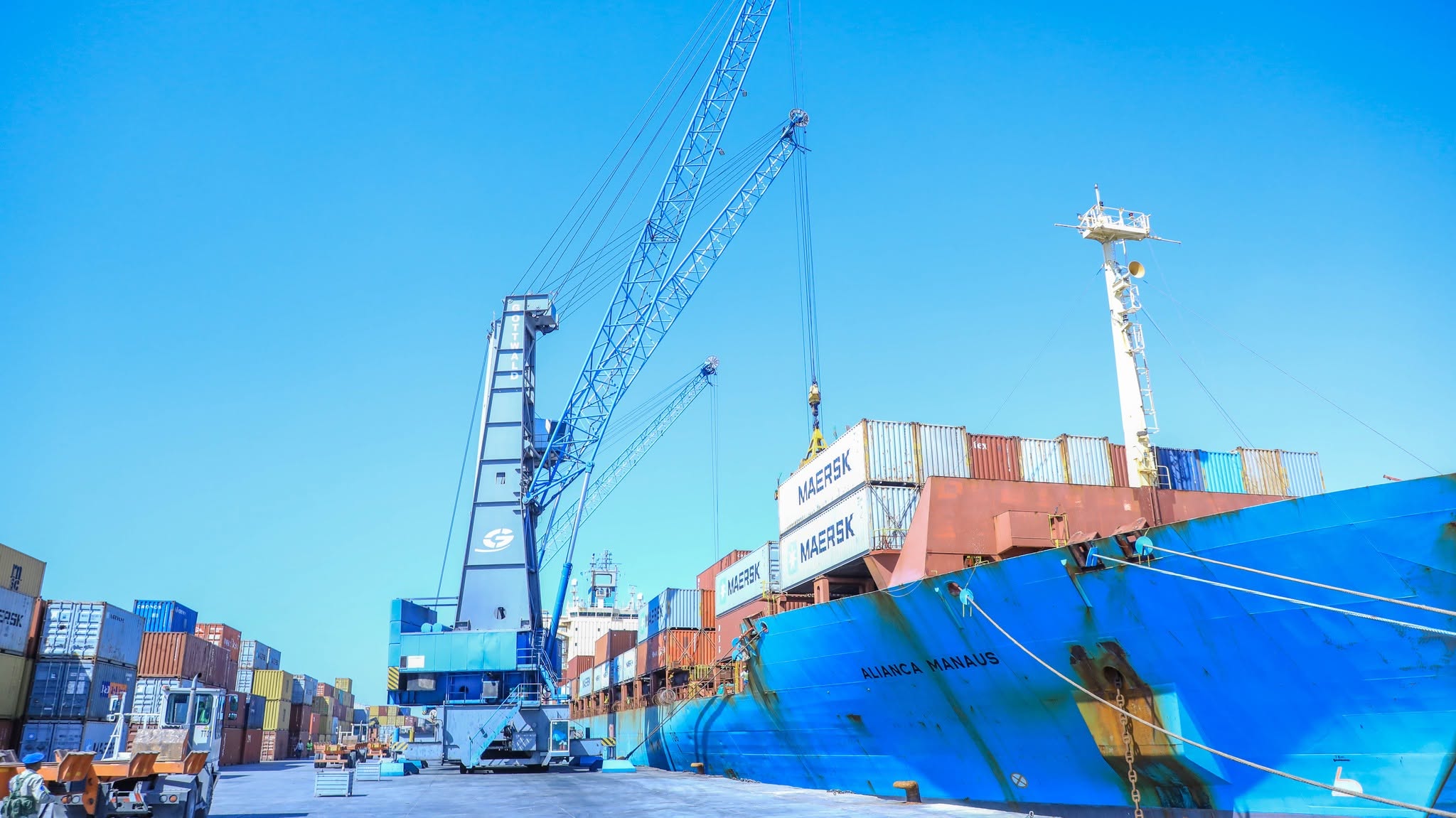 Mogadishu Port is one of Africa’s fastest-rising maritime hubs, ranking sixth on the continent. Photo credit: Mogadishu Port Authority.
In Somalia, Mogadishu Port has emerged as one of the fastest-improving ports in Africa. According to the CPPI 2025 index, Mogadishu ranks sixth in Africa and 127th globally, placing it ahead of major ports including Dar es Salaam, Mombasa, and several West African hubs.
This marks a significant shift in East Africa’s maritime competitiveness, as Mogadishu continues to expand its operational capacity and improve turnaround times.
The port has also recorded strong operational growth in recent months. In October 2025 alone, Mogadishu Port achieved its highest productivity of the year, handling 15,647 TEUs and 120,787 metric tons of non-containerized cargo, along with record-breaking revenue and total tonnage.
Under the management of Alport Mogadishu, the port has introduced digital tracking systems, improved safety compliance, and modernized logistics operations—reducing congestion and increasing efficiency.
Somali Report · Newsletter
Your morning briefing on Somalia's biggest stories — politics, security, business, and the people shaping the region's future.
The World Bank previously ranked Mogadishu among the top-performing ports in East Africa, a milestone widely seen as evidence of Somalia’s recovering maritime sector.
A major highlight of Mogadishu’s recent development is the entry of international shipping companies. In June 2026, Turkish shipping firm Akkon Lines officially launched operations at Mogadishu Port, marking a new phase in Somalia–Turkey maritime cooperation.
The launch ceremony was attended by Somali officials, Turkish embassy representatives, and private sector stakeholders, signaling growing investor confidence in Somalia’s logistics sector.
The 2025 CPPI ranking shows continued dominance by North African ports, with Morocco’s Tanger Med ranked first in Africa and sixth globally, followed by Egypt’s Port Said.
Other top African performers include Damietta, El Sokhna, Dakar, and El Dekheila. However, the report highlights that African ports generally lag behind global leaders due to infrastructure constraints, limited investment, and weaker transport connectivity.
Dar es Salaam Port in Tanzania ranks 255th globally, while Kenya’s Mombasa Port ranks significantly lower at 396th globally, reflecting ongoing operational inefficiencies and congestion challenges.
Experts note that export-driven ports tend to perform better in the CPPI index due to better container planning and reduced cargo uncertainty, while import-heavy ports often face delays and storage inefficiencies.
Global rankings continue to be led by China, with four ports in the world’s top five, while geopolitical disruptions have affected port performance in parts of the Middle East and Red Sea corridor.
The latest CPPI results highlight a shifting maritime landscape in the Horn of Africa, where Djibouti maintains its position as a regional logistics powerhouse, while Mogadishu emerges as a rapidly rising competitor.
Together, the two ports reflect broader changes in East Africa’s trade architecture, driven by modernization efforts, foreign investment, and increasing integration into global supply chains.
As Aboubaker Omar Hadi emphasized, the rankings are not an endpoint but part of an ongoing effort to strengthen competitiveness in a rapidly evolving global shipping environment.
For Somalia and Djibouti alike, the 2025 results signal both progress achieved and a long road ahead in the race to become leading maritime gateways for Africa and beyond.
About the Author
Omar Adam is a Senior Reporter for Somali Report based in Addis Ababa. He reports on Ethiopian politics, security, business, and economic affairs, with a special focus on the Somali Region and the experiences, governance, and development of Somali communities across Ethiopia.
Somalia’s Youth Need Skills, Not Just Degrees, to Unlock the Country’s Future