Former Somali National Security Adviser Hussein Moalim warned that Somalia’s security future depends on the government’s ability to reduce reliance on foreign troops and build strong national security institutions.
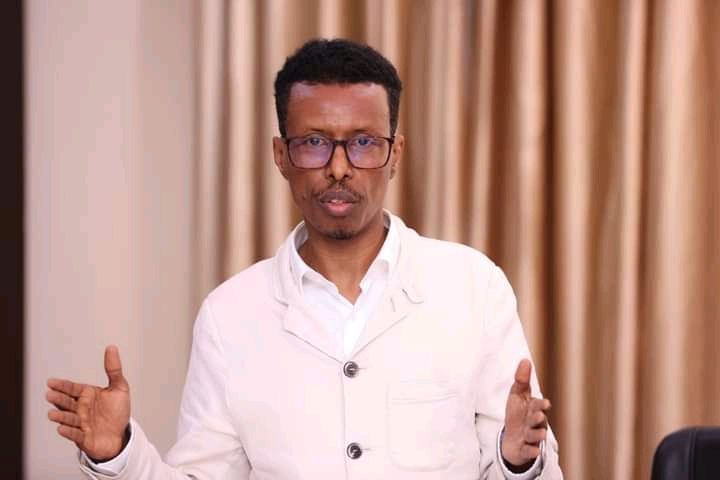
Mogadishu (Somali Report) — Former Somali National Security Adviser Hussein Moalim warned Wednesday that Somalia’s security future depends on the federal government’s ability to build national forces capable of securing the country without long-term reliance on foreign troops.
Speaking in Mogadishu, Moalim said international forces and foreign support have played an important role in Somalia’s fight against al-Shabab, but he said the country has failed to develop a clear path toward security self-reliance.
“Governance cannot be dependent on any foreigner,” Moalim said. “It is unfortunate that we have not done the work that we needed to do.”
His remarks came weeks after the United States said it would block United Nations support for the African Union Support and Stabilization Mission in Somalia, known as AUSSOM, starting next year, according to documents reviewed by officials. The decision has raised concern over the future of the AU mission at a time when al-Shabab remains active across large parts of southern and central Somalia.
AUSSOM, which has nearly 12,000 personnel, supports Somalia’s federal government in military operations against al-Shabab, an al-Qaida-linked militant group seeking to topple the government. The mission relies heavily on U.N. logistical support, including food, water, fuel, medical services and troop transportation.
The mission is already facing a severe financial crisis, with an estimated annual budget shortfall of $180 million to $190 million, in addition to unpaid debts owed to troop-contributing countries. U.S. opposition to U.N. funding, combined with shifting European Union priorities, has deepened uncertainty over the mission’s ability to continue operating at current levels.
Somali Report · Newsletter
Your morning briefing on Somalia's biggest stories — politics, security, business, and the people shaping the region's future.
Moalim said the current security crisis should not be blamed on the Somali people, but on successive governments that failed to build strong, disciplined and accountable security institutions.
He said delays in rebuilding the army, police and intelligence agencies have left Somalia dependent on foreign military assistance more than three decades after the collapse of the central government.
“When the people see the fatigue, the economic crisis and the fact that everything is falling behind, they become discouraged,” he said. “The reason for this is that we have not done the work that was expected of us properly.”
Somalia has relied for years on African Union forces, U.S. airstrikes, foreign training programs and donor-funded logistics to hold territory and support operations against al-Shabab. But the expected reduction in external backing has renewed debate over whether Somali forces are ready to assume full security responsibility.
The warning comes as al-Shabab has mounted a significant resurgence. After losing territory in central Somalia during government-led offensives between 2022 and early 2024, the group has pushed back and reclaimed parts of the Middle and Lower Shabelle regions, bringing the conflict to a difficult impasse.
Al-Shabab controls large rural areas and has previously advanced close to Mogadishu, exposing gaps in Somalia’s security transition and the continuing need for coordinated military pressure.
Moalim said Somalia must treat the funding crisis as a wake-up call and accelerate reforms that strengthen national forces, improve command structures and reduce political divisions that have slowed security progress.
His comments reflect growing concern among Somali security experts that the country could face deeper instability if international support declines before Somali institutions are prepared to fill the gap.
About the Author
Osman Hassan is a Senior Editor at the Somali Report based in Nairobi with over 15 years of experience in journalism. He has worked with local and international media outlets in Somalia and is an award-winning journalist. His reporting focuses on politics, security, and regional affairs in the Horn of Africa.
Somali Cabinet Moves to Enforce New Constitution, Sets Two-Month Deadline for Draft Law


