Baashe Yusuf Ahmed has rejected his dismissal by President Hassan Sheikh, calling the decree "null and void" and unconstitutional. The legal standoff between the executive branch and Somalia's highest court has sparked fears of constitutional paralysis in Mogadishu.
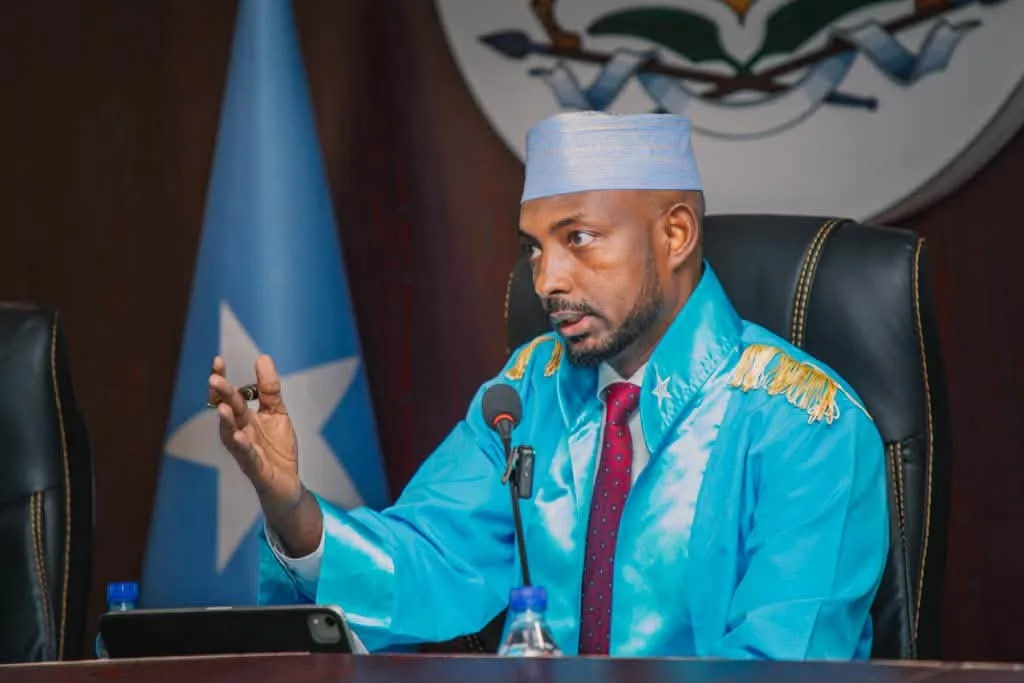 MOGADISHU (Somali Report) — Somalia’s political crisis deepened sharply on Thursday as former Chief Justice Baashe Yusuf Ahmed rejected his dismissal by President Hassan Sheikh, declaring the presidential decree unconstitutional and setting the stage for a high-stakes institutional showdown.
In a strongly worded statement released in Mogadishu, Ahmed denounced the presidential decree issued late Wednesday night as an assault on the rule of law and the separation of powers. He argued that the removal bypasses constitutional safeguards designed to protect the independence of the nation’s judiciary from executive overreach.
"This action is a blatant violation of constitutional principles, the separation of powers, and the absolute independence of Somalia's judiciary," Ahmed’s office stated. The former chief justice further alleged that the underlying motivation for his ouster was political interference aimed at derailing a high-profile constitutional case currently pending before the Supreme Court, which was brought forward by opposition figures challenging recent governance reforms.
According to the statement, the Supreme Court has formally deemed the presidential removal "null and void," arguing that it carries no legal weight because it was published via social media channels rather than through proper legal administrative channels. The court instructed the presidency to strictly adhere to the provisional constitution and respect judicial independence.
The feud erupted late Wednesday when President Hassan Sheikh Mohamad issued a decree relieving Dr. Ahmed of his duties as Chief Justice and immediately appointing Ibrahim Idle Suleyman to the post.
Somali Report · Newsletter
Your morning briefing on Somalia's biggest stories — politics, security, business, and the people shaping the region's future.
The Villa Somalia defended the reshuffle, stating that the executive action was taken in direct response to mounting complaints from judges, judicial workers, and legal practitioners across the country. According to the presidency, the transition was necessary to address systemic administrative bottlenecks and accelerate long-overdue reforms within the federal judicial system.
However, legal analysts in Mogadishu warn that the public collision between the executive branch and the country’s highest court risks plunging the federal government into a constitutional paralysis. The dispute centers heavily on the boundaries of presidential authority regarding judicial appointments and dismissals, particularly during a politically sensitive period marked by ongoing debates over constitutional amendments and the timeline for national electoral transitions.
Opposition groups have quickly rallied behind the ousted chief justice, echoing concerns over executive encroachment and demanding that the executive branch respect court rulings. Meanwhile, supporters of the administration maintain that the president acted well within his constitutional mandates to ensure accountability and efficiency within state institutions.
As international partners monitor the escalating standoff with growing concern, civil society organizations have called for calm and dialogue between the presidency and judicial authorities to prevent a total breakdown of constitutional order in the Horn of Africa nation.
About the Author
Ahmed Omar is a senior journalist for Somali Report, based in Mogadishu. He has two decades of experience reporting on Somalia for international and local media. He covers politics, security, governance, business, trade, economic developments and regional affairs.
