The African Union has approved a three-phase plan to gradually reduce AUSSOM troops in Somalia through 2027 and beyond, while transferring military bases and security responsibilities to Somali forces. The bloc has warned that a poorly coordinated withdrawal could create security gaps exploited by Al-Shabaab.
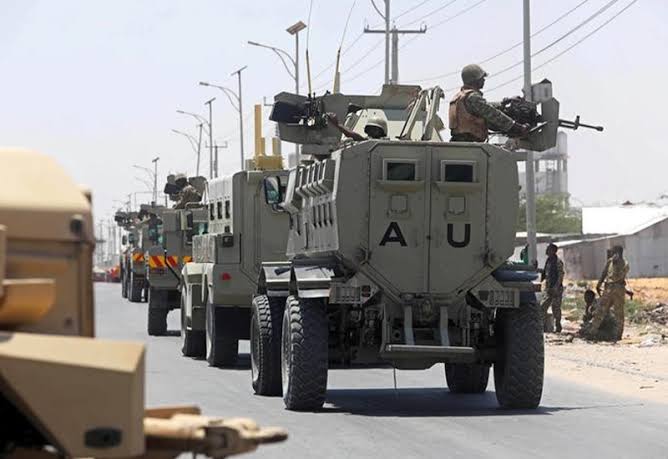
The plan sets out a gradual transfer of military bases and security responsibilities to Somali forces, alongside efforts to strengthen the country's national security institutions as the African Union Support and Stabilization Mission in Somalia (AUSSOM) prepares for its next phase.
The council adopted the framework during its 1,380th meeting on November 25, which focused on Somalia's security situation, the future of AUSSOM and the country's security transition.
According to the council's communiqué, the first phase will run from November to December 2026, while the second will cover January to December 2027. A third phase will begin after 2027, with the future structure of the mission and the allocation of security responsibilities to be determined at that stage.
The council endorsed the first two phases of the drawdown, stressing that the process must be gradual, coordinated and informed by conditions on the ground and the operational capabilities of Somali security forces.
It noted that responsibility for five military locations had already been transferred to Somalia's armed forces, marking part of the broader effort to place national troops in charge of security positions previously held by AUSSOM contingents.
The African Union, Somalia's federal government and AUSSOM have been tasked with jointly assessing security conditions at locations scheduled for handover. The findings of the assessment are expected to be submitted by September 2027.
The council also asked the African Union Commission to clarify arrangements for troops currently deployed in Somalia, whose authorised period of deployment is due to expire on December 31, 2026.
The council cautioned against reducing or withdrawing AUSSOM troops solely because of financial constraints without an agreed transition strategy, warning that such a move could leave security vacuums that Al-Shabaab could exploit to recapture strategic towns and key supply routes.
The warning comes as Somalia prepares to assume greater responsibility for securing territory previously protected by international forces, amid continuing operations against the Al-Qaeda-linked militant group.
Somali Report · Newsletter
Your morning briefing on Somalia's biggest stories — politics, security, business, and the people shaping the region's future.
The council praised the progress made by Somalia's armed forces, particularly joint operations conducted alongside AUSSOM, including campaigns known as Silent Storm and Rolling Thunder. It also commended military operations carried out independently by Somali forces.
However, it urged the United Nations, European Union, African countries and other international partners to maintain financial, logistical and operational support for AUSSOM and the development of Somalia's security institutions.
The African Union also said it would launch diplomatic efforts to secure an extension of the United Nations Support Office in Somalia (UNSOS), which provides logistical assistance to the mission, until December 31, 2027.
It called for the UN Security Council to ensure that the support office receives adequate funding and resources to sustain its operations during the transition period.
The future of international military support remains a major concern for Somalia, where Al-Shabaab continues to carry out attacks against government forces, security installations and civilian targets despite years of military campaigns.
AUSSOM replaced the African Union Transition Mission in Somalia (ATMIS) on January 1, 2025, taking over international security responsibilities as Somali forces gradually assume control of the country's security.
The council also welcomed the first direct elections held in several parts of Somalia and commended talks between President Hassan Sheikh Mohamud, political stakeholders and civil society representatives ahead of planned national elections in 2027.
It stressed that countries contributing troops and police personnel to AUSSOM must be fully involved in decisions concerning the mission's future structure and Somalia's security transition.
The three-phase framework comes at a critical time for Somalia, as the government faces the dual challenge of expanding the capabilities of its security forces while maintaining pressure on Al-Shabaab.
The council's warning highlights concerns that an accelerated withdrawal, particularly without sufficient financial and operational support, could undermine security gains made over more than a decade of international military engagement in the country.
About the Author
Ahmed Omar is a senior journalist for Somali Report, based in Mogadishu. He has two decades of experience reporting on Somalia for international and local media. He covers politics, security, governance, business, trade, economic developments and regional affairs.
