Ethiopia could lose up to 0.5% of its GDP if millions of smallholder coffee farmers fail to meet new European Union traceability and anti-deforestation requirements, threatening export earnings, foreign currency supplies and rural livelihoods.
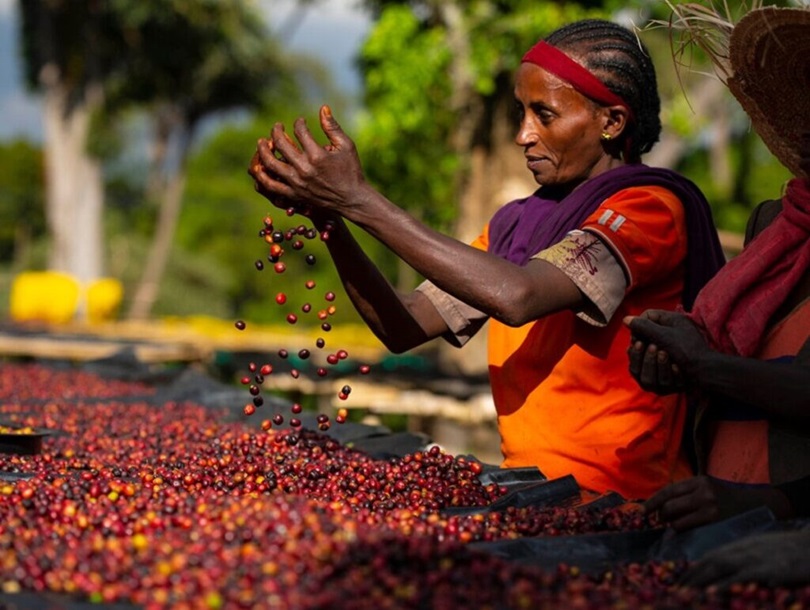 ADDIS ABABA (Somali Report) – Ethiopia could face significant financial losses from new European Union (EU) anti-deforestation requirements, with coffee exports potentially losing hundreds of millions of dollars if smallholder farmers cannot meet the new compliance standards.
A new report by London-based think tank ODI Global warns that the country could lose export earnings equivalent to as much as 0.5 per cent of its gross domestic product (GDP), with consequences extending beyond the coffee industry to foreign exchange availability, rural employment and the banking sector.
The briefing paper examines the potential impact of the EU Deforestation Regulation (EUDR), which requires companies importing certain agricultural commodities, including coffee, to demonstrate that their products were not sourced from land deforested after December 31, 2020.
Under the regulation, exporters must provide precise geographical coordinates for farms, demonstrate compliance with relevant national laws and establish traceability systems that track coffee from individual farms to export destinations.
Although enforcement deadlines have been postponed, large operators are expected to face binding requirements from late 2026, while smaller enterprises have until mid-2027.
Ethiopia is particularly vulnerable because of the structure of its coffee industry, which relies heavily on smallholder farmers.
According to the ODI Global report, approximately four million smallholder farmers, most cultivating plots of less than one hectare, account for about 95 per cent of the country's coffee production.
The European Union is one of Ethiopia's most important coffee markets, purchasing approximately 30 per cent of its exports. Coffee itself accounts for around 35 per cent of the country's merchandise export earnings.
In the 2024/25 fiscal year, Ethiopia exported nearly 469,000 tonnes of coffee, generating a record $2.65 billion, according to figures cited in the report.
However, the authors warn that difficulties meeting the EU's documentation and geographical tracking requirements could put a substantial share of these exports at risk.
They estimate that as much as 60 per cent of Ethiopian coffee exports could face exclusion from the European market because of gaps in legal documentation and farm geolocation.
The Ethiopian Coffee and Tea Authority (ECTA) had mapped approximately 200,000 hectares out of an estimated 860,000 hectares of coffee farmland by July 2024, representing just 23 per cent of the total area, the report says.
The potential financial consequences are substantial.
ODI Global estimates that Ethiopia could lose approximately $160 million in EU-bound coffee revenue if 20 per cent of shipments are excluded from the market. The figure could rise to $453 million if the proportion of rejected shipments reaches 57 per cent.
The resulting foreign exchange losses could range from 2.2 per cent to 6.3 per cent, potentially reaching 8.5 per cent under the worst-case scenario.
Redirecting rejected coffee to alternative markets such as Asia may not fully protect exporters from financial losses.
The report notes that the European market offers a price premium of more than 26 per cent for specialty coffee compared with alternative destinations. Losing that premium could cost Ethiopian exporters between $42 million and $118 million.
Somali Report · Newsletter
Your morning briefing on Somalia's biggest stories — politics, security, business, and the people shaping the region's future.
The exposure comes at a difficult time for Ethiopia, which continues to face pressure on its foreign currency reserves.
The report cites data indicating that the country's reserves stood at approximately $4.4 billion at the end of the 2025 fiscal year, equivalent to around 3.7 months of import cover. It also references Bloomberg reporting that Ethiopia spent $1.35 billion in 2025 defending the birr.
Beyond exporters and farmers, the new requirements could create risks for financial institutions that provide credit to the coffee industry.
The Cooperative Bank of Oromia (COOP), for example, directs approximately 40 per cent of its lending to cooperatives operating in coffee and cereals. Between 20 and 30 per cent of its loan portfolio is linked to coffee export financing, according to the report.
Researchers also found that some European buyers were already offering less favourable forward-contract conditions, raising concerns about financing and cash flow for exporters and cooperatives.
The Sidama Coffee Farmers' Cooperative Union told researchers it had already excluded 40 per cent of its member cooperatives from EU exports and expected to lose up to 20 per cent of its European sales, with half of that decline attributed to the new regulation.
However, the report argues that Ethiopia's potential difficulties are largely linked to compliance and documentation rather than widespread deforestation.
Citing findings from the European Forest Institute, the authors note that no more than 20 coffee plots were associated with deforestation occurring after the regulation's December 2020 cut-off date.
The paper also acknowledges progress by the Ethiopian government in developing systems to improve land registration and coffee traceability.
These efforts include the Ethiopian Coffee Traceability Management System and the issuance of approximately 31 million land certificates out of an estimated 50 million plots. However, the traceability system is not yet fully operational.
The authors recommend that Ethiopia engage with Brussels to clarify acceptable legal documentation and push for an approach that takes account of the country's smallholder-based agricultural structure.
They also call for stronger cooperative institutions, improved access to financing and incentives such as carbon credits and sustainability premiums to help farmers meet the requirements.
Some exporters have indicated they could redirect shipments to the United States, Canada and China if European buyers are unwilling to share the costs of compliance.
The findings are based on 28 interviews with government institutions, exporters, processors and cooperative unions. Smallholder farmers were not interviewed directly, a limitation acknowledged by the researchers.
For Ethiopia, the challenge is to protect one of its most important export industries while adapting to increasingly demanding international environmental and supply-chain standards.
How quickly the country can close its traceability and documentation gaps could determine whether its coffee sector maintains access to the lucrative European market or faces mounting financial pressure in the coming years.
About the Author
Fatuma Taxadar Yusuf is the Editor-in-Chief of Somali Report. She was the first woman to serve as an editor and media managing director in Somalia’s Puntland State. Previously, she worked with the BBC World Service and other leading media organizations in Somalia. She also serves as Deputy Chairperson of the Somalia Media Council, an independent body that regulates media standards and professional conduct in Somalia.
