Ethiopia and Djibouti are partnering with Nigerian billionaire Aliko Dangote on a $660 million petroleum pipeline linking the two countries, a project expected to improve fuel supplies, reduce transport costs and strengthen regional trade.
 ADDIS ABABA (Somali Report) – Ethiopia and Djibouti have partnered with Nigerian industrialist Aliko Dangote to develop a $660 million petroleum pipeline, in a major infrastructure investment aimed at improving fuel security and strengthening trade links across the Horn of Africa.
The 120-kilometre pipeline will connect Damerjog in Djibouti with Dewele in Ethiopia, providing a dedicated route for transporting refined petroleum products between the neighbouring countries.
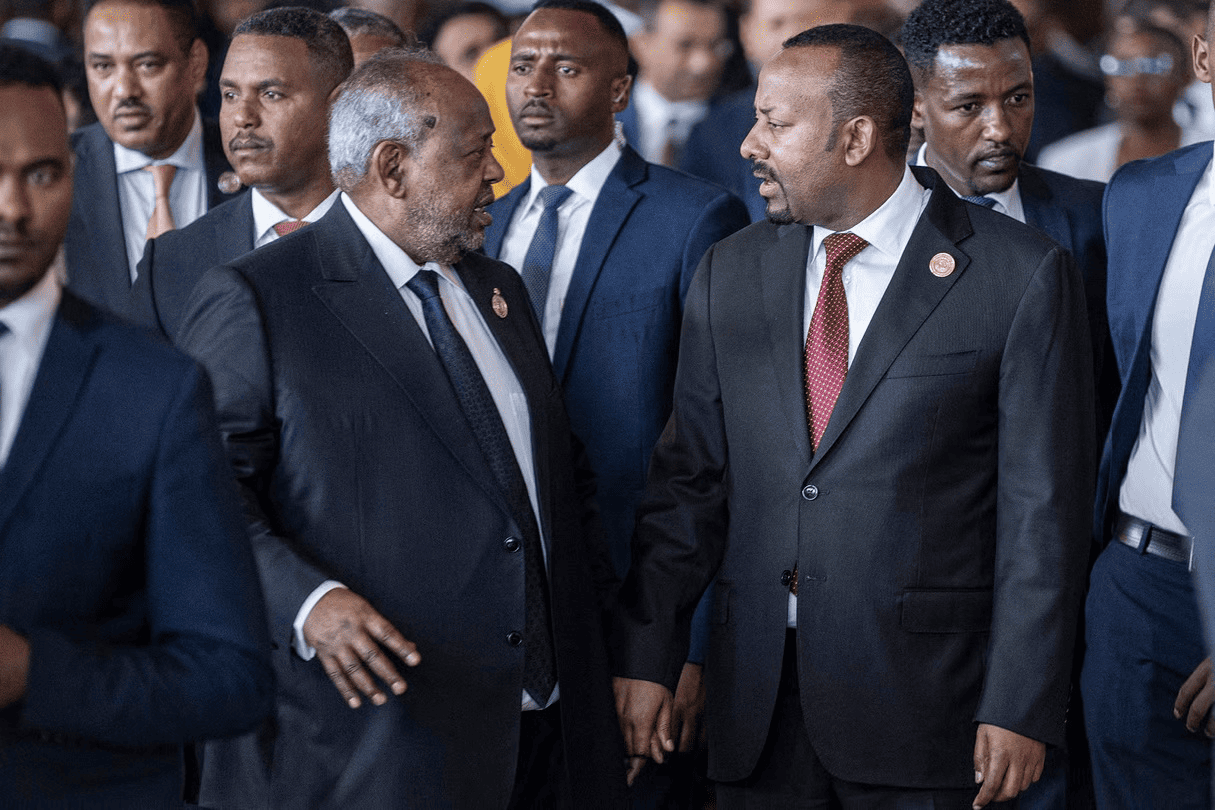
The project was announced on September 24 during Ethiopian Prime Minister Abiy Ahmed's visit to Djibouti, where he met President Ismail Omar Guelleh alongside Dangote.
The investment will be implemented through a partnership between Ethiopian Investment Holdings and the Dangote Group, with petroleum storage facilities planned at both ends of the pipeline.
According to details reported by Reuters, the infrastructure will include storage capacity of approximately 375,000 cubic metres at Damerjog and 800,000 cubic metres at Dewele. Combined, the facilities will provide more than 1.1 million cubic metres of petroleum storage capacity.
The project is expected to become operational within 18 months.
Abiy described the investment as a strategic development for the economic relationship between Ethiopia and Djibouti, highlighting its potential to improve the efficiency of a corridor that handles much of Ethiopia's international trade.
He said the pipeline would help reduce logistics expenses and transportation delays while strengthening the reliability of fuel supplies.
For landlocked Ethiopia, which relies heavily on Djibouti's ports for access to international markets, the project represents an effort to improve the transportation and distribution of one of its most important imported commodities.
Currently, petroleum products moving through the Djibouti-Ethiopia corridor depend heavily on road transportation. A dedicated pipeline could provide an alternative supply route, improve distribution efficiency and strengthen the country's strategic fuel reserves.
The planned storage facilities are also expected to give both countries greater capacity to manage petroleum supplies and respond to disruptions in international energy markets.
Djiboutian President Ismail Omar Guelleh presented the investment as part of a broader push for African energy independence and industrial development.
He argued that African countries need to move beyond exporting raw resources while relying on imported refined products, often exposed to international price fluctuations and supply disruptions.
Guelleh also emphasised the importance of developing local technical expertise to operate and maintain strategic infrastructure.
Somali Report · Newsletter
Your morning briefing on Somalia's biggest stories — politics, security, business, and the people shaping the region's future.
“A pipeline we cannot maintain ourselves is not independence,” he said.
His remarks highlighted the importance of ensuring that major infrastructure investments generate technical skills, employment and long-term economic benefits beyond the construction phase.
The agreement also expands the Dangote Group's growing investment interests in East Africa.
The Nigerian conglomerate is separately pursuing a reported $4 billion fertiliser-related investment in Ethiopia, involving associated energy and industrial infrastructure.
Dangote's participation in the petroleum pipeline project brings additional private-sector capital and industrial experience into a strategic partnership involving two Horn of Africa governments.
For Djibouti, the pipeline could strengthen its position as a regional logistics and energy distribution centre, building on its importance as Ethiopia's principal maritime gateway.
For Ethiopia, the infrastructure offers an opportunity to improve fuel supply reliability, support industrial expansion and reduce some of the logistical costs associated with importing petroleum products.
The project also reflects growing efforts across Africa to strengthen cross-border infrastructure and regional economic cooperation.
Both countries are seeking to improve connectivity through investments that support trade, transportation, energy distribution and industrial development.
Guelleh linked such projects to the ambitions of the African Continental Free Trade Area (AfCFTA), arguing that regional economic integration requires practical infrastructure connecting African markets.
Ports, roads, railways and pipelines will be essential to facilitating the movement of goods and energy across national borders, he said.
The Damerjog-Dewele pipeline therefore represents more than a bilateral energy project. It is also part of a wider effort to strengthen the economic relationship between Ethiopia and Djibouti while attracting African private investment into strategic infrastructure.
If completed within the projected timeframe, the $660 million investment could reshape petroleum transportation along one of the Horn of Africa's most important trade corridors.
About the Author
Fatuma Taxadar Yusuf is the Editor-in-Chief of Somali Report. She was the first woman to serve as an editor and media managing director in Somalia’s Puntland State. Previously, she worked with the BBC World Service and other leading media organizations in Somalia. She also serves as Deputy Chairperson of the Somalia Media Council, an independent body that regulates media standards and professional conduct in Somalia.
