Somalia is positioning itself as a new investment destination for East Africa, with opportunities in oil and gas, fisheries, livestock, agriculture, manufacturing and logistics as it seeks to maximise benefits from EAC membership.
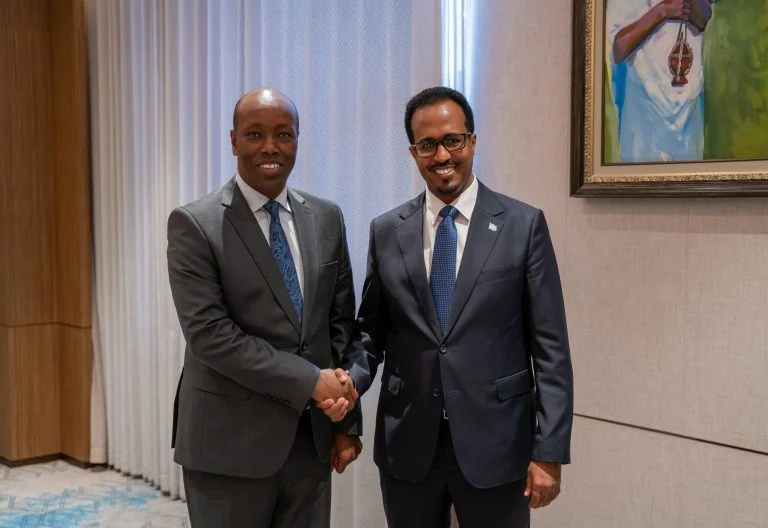 Lee Kinyanjui with Somalia’s Minister of Commerce and Industry Gamal Mohamed Hassan in Addis Ababa, Ethiopia, on September 2, 2026. PHOTO/@GovLeeKinyanjui/X
NAIROBI (Somali Report) – Kenya and other East African Community (EAC) member states are being urged to deepen trade and investment ties with Somalia, as the country seeks to unlock its economic potential and establish itself as a major regional commercial and logistics hub.
Regional business organisations and policymakers say Somalia's growing integration into the East African market presents opportunities across several sectors, including manufacturing, agriculture, livestock, fisheries, energy, tourism and transport infrastructure.
With a coastline stretching more than 3,000 kilometres along the Indian Ocean and Gulf of Aden, Somalia offers strategic access to international shipping routes connecting East Africa with the Middle East and wider global markets.
Its largely untapped natural resources, including potential offshore oil and gas reserves, alongside its marine wealth and agricultural potential, are attracting growing attention from regional investors.
Somalia is also looking to use its membership of the EAC to expand market access, attract foreign capital and strengthen domestic industries.
The country was admitted to the regional bloc on November 24, 2023, becoming its eighth member after completing the ratification process on March 4, 2024.
Membership gives Somalia access to a regional market of more than 300 million people, creating opportunities for businesses to expand across borders and participate in regional supply chains.
The East African Business Council (EABC), the EAC, the Somali Chamber of Commerce and Industry, Germany's development agency GIZ and government policymakers have identified manufacturing, logistics, financial services, tourism and value addition as priority sectors for deeper economic cooperation.
EAC Deputy Secretary General Annette Mutaawe, who oversees customs, trade and monetary affairs, called on private-sector players to take advantage of the expanded regional market.
“The private sector should leverage the enlarged regional market, strengthen value chains and pursue cross-border investment opportunities,” she said.
Somalia's Minister of Commerce and Industry, Gamal Hassan, also urged businesses to explore opportunities under both the EAC and the African Continental Free Trade Area (AfCFTA), particularly in manufacturing, industrial development and value addition.
For Somalia, the benefits of regional integration extend beyond access to consumers. Its geographical position offers East African businesses an additional maritime gateway to international markets, while creating opportunities in shipping, warehousing, port services and transit trade.
The government is seeking to attract investment into transport and logistics infrastructure as it works to position the country as a regional trade hub.
Somali Report · Newsletter
Your morning briefing on Somalia's biggest stories — politics, security, business, and the people shaping the region's future.
The Somali Chamber of Commerce and Industry says stronger business-to-business partnerships, improved market access and investment connections will be essential to turning membership of the regional bloc into tangible economic gains.
SOMINVEST Director Ismail Abdalla Ali stressed the importance of creating a more favourable business environment to attract domestic, regional and international investors.
Kenya already maintains significant commercial links with Somalia, although trade remains heavily tilted in Nairobi's favour.
Kenyan exports to Somalia are estimated at approximately $130 million annually, equivalent to about Sh16.8 billion. Major exports include rolled tobacco, packaged medicines, refined petroleum products, khat (miraa), dairy products and cement.
Somalia's exports to Kenya include specialised equipment, clothing accessories, furniture, fish, livestock and scrap metals, although their volumes remain comparatively smaller.
Business leaders say reducing this trade imbalance will require greater investment in Somali production capacity, processing industries and export infrastructure.
They have also called for the implementation of existing EAC commitments, the removal of non-tariff barriers and simpler procedures for the movement of goods, services and capital across member states.
Somalia's diaspora is another potential driver of investment, bringing financial resources, entrepreneurship and established commercial networks that connect the country to regional and international markets.
The renewed focus on Somalia comes ahead of the East Africa CEO and Investment Forum, scheduled to take place in Nairobi on September 17–18.
Organised by the EABC, the event is expected to attract more than 500 chief executives, investors, policymakers and development finance institutions.
Discussions are expected to focus on turning regional investment opportunities into concrete business partnerships, financing arrangements and commercial commitments.
For Somalia, the challenge will be translating its strategic location, natural resources and expanded regional market access into sustainable economic growth.
For Kenya and its EAC partners, deeper engagement with Somalia could open new markets, strengthen regional supply chains and create investment opportunities in one of East Africa's emerging economies.
About the Author
Fatuma Taxadar Yusuf is the Editor-in-Chief of Somali Report. She was the first woman to serve as an editor and media managing director in Somalia’s Puntland State. Previously, she worked with the BBC World Service and other leading media organizations in Somalia. She also serves as Deputy Chairperson of the Somalia Media Council, an independent body that regulates media standards and professional conduct in Somalia.
