Uganda has dismissed reports that Al-Shabaab killed up to 11 Ugandan soldiers in an alleged ambush in Somalia's Lower Shabelle region, as Kampala begins withdrawing troops from the country.
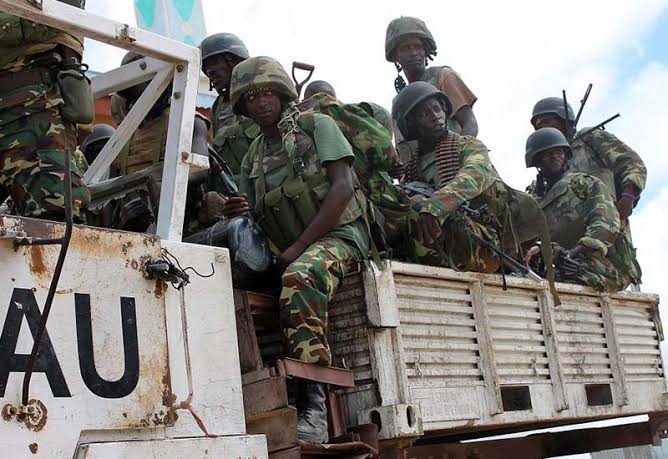
Dennis Katungi, deputy executive director of the Uganda Media Centre, told a news conference in Kampala that the reports alleging casualties among Ugandan forces were fabricated.
“The Uganda People's Defence Forces have dismissed online reports claiming that their troops were attacked in Somalia and soldiers killed,” Katungi said.
The reports rejected by Kampala claimed that Al-Shabaab fighters had ambushed a convoy carrying Ugandan troops as they were withdrawing from positions in Lower Shabelle, a region south of the Somali capital, Mogadishu.
According to the unverified accounts, between 10 and 11 Ugandan soldiers serving under the African Union Support and Stabilization Mission in Somalia (AUSSOM) were killed in the alleged attack.
Ugandan authorities did not report any casualties or provide further details about the circumstances surrounding the claims, maintaining that the reports were part of a disinformation campaign by Al-Shabaab.
The denial comes amid growing military movements linked to Uganda's decision to begin withdrawing some of its troops from Somalia, raising concerns about potential security gaps in areas where Ugandan forces have maintained a significant presence.
Uganda's troop withdrawal
Ugandan forces in Somalia operate under two separate arrangements: a bilateral security agreement between Kampala and Mogadishu and the African Union's AUSSOM mission.
Somali Report · Newsletter
Your morning briefing on Somalia's biggest stories — politics, security, business, and the people shaping the region's future.
The initial withdrawal, which began earlier this month, primarily concerns troops deployed under the bilateral arrangement. Uganda's military has confirmed that the first contingent has returned home, while the withdrawal of forces serving under AUSSOM is expected to take place gradually through the end of 2027.
The timetable is significantly earlier than the broader AUSSOM withdrawal framework, which envisages the mission's eventual departure from Somalia by December 2029, subject to security conditions on the ground.
Uganda contributes approximately 4,500 troops to AUSSOM, making it the mission's largest troop-contributing country. Its forces have long operated in Mogadishu and Lower Shabelle, supporting Somali security forces and protecting strategic installations, supply routes and key infrastructure.
A Reuters report earlier this month said an AUSSOM communication to the United Nations Support Office in Somalia had warned that Uganda's withdrawal could leave parts of Lower Shabelle increasingly vulnerable to attacks by Al-Shabaab.
The warning has highlighted concerns over the capacity of Somali forces to assume responsibility for security in areas where international troops have played a central role in counter-insurgency operations.
Uganda was the first African country to deploy troops to Somalia under the African Union peacekeeping mission, sending its initial contingent in March 2007 as part of the African Union Mission in Somalia (AMISOM).
Over nearly two decades, Ugandan forces played a major role in operations that pushed Al-Shabaab out of Mogadishu and other strategic locations, while also securing important government and military facilities.
AMISOM was later replaced by the African Union Transition Mission in Somalia (ATMIS), which subsequently gave way to AUSSOM in January 2025.
Uganda's planned withdrawal marks the gradual end of a nearly 20-year military presence in Somalia, as the federal government faces mounting pressure to strengthen its own security forces and take full responsibility for protecting the country against the Al-Shabaab insurgency.
About the Author
Ahmed Omar is a senior journalist for Somali Report, based in Mogadishu. He has two decades of experience reporting on Somalia for international and local media. He covers politics, security, governance, business, trade, economic developments and regional affairs.
