Germany has moved two naval ships and 140 personnel to Djibouti as part of preparations for a potential multinational mission to clear sea mines in the Strait of Hormuz. The deployment comes amid efforts to secure global shipping routes following a ceasefire between the United States and Iran.
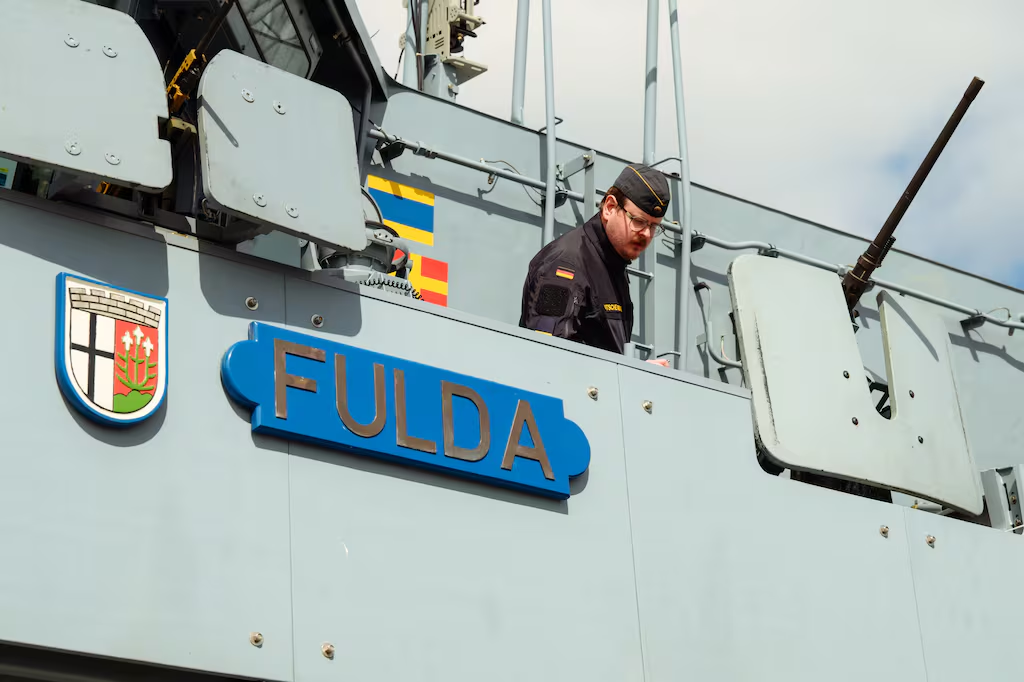 German sailor aboard the minesweeper Fulda before its deployment to the Red Sea. (Gregor Fischer/Getty Images)
DJIBOUTI (Somali Report) — Germany has dispatched two naval vessels to Djibouti as part of preparations for a possible multinational mission to clear sea mines in the strategically vital Strait of Hormuz, amid efforts to restore confidence in one of the world’s most important maritime trade routes.
German Defense Minister Boris Pistorius confirmed on Thursday that the mine-clearing ship Fulda and the support vessel Mosel had successfully transited the Suez Canal and were en route to Djibouti. The ships are expected to arrive within five to seven days, where they will be refueled and resupplied before any further deployment.
A total of approximately 140 German military personnel are aboard the vessels, including mine-clearance divers, vessel protection teams and operators of autonomous systems designed for underwater detection and disposal of naval mines.
The deployment comes as international powers assess the security situation in the Strait of Hormuz following a ceasefire agreement between the United States and Iran after months of tensions that disrupted shipping and energy markets.
German officials stressed that the current movement of ships to Djibouti does not automatically mean Germany will participate in mine-clearing operations. Pistorius described the deployment as a pre-positioning measure for a “possible” future mission.
“We are preparing for a possible mission in the Strait of Hormuz,” Pistorius told reporters ahead of a NATO defense ministers’ meeting in Brussels, emphasizing that several political and legal conditions must still be met before Germany commits forces to such an operation.
Any German participation would require approval from the Bundestag, Germany’s parliament, which must authorize overseas military deployments. Berlin hopes to present a proposal before lawmakers begin their summer recess on July 10.
German authorities also insist that a lasting end to hostilities, a clear international legal mandate, and the consent of regional states—including Iran and Oman—would be necessary before mine-clearing operations could begin.
Somali Report · Newsletter
Your morning briefing on Somalia's biggest stories — politics, security, business, and the people shaping the region's future.
The two vessels are currently operating under the European Union’s Operation Aspides, a naval mission launched to protect commercial shipping from attacks by Yemen’s Iran-backed Houthi movement in the Red Sea. During their transit, the German ships are expected to contribute to the operation’s maritime surveillance and situational awareness efforts.
The Strait of Hormuz remains one of the world’s most critical maritime chokepoints, connecting the Persian Gulf to global markets. Any disruption to shipping through the narrow waterway can have immediate consequences for global oil and liquefied natural gas supplies.
Industry officials and maritime security experts have repeatedly warned that the suspected presence of sea mines remains a major obstacle to restoring normal shipping traffic. Insurance providers and shipping associations have called for rapid mine-clearance efforts to reassure shipowners and crews operating in the region.
Germany is considered one of Europe’s leading naval powers in mine warfare. Experts note that the German Navy has extensive experience locating and disposing of unexploded ordnance in the North Sea and Baltic Sea, where large quantities of mines and munitions from the two World Wars remain on the seabed.
The Fulda carries specialized equipment designed to detect and neutralize underwater threats. German naval mine-clearing operations rely heavily on unmanned systems, including remotely operated surface and underwater drones capable of identifying and destroying mines without exposing sailors to direct danger.
When technology alone is insufficient, specially trained mine-clearance divers can be deployed to investigate and remove explosive devices.
Germany’s preparations are taking place alongside broader European efforts led by France and the United Kingdom to establish a multinational maritime security mission. More than 20 countries have reportedly expressed support for a defensive operation aimed at protecting commercial shipping and conducting mine-clearance activities in the Strait of Hormuz.
However, the initiative faces diplomatic challenges. Iranian officials have previously warned against the deployment of foreign warships in the region, arguing that security in the strait should be managed by countries bordering the waterway. Tehran has signaled strong opposition to outside military involvement, even for mine-clearing purposes.
For now, Djibouti is set to become Germany’s staging ground as Berlin weighs whether to join what could become one of the most significant multinational maritime security operations in the Gulf in recent years. The final decision is expected to depend on parliamentary approval, regional consent, and the durability of the fragile ceasefire between Washington and Tehran.
About the Author

Mohamed Farah is a senior editor at Somali Report, based in London, covering geopolitics, trade, business, and security across the Horn of Africa and the Red Sea region.
Seven Ethiopian Opposition Groups Form Alliance to Oust Abiy Government


